

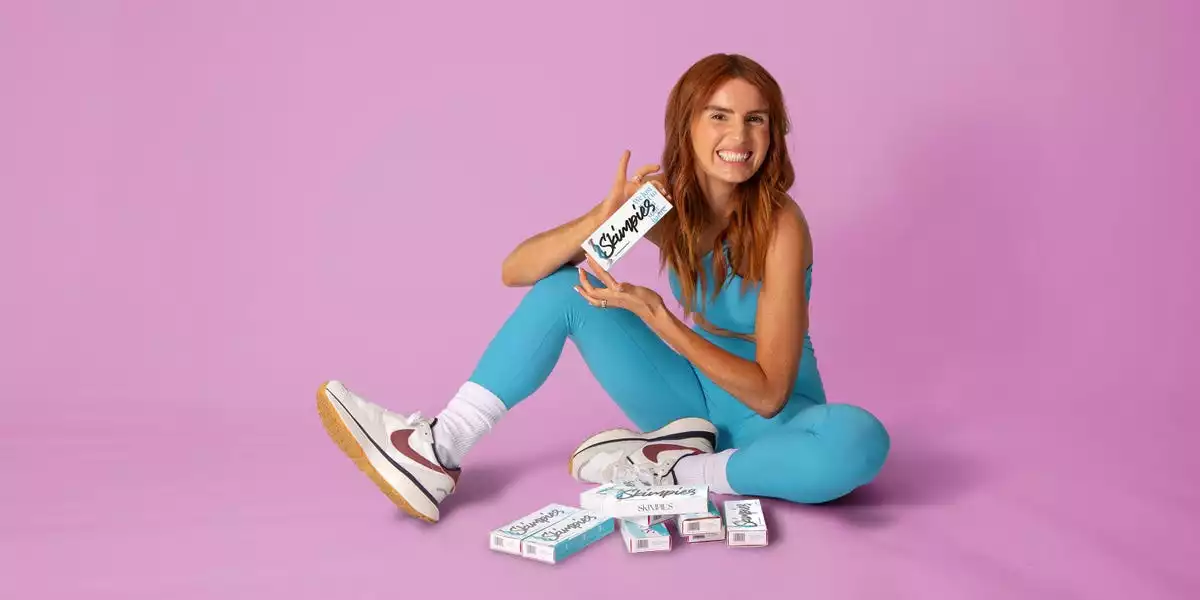

The Intimate Apparel Disruption: Comfort, Authenticity, and the TikTok Commerce Engine
In the restless world of consumer goods, few categories have seen as profound a transformation as intimate apparel. The launch of Skimpies—a direct-to-consumer underwear brand helmed by Bette Bentley—offers a vivid case study in how the intersection of personal narrative, agile manufacturing, and creator-led commerce is redrawing the boundaries of this $87 billion global market. Within a single month of its September 2024 debut, Skimpies generated $60,000 in sales, propelled not by celebrity endorsements or splashy ad campaigns, but by the gravitational pull of TikTok storytelling and a founder’s health journey.
Comfort-First: The New Value Chain in Intimates
The post-pandemic consumer has shed old allegiances. Comfort-centric and inclusive designs now outpace the fashion-driven SKUs that once defined legacy brands. The numbers tell the story: direct-to-consumer upstarts like Parade and Knix have seized more than 12% of the online segment, riding a “comfort shift” that continues to erode the dominance of traditional players. Skimpies’ micro-category focus—delivering a single-function, health-adjacent product—finds legitimacy in this climate, where consumers are increasingly open to niche solutions such as period underwear and mastectomy bras.
What truly sets Skimpies apart, however, is its deft use of TikTok. The platform’s algorithmic discovery and appetite for authenticity have made it a crucible for founder-led brands. Apparel conversion rates on TikTok now average two to four times those of Instagram, and comedy-infused storytelling—Skimpies’ signature—creates an authenticity vector that is nearly impossible for incumbents to mimic without diluting their brand voice. In a landscape where preventive care and self-diagnosis are on the rise (social media discussions of mammograms are up 23% year-over-year), Skimpies’ origin story serves as an emotive moat, insulating it from commoditization.
Manufacturing Agility Meets Data-Driven Design
Behind the scenes, Skimpies’ operational model is as modern as its marketing. By investing in low-volume aluminium moulds—amortized at just 1,600 units, compared to the 10,000-unit breakeven of overseas mass tooling—Bentley has de-risked per-unit economics and enabled U.S. or near-shore production. This not only hedges against geopolitical supply risk but also allows for rapid SKU iteration, a critical advantage in a market where consumer preferences shift with the speed of social media trends.
Material science remains a key lever for future differentiation. While cotton’s sustainability appeal is undeniable, next-generation cellulosics and 3D-knit seamless constructions offer potential improvements in margin and intellectual property defensibility. The opportunity to embed antimicrobial or moisture-management finishes, borrowed from athleisure supply chains, could further elevate the product and expand its addressable market.
Perhaps most compelling is Skimpies’ nascent data loop. Direct e-commerce and TikTok comments provide a rich stream of unstructured fit feedback. Leveraging natural language processing to analyze this data could dramatically compress design cycles and enable quasi-mass customization—an area where early partnerships with 3D body scan innovators would position Skimpies ahead of the fit-tech curve.
Capital Efficiency and Community as Strategic Assets
Skimpies’ commercial model is a study in disciplined growth. Eschewing venture capital in favor of bootstrapped resilience, the brand achieves profitability within 90 days of customer acquisition—a notable feat in today’s high-rate environment. Yet, as the company eyes scale beyond $5 million in revenue, working capital constraints will loom large, necessitating creative solutions such as purchase order financing or revenue-based lending.
The company’s approach to talent is equally strategic. By recruiting mothers re-entering the workforce, Skimpies taps into an underutilized talent pool while crafting an ESG narrative that resonates with institutional buyers and retail partners. This mission-centric hiring not only differentiates the brand in a tight labor market but also reinforces its authenticity—a quality that is fast becoming a form of intellectual property in its own right.
The Broader Shift: Narrative, Micro-Manufacturing, and Platform Risk
Skimpies is more than a single-brand success story; it is a harbinger of structural realignment across consumer product innovation and supply chain localization. The convergence of personal medical journeys and soft-goods design is spawning new categories, while government incentives for domestic manufacturing align with the brand’s mould-based approach. Yet, platform dependency remains a double-edged sword: TikTok’s regulatory uncertainty underscores the need for omni-channel redundancy, from email lists to affiliate syndication.
For decision-makers across apparel, health-adjacent goods, and digital commerce, the lesson is clear. The future belongs to those who can blend authenticity, operational agility, and data-driven design—while maintaining the capital discipline and narrative equity that today’s consumers and investors demand. Skimpies, in its brief but telling trajectory, offers a blueprint for this new era, where the most resonant brands are built not just on product, but on story, community, and the nimble deployment of technology.


 By
By

 By
By
 By
By

 By
By
 By
By







