

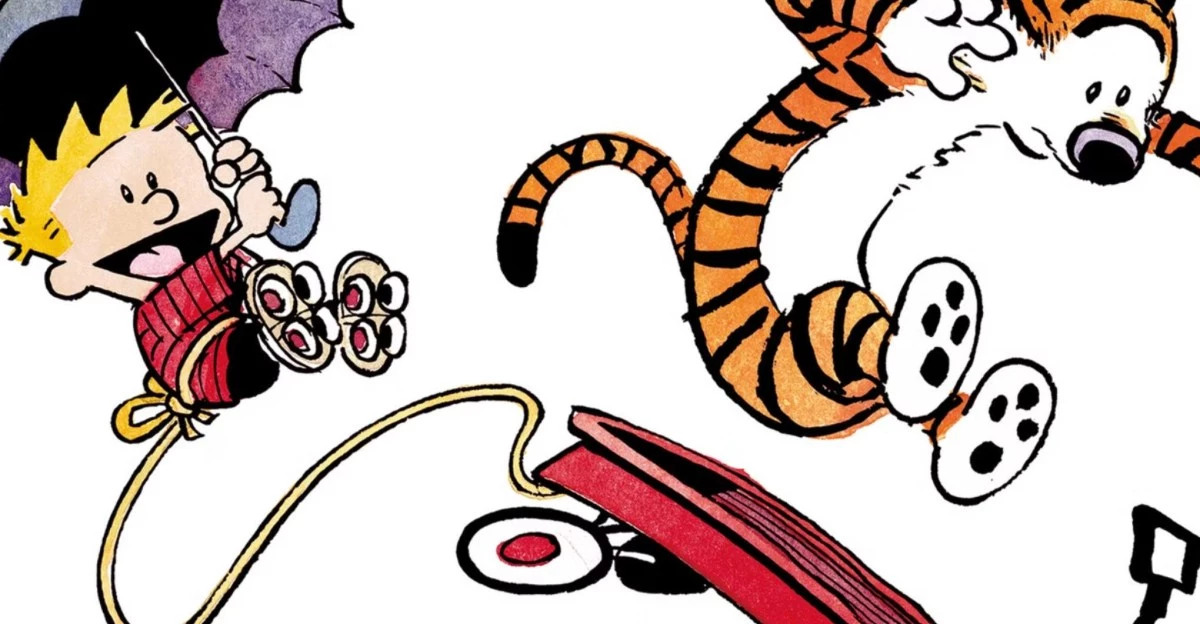

Father’s Day book deals as a real-time readout of consumer confidence and discretionary spend
Amazon’s pre–Father’s Day promotions on premium print collections are more than a seasonal merchandising beat; they function as a high-signal indicator of how discretionary spending, inflation fatigue, and retailer pricing power are interacting in 2026’s consumer economy. The headline discounts are striking: The Complete Calvin and Hobbes deluxe hardcover set dropping from a $225 list price to $89.48 via coupon, and illustrated slipcase editions of J.R.R. Tolkien’s The Lord of the Rings reaching $105.14, alongside markdowns on The Silmarillion and The Hobbit.
For publishers, these are flagship, evergreen titles—products that typically resist deep discounting because they carry brand prestige and stable long-tail demand. When they are discounted aggressively, it often reflects a complex mix of forces rather than a simple “sale”:
- Price sensitivity remains elevated after years of inflation-driven trade-down behavior, even among higher-income shoppers. Premium gifts still sell, but increasingly at “deal-validated” price points.
- Inventory and cash-flow dynamics matter. Heavy, high-production-value books are expensive to warehouse and ship; clearing inventory ahead of peak summer logistics can be rational even if it compresses margin.
- Holiday demand shaping is now a science. Father’s Day is smaller than Q4, but it’s a useful proving ground for promotional mechanics that will later be scaled into back-to-school and year-end gifting.
The net effect is a market where consumers are being trained—again—to expect premium products at algorithmically optimized prices, while publishers must decide how much margin they can surrender to protect volume and visibility.
The “tactile premium” fights back: why deluxe print thrives in a digital-first era
For more than a decade, publishing has lived with recurring predictions that digital formats would steadily hollow out print. Yet these promotions underscore a more nuanced reality: print is bifurcating, not disappearing. Everyday reading may migrate to e-books and audiobooks, but giftable, collectible print is proving resilient—especially when it offers something digital cannot.
Deluxe editions succeed because they monetize what might be called the tactile premium:
- Materiality and display value: slipcases, illustrated plates, heavyweight paper, and shelf presence turn books into objects of identity and décor.
- Gifting utility: premium print is legible as a “serious” present in a way a digital download often is not, particularly for intergenerational gifting.
- Ritual and nostalgia: Calvin and Hobbes and Tolkien are not merely content; they are cultural touchstones. Their value is amplified by memory, tradition, and the desire to pass something down.
This is where nostalgia becomes an economic lever rather than a soft sentiment. Iconic intellectual property (IP) tends to have higher tolerance for premium pricing—but also a strong response to well-timed discounts that create urgency. Retailers can stimulate conversion without eroding the perceived prestige of the underlying brand, because the brand equity is already deeply established.
Inside Amazon’s promotion engine: coupons, dynamic pricing, and algorithmic visibility
The mechanics matter as much as the markdowns. Amazon’s use of a coupon overlay—rather than a simple list-price reduction—signals a sophisticated approach to conversion optimization. Coupons can be deployed selectively, tested rapidly, and tuned to shopper cohorts without permanently resetting price expectations in the same way a straightforward price cut might.
Under the hood, these campaigns increasingly resemble a real-time pricing laboratory, shaped by:
- Price-elasticity modeling that estimates how demand responds at different price points for specific SKUs
- Inventory-aware discounting tied to stock levels, fulfillment constraints, and storage cost curves
- Behavioral targeting informed by browsing history, wish lists, and prior gift purchases
- A/B testing at scale, where different users may effectively experience different promotional pathways
For publishers, the strategic question is not whether Amazon can move units—it can—but how these systems influence discoverability and margin structure. Deep promotions on marquee titles can lift the entire author or franchise ecosystem, but they can also normalize a “race to the bottom” if competing retailers and channels are forced to match prices without comparable data advantages.
This is where retailer–publisher relationships become pivotal. Large promotions on canonical titles often imply some combination of co-funded marketing, negotiated buy-downs, or vendor-program incentives that trade margin for placement. In a platform-dominated environment, visibility is a currency—and discounting is frequently the toll.
What business and technology leaders should watch next in publishing, IP strategy, and retail channels
These Father’s Day deals illuminate a broader strategic playbook that extends beyond books. The same dynamics—premiumization, algorithmic pricing, and nostalgia-driven demand—are reshaping categories from consumer electronics bundles to collectible toys and luxury home goods.
Several forward-looking implications stand out:
- Algorithmic discounting will spread further into premium categories. Companies should prepare for a world where pricing is less a quarterly decision and more a continuous system, requiring governance, analytics, and guardrails (including MAP-like strategies where feasible).
- Collector’s editions are becoming a margin refuge. Publishers and IP owners can deepen returns with differentiated SKUs, limited runs, serialized extras, and direct-to-consumer (DTC) drops that reduce dependence on platform economics.
- Nostalgia will increasingly be engineered, not merely observed. Legacy IP can be mapped to new formats—interactive experiences, premium packaging, and cross-media tie-ins—while preserving the core canon that makes the property valuable.
- Channel diversification is shifting from “nice to have” to risk management. Over-reliance on any single platform exposes brands to sudden margin compression and visibility volatility. The winners will orchestrate inventory and exclusives across Amazon, specialty retail, and DTC with deliberate SKU differentiation.
Ultimately, the significance of Amazon’s discounted Calvin and Hobbes and Tolkien sets is not that consumers like classics—everyone already knew that. It’s that the market is now pricing nostalgia with machine precision, and the companies that thrive will be the ones that treat pricing, format, and distribution not as separate decisions, but as a single integrated strategy built for an algorithmic retail era.

 By
By

 By
By
 By
By

 By
By
 By
By
 By
By







