


Rediscovering Power: The Baghdad Battery and the Renaissance of Forgotten Technologies
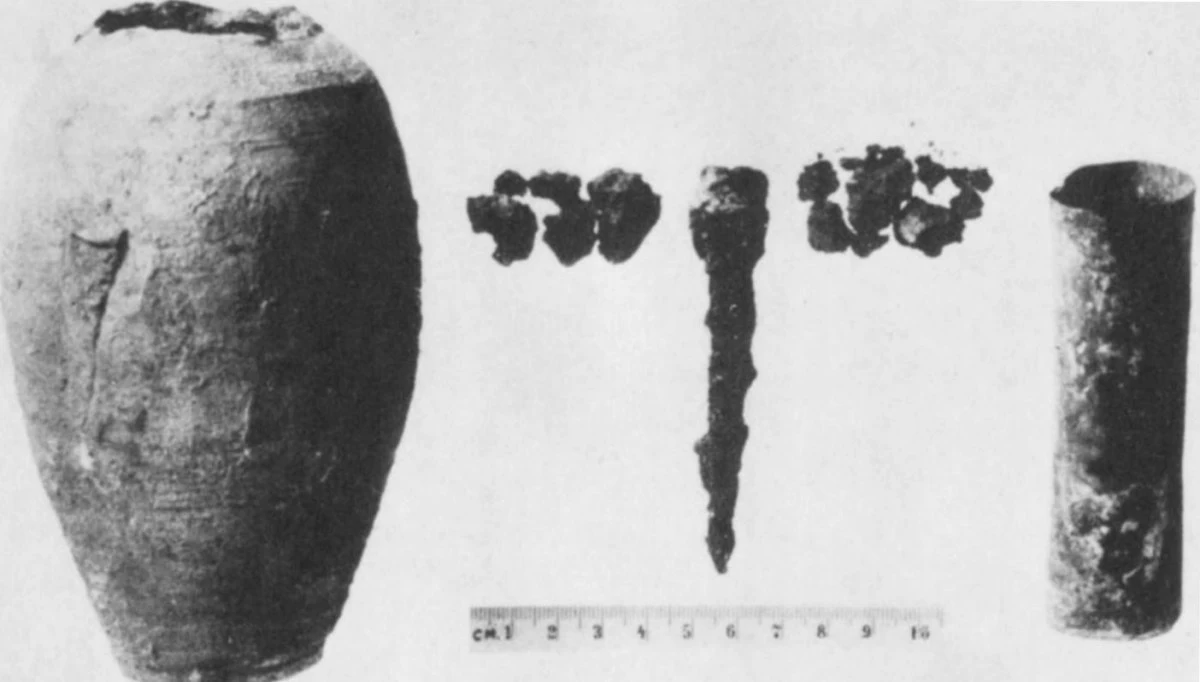
A clay jar, unearthed from the dust of ancient Mesopotamia and long dismissed as a vessel for prayers, has returned to the center of a quietly seismic debate. Recent laboratory reconstructions suggest that the so-called “Baghdad battery”—a 2,000-year-old artifact with a copper cylinder and iron rod—could have generated up to 1.4 volts, a voltage strikingly similar to the modern AA cell. While mainstream archaeology clings to ritual explanations, the latest experiments illuminate a deeper narrative: that empirical engineering and electrochemical curiosity flourished long before the scientific revolution. This artifact, and the discourse it inspires, offers a lens into the cyclical nature of innovation, the commercial allure of micro-power, and the strategic necessity of cross-disciplinary thinking in an era when access to physical artifacts is increasingly fraught.
Ancient Ingenuity Meets Modern Micro-Power
The technical anatomy of the Baghdad battery is, at its core, a study in serendipitous design. Alexander Bazes’s meticulous replica demonstrates how the jar’s porous clay acts as a primitive ion-selective membrane, echoing the separators in today’s lithium-ion cells. The copper–iron pairing forms a galvanic couple, reliably producing a 1.4 V open-circuit voltage. While this output is modest, the implications are anything but. When multiplied in series, such cells could power low-wattage devices—precisely the kind of micro-scale energy sources now coveted for environmental sensors, ingestible medical devices, and NFC tags.
The resonance with contemporary needs is uncanny. The Baghdad battery’s low-cost, biodegradable construction—manufacturable at ambient temperatures—aligns seamlessly with green-chemistry imperatives. As the world pivots toward sustainable electronics, the artifact’s implicit design principles offer a blueprint for scalable, eco-friendly power sources.
Moreover, the methodological landscape is shifting. Reconstruction science has evolved from museum theatrics to rigorous, peer-reviewed electrochemical analysis. Digital twins—virtual models of archaeological objects—are now indispensable, especially as geopolitical instability restricts access to original artifacts. This convergence of AI-augmented modeling and experimental archaeology is accelerating materials discovery, even in the face of cultural loss or export controls.
Strategic and Economic Undercurrents in Battery Innovation
The Baghdad battery’s revival is not merely an academic curiosity; it is a harbinger of strategic and economic realignment in the energy sector. Ancient material stacks, relying on abundant metals like iron and copper, sidestep the critical mineral bottlenecks—lithium, cobalt, nickel—that have come to define the modern battery supply chain. For corporations seeking “strategic autonomy,” these chemistries offer a pathway to diversify beyond China-centric dependencies.
The intellectual property landscape is equally fertile. Primitive galvanic cells are largely unencumbered by legacy patents, creating a white space for start-ups and university spin-outs to innovate without the drag of legal entanglement. The ESG (environmental, social, and governance) narrative is compelling: fully recyclable, low-energy-input cells can be monetized through green bonds and regulatory incentives. Luxury and heritage brands, ever in search of experiential differentiation, might soon deploy “archaeo-tech” wearables—devices powered by eco-friendly copper–iron cells, steeped in historical mystique.
Yet, the risks are as tangible as the opportunities. The disappearance of the original Baghdad battery after the 2003 Iraq invasion is a stark reminder: cultural heritage loss can stymie scientific progress and erode soft power. For multinationals operating in volatile regions, this underscores the urgency of robust insurance, data-capture protocols, and digital archiving for proprietary prototypes and industrial artifacts.
Unlikely Bridges: From Ritual Artifacts to Next-Gen Devices
The Baghdad battery’s porous-jar design finds echoes in today’s ambient moisture-powered generators—technologies poised to energize the burgeoning Internet of Things. Medical device innovators, exploring ingestible sensors, may discover that copper–iron pairs in clay matrices offer biocompatibility without the need for exotic coatings. Even the original hypothesis—that the jar “corroded prayers”—has a modern analog: vanishing ink security features in anti-counterfeit packaging.
Forward-looking battery makers are already eyeing iron–copper–ceramic chemistries for sub-1 Wh devices, where disposability and ecological safety outweigh raw energy density. Standards bodies like ANSI and IEC may soon need to define new categories for biodegradable micro-cells, opening regulatory doors for agile first movers. Meanwhile, venture and corporate R&D teams would be wise to allocate exploratory budgets for “historical technology mining”—surfacing low-TRL concepts overlooked by conventional roadmaps.
The Baghdad battery debate, then, is not about ancient flashlights or lost civilizations. It is a testament to the cyclical nature of innovation: solutions once relegated to the margins can re-emerge as market conditions shift and new imperatives arise. The real advantage belongs to those who blend archaeology, materials science, and digital modeling—unearthing not just artifacts, but the latent potential of ideas waiting for their moment to return.

 By
By
 By
By

 By
By
 By
By

 By
By
 By
By







