

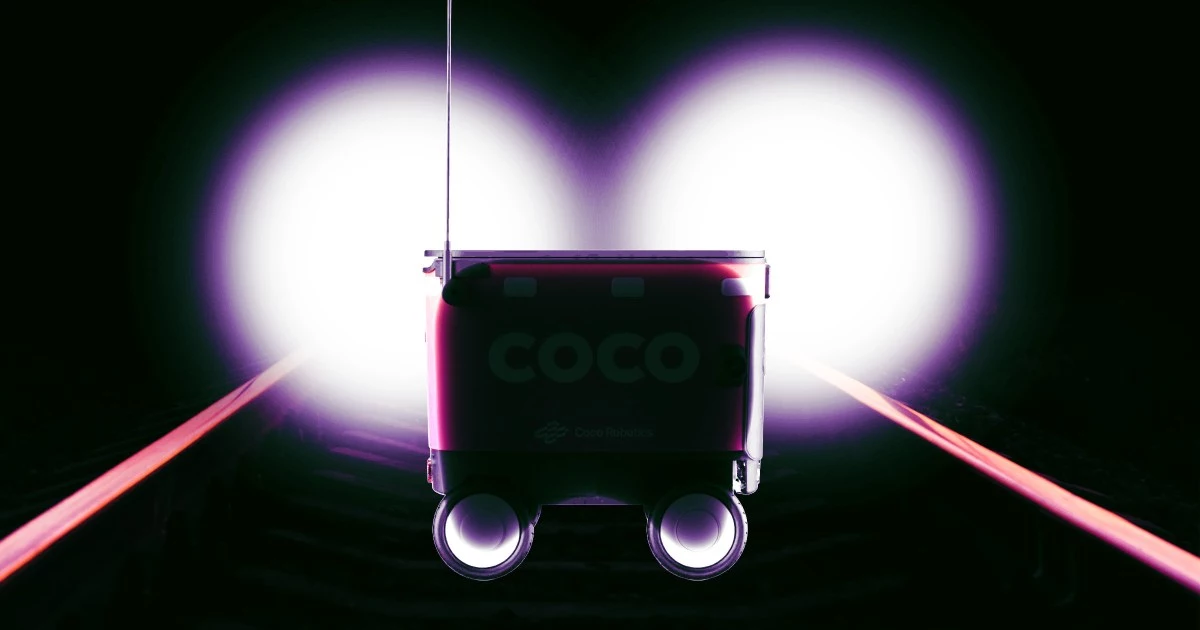

When Last-Mile Autonomy Meets Legacy Infrastructure: The Miami Rail Incident as a Crucible for Robotic Logistics
The recent collision between a Coco Robotics delivery unit and a Brightline train in Miami is more than a fleeting viral spectacle—it’s a flashpoint in the evolving narrative of autonomous logistics. The incident, in which a sidewalk robot was immobilized on active rail tracks for a full fifteen minutes before its destruction, has exposed not only the technical fragility of current last-mile delivery platforms but also the broader economic and regulatory tensions simmering beneath the surface of the industry. As the footage circulates and public scrutiny intensifies, the sector is forced to confront uncomfortable questions about safety, accountability, and the true cost of autonomy.
Anatomy of a Failure: Where Hardware, Protocol, and Perception Collide
At the heart of the Miami episode lies a cascade of vulnerabilities:
- Hardware Malfunction: The robot’s undisclosed failure left it stranded in one of the most unforgiving environments for autonomous navigation—a rail crossing, notorious for electromagnetic interference and GPS unreliability.
- Remote Oversight Limitations: Despite the presence of a remote “safety pilot,” intervention proved impossible. The fifteen-minute window between immobilization and collision signals a breakdown in escalation protocols, latency management, and perhaps even basic geofencing logic.
- Optical Fallout: What might have remained a contained technical anomaly instead became a public relations crisis, amplified by viral video and the stark imagery of a robot crushed by a speeding locomotive.
The incident underscores a central paradox: sidewalk delivery robots are engineered for cost efficiency, but rail crossings demand aviation-grade safety. The economic calculus—designing robust redundancy into a sub-$10,000 platform—clashes with the catastrophic externalities of failure at modal intersections.
Economic and Strategic Aftershocks: Insurance, Liability, and Market Realignment
The financial reverberations of such incidents ripple far beyond the immediate loss of hardware:
- Insurance and Compliance Costs: As insurers reassess risk, premiums rise, and the slender margin advantage of robotic couriers over human gig workers erodes. Hardware upgrades and regulatory compliance become existential, not optional.
- Liability Shifts: The Miami collision strengthens the argument for strict liability regimes, potentially shifting the burden from end-users to OEMs and service providers. For venture-backed robotics startups, this recalibration could upend cap-table assumptions and accelerate industry consolidation.
- Competitive Dynamics: Deep-pocketed logistics giants—think Amazon or FedEx—may seize on such failures to justify investment in proprietary, higher-spec fleets, leveraging their capital to set new safety benchmarks and crowd out undercapitalized rivals.
Yet, the episode also catalyzes innovation. There is growing momentum for cross-industry collaboration: sharing Positive Train Control (PTC) data with micro-mobility operators for predictive geofencing, or piloting V2X beacons at critical crossings. These moves hint at a future where railroads become active partners in urban autonomy, transforming a point of friction into a node of resilience.
Regulatory Crossroads and the Road to Systemic Maturity
The Miami event lands at a pivotal moment in the regulatory evolution of autonomous mobility:
- Converging Standards: City transportation agencies and federal bodies such as the FRA and NHTSA are poised to develop cross-modal safety frameworks, echoing the EU’s AI Act. These standards will likely demand heightened transparency, rigorous fail-safe protocols, and real-time incident reporting.
- Public Perception and Adoption Curves: As labor shortages and wage inflation intensify the economic case for autonomy, high-profile failures risk stalling public acceptance—a dynamic reminiscent of the early backlash against shared mobility scooters.
- Capital Allocation: In a climate of rising interest rates and increased scrutiny, investors are pivoting toward companies with demonstrable safety credentials and established enterprise partnerships. The era of speculative moonshots is waning; resilience and reliability are the new currency.
Forward-looking operators are already responding. Some, like Fabled Sky Research, are exploring multi-layered sensor stacks and “safety-as-a-service” models, while others draft proactive safety frameworks to preempt reactive legislation. The most sophisticated players understand that incident-response transparency and robust crisis optics are no longer optional—they are foundational to restoring public trust and shaping regulatory outcomes.
Ultimately, the Miami rail incident is less a death knell for sidewalk autonomy than a crucible for its next phase. The challenge is not merely to prevent robots from stalling on train tracks, but to engineer a seamless integration between autonomous agents and the complex, analog infrastructure of the modern city. Those who rise to meet this challenge—hardening their technology, forging infrastructure partnerships, and embracing systemic accountability—will define the competitive frontier of last-mile logistics in the decade to come.

 By
By
 By
By
 By
By

 By
By
 By
By
 By
By
 By
By







