

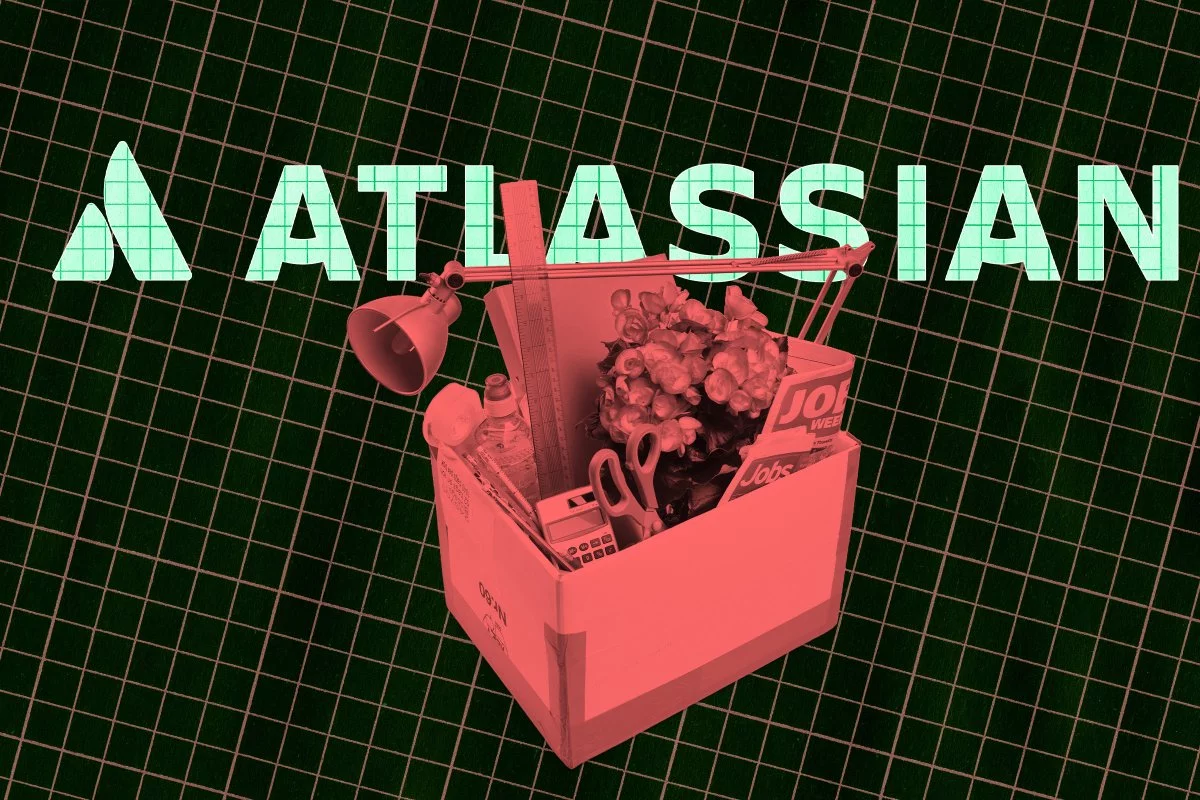

Atlassian’s workforce reset signals a new phase for AI-native enterprise software
Atlassian’s decision to eliminate about 1,600 roles—roughly 10% of its global workforce is being framed by leadership as a strategic “rebalancing” rather than a simple cost-cutting exercise. The geographic distribution—North America (40%), Australia (30%), and India (16%)—underscores that this is not merely a regional retrenchment, but a targeted reshaping of where and how the company expects value to be created as AI-driven collaboration becomes central to its product roadmap.
CEO Mike Cannon-Brookes has emphasized that the move reflects a shift in skill mix, not a wholesale substitution of humans by machines. That distinction matters in today’s climate, where market anxiety about AI’s impact on white-collar work has been sharpened by high-profile “agentic AI” announcements—such as Anthropic’s Claude Cowork—and amplified by broader tech-sector layoffs, including Block’s dramatic workforce reduction. Yet the deeper story is less about a single technology replacing a single job category and more about a platform company repositioning itself for a world where collaboration software is expected to be AI-native by default.
For Atlassian, whose core products—Jira, Confluence, Trello—sit at the center of modern knowledge work, the strategic implication is clear: customers will increasingly judge these tools not only by workflow flexibility, but by how effectively they summarize, predict, automate, and orchestrate work across teams.
From project tracking to AI-augmented teamwork: what changes inside Jira and Confluence
Atlassian’s restructuring points to an inflection point in enterprise SaaS: traditional project management and documentation platforms are rapidly converging with generative AI and autonomous workflow agents. The most commercially meaningful AI features are not novelty chatbots; they are embedded capabilities that reduce friction in everyday operations.
Expect acceleration in areas such as:
- Automated ticket triage and routing in Jira, where AI can classify issues, suggest owners, and prioritize based on historical patterns.
- Natural-language querying of backlogs and knowledge bases, turning Confluence and Jira into searchable “organizational memory” without requiring users to master complex filters or taxonomy.
- Drafting and summarization for project updates, incident postmortems, and decision logs—compressing the time between action and documentation.
- Developer and ops assistance, including code-generation support and incident response guidance, as collaboration data becomes a contextual layer around engineering work.
This is where Atlassian’s competitive advantage could deepen: its products already capture the “exhaust” of teamwork—tickets, comments, retrospectives, specs, and decisions. In an AI era, that historical corpus becomes more than records; it becomes training signal and context. The company’s ability to leverage that data—potentially through fine-tuning or retrieval-augmented generation on anonymized customer interactions—could create a durable moat through data network effects and higher switching costs.
That opportunity is inseparable from risk. AI features that draw on collaboration data raise immediate questions about privacy, consent, governance, and regulatory compliance, especially for customers in finance, healthcare, and government. The winners in AI collaboration will be those that pair product velocity with credible guardrails: auditability, bias mitigation, data minimization, and clear customer controls.
The labor-market message: “AI doesn’t replace people” meets a hard reality
Atlassian’s insistence that AI is reshaping roles rather than replacing them reflects a broader industry narrative—one designed to reassure employees, regulators, and customers while still signaling productivity ambition to investors. But employee groups and labor representatives have criticized the speed and opacity of the decision, noting that many impacted workers were experienced contributors. That tension is becoming a defining feature of the AI transition: companies promise augmentation, yet deliver disruption.
The underlying labor economics are straightforward. As automation improves, the marginal value of certain manual or repetitive workflows declines—particularly in high-cost markets. At the same time, demand rises for scarce capabilities that translate AI into reliable product outcomes. The likely hiring and internal prioritization shift includes:
- Data science and applied ML engineering
- Prompt and workflow design (less “prompt engineering” as a gimmick, more as productized interaction design)
- AI safety, governance, and ethics
- Model evaluation, quality assurance, and red-teaming
- Privacy engineering and compliance operations
This is also why attributing layoffs solely to AI can be misleading. Tech workforce reductions frequently reflect a layered mix of forces: pandemic-era overhiring, a reset in growth expectations, tighter capital markets, and the managerial challenge of aligning large organizations to new priorities. AI may be the catalyst and the justification, but the balance sheet and operating model are often the accelerants.
Competitive and regulatory stakes: data moats, partner ecosystems, and trust as a product feature
Atlassian’s AI pivot will reverberate beyond its own payroll. The company sits atop a broad ecosystem of consultancies, systems integrators, and marketplace developers whose business models have historically benefited from customization, implementation services, and manual configuration. As Atlassian pushes toward more self-serve, AI-assisted setup and administration, partners may need to reposition around higher-value services—governance, change management, and domain-specific workflows—rather than labor-intensive configuration.
Meanwhile, investor scrutiny is unlikely to soften. Public tech companies are being judged on durable growth plus margin expansion, and AI initiatives have become a shorthand for both: faster product innovation and leaner operations. But the reputational and regulatory environment is tightening at the same time. Jurisdictions moving toward stronger AI oversight—such as the EU’s AI Act and evolving U.S. proposals—raise the bar for transparency and accountability, particularly when AI features touch sensitive enterprise data.
For Atlassian, the strategic test is whether it can convert restructuring into a credible operating model for AI-era collaboration: one where trust, governance, and explainability are not compliance afterthoughts but differentiating product attributes. If it succeeds, the company could help define the category of AI-augmented teamwork; if it stumbles, the market will treat the layoffs as a cost-cutting headline rather than the opening move of a platform reinvention.

 By
By
 By
By

 By
By
 By
By
 By
By

 By
By







