

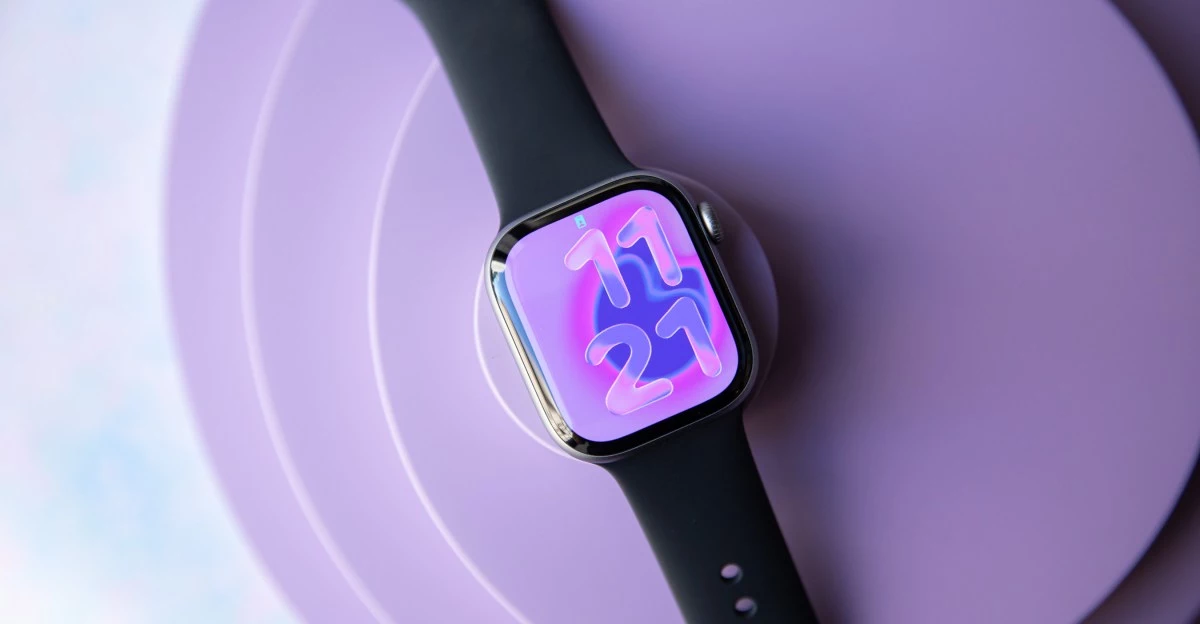

Apple’s Swift Price Cut: A Signal of Strategic Intent in the Wearables Arena
In a move that has reverberated across both retail and technology sectors, Apple has slashed the price of its newly released Watch Series 11 by $70—weeks after its debut. Available at $329 for the 42 mm GPS variant and $359 for the 46 mm model, this aggressive discounting, synchronized across Amazon, Best Buy, and Target, is far from a routine Cyber Monday ploy. Instead, it offers a rare window into Apple’s evolving strategy as it seeks to consolidate its dominance at the nexus of consumer electronics and preventive health.
Engineering the Future of Wearable Health
The Watch Series 11 is not a mere incremental update. Apple has reimagined its flagship wearable with a thinner chassis and a display it touts as twice as durable as its predecessor. The significance of this engineering feat is twofold: it positions Apple to outmaneuver rivals like Garmin and Samsung on perceived longevity, while retaining the sleekness that defines the brand’s aesthetic.
Battery life, long a pain point for wearables aspiring to medical-grade reliability, now stretches to a full 24 hours, with a rapid 30-minute fast charge. This is more than a convenience—it is a strategic necessity. As regulatory bodies increasingly require all-day data continuity for health monitoring devices, Apple’s incremental improvements become foundational to its ambitions in remote patient monitoring.
Perhaps most transformative is the integration of a power-efficient 5G modem, a quiet but profound step toward decoupling the watch from the iPhone. This shift hints at a future where the watch, not the smartphone, becomes the primary node in Apple’s ecosystem—a harbinger of a post-smartphone era. The FDA-cleared hypertension and sleep apnea detection algorithms further cement Apple’s role as a gatekeeper of consumer health data, opening doors to reimbursable healthcare services and employer health plans.
Economic Calculus and Channel Dynamics
Apple’s decision to discount the Series 11 so soon after launch is a marked departure from its traditional pricing discipline. Several forces are at play:
- Inventory Normalization: Following tepid demand for the Series 10 amid broader economic uncertainty, Apple may be recalibrating its forecasts and clearing excess stock.
- Install-Base Expansion: Aggressive pricing is a lever to seed emerging markets and drive adoption of high-margin services like Fitness+, Health+, and iCloud, each boasting gross margins north of 70%.
- Retailer Coordination: The uniform markdown across major retailers suggests Apple is co-funding these promotions, prioritizing rapid install-base growth over short-term hardware margins.
- Demand Elasticity Testing: In a climate of elevated interest rates and constrained discretionary spending, Apple is probing the price sensitivity of its customer base—without undermining its premium Ultra line.
This calculated risk, trading immediate profit for long-term ecosystem entrenchment, reflects a sophisticated understanding of the wearables market’s maturation and the shifting economics of consumer tech.
The Competitive Ripple Effect and Strategic Imperatives
Apple’s advances are already reshaping the competitive landscape. Alphabet’s Fitbit and Samsung’s Bio-Processor platforms now lag behind in FDA clearances, likely spurring a wave of acquisitions in sleep and cardiology analytics. Insurers, too, are taking note: Apple’s growing suite of clinical features aligns with payer incentives to monitor chronic conditions, setting the stage for bulk procurement reminiscent of the iPhone’s enterprise surge in the early 2010s.
The implications extend to the component supply chain. Apple’s adoption of a custom, low-power 5G RF stack could tighten supply for second-tier manufacturers, raising the competitive stakes for access to advanced silicon in 2024.
For stakeholders across the spectrum, the message is clear:
- Consumer-electronics OEMs must brace for margin compression and pivot toward differentiated verticals, such as industrial or medical-grade wearables.
- Health-tech and insurance leaders would do well to integrate with Apple’s HealthKit APIs, leveraging the company’s FDA-cleared algorithms rather than building redundant platforms.
- Retailers should prepare for Apple-driven promotional cycles, adjusting inventory and marketing strategies to align with Cupertino’s increasingly dynamic demand generation.
- Investors should monitor the interplay between hardware margin dilution and the expanding profitability of Apple’s subscription services.
- Regulators face mounting pressure to address the privacy and antitrust risks inherent in Apple’s expanding biometric data moat.
A Calculated Bet on the Next Frontier
The Watch Series 11’s price drop is not a fleeting holiday discount but a deliberate maneuver in Apple’s campaign to redefine the intersection of personal technology, healthcare, and subscription economics. By sacrificing near-term hardware margins, Apple is accelerating the flywheel of a sensor-rich, services-centric ecosystem—one that could reshape not only remote care delivery, but the very contours of competition in both technology and healthcare. Those who recognize the multidimensional nature of this play will be best positioned to navigate the shifting tides of pricing, partnership, and policy in the years ahead.


 By
By

 By
By
 By
By
 By
By

 By
By







