

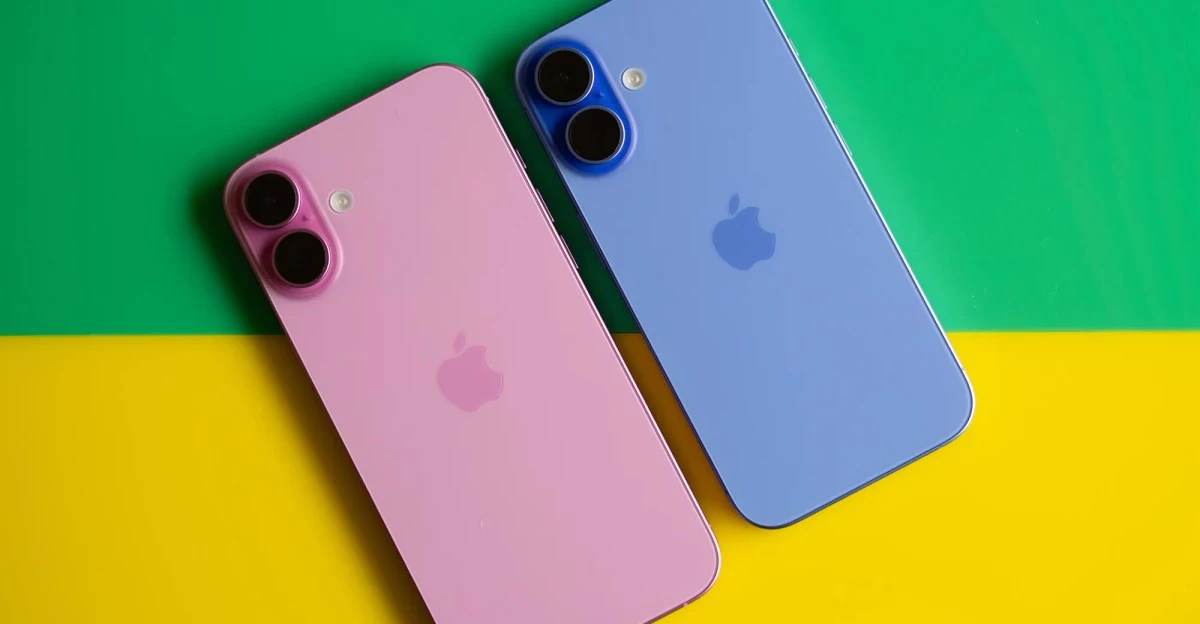

Apple’s Three-Billion iPhone Milestone: Triumph or Turning Point?
Apple’s announcement of three billion cumulative iPhone sales is, on its face, a staggering testament to the gravitational pull of Cupertino’s most iconic product. The acceleration of each billion—nine years for the first, then five, then just four—suggests not just relentless demand, but a deepening of Apple’s hold on the digital lives of a global populace. Yet, as the champagne corks pop in Silicon Valley, Apple’s own leadership is striking a note of candid sobriety: the smartphone’s reign may be finite, and the next decade could see the iPhone’s centrality dissolve into something more diffuse, more ambient, and, perhaps, less lucrative.
The Smartphone Plateau and the AI Horizon
The context for this milestone is a maturing smartphone market where growth has slowed to a crawl. Global handset shipments now inch forward at a meager 1–2% compound annual growth rate, with replacement cycles stretching beyond three years in developed markets. Apple’s continued acceleration, then, is less a story of market expansion and more an illustration of ecosystem entrenchment—particularly among younger demographics, for whom iMessage blue bubbles and AirDrop have become social signifiers as much as technical features.
But beneath this surface, the technological tides are shifting. Apple’s A-series silicon remains the envy of the industry in raw performance, yet the locus of innovation is moving rapidly toward generative AI—where cloud-centric rivals, wielding large language models and multimodal capabilities, are racing ahead. Apple’s privacy-first, on-device AI philosophy is a differentiator, but it demands neural engines and software frameworks that are only now emerging. The industry’s gaze is fixed on rumors of AI-native hardware—devices that could demote the phone from interface apex to mere network node, a vision that looms as both threat and opportunity.
Economic Gravity and Strategic Rebalancing
The iPhone’s economic might is undiminished, still accounting for more than half of Apple’s revenue. Yet, this very concentration is a source of vulnerability. Services and wearables are growing, but not at a pace that can offset any future plateau in handset sales. Gross margins remain buoyant thanks to average selling price discipline and vertical integration, but regulatory clouds are gathering. In-app payment restrictions, antitrust scrutiny, and shifting global rules threaten the high-margin service layers that have become Apple’s hedge against hardware cyclicality.
Apple’s response has been a marked increase in R&D spending—nearly $30 billion annually—redirected toward AI toolchain acquisitions and custom silicon, even as ancillary moonshots like autonomous vehicles are quietly deprioritized. Executive candor about a “post-phone” era is as much a talent magnet as it is investor preconditioning: a signal that Apple is preparing for margin-dilutive platform transitions, and that the next battle will be fought on the terrain of AI and ambient computing.
Meanwhile, the company’s supply chain recalibration—diversifying assembly to India and Vietnam—reflects both geopolitical necessity and logistical complexity. Chasing the next billion devices in an era of rising protectionism and quality-control challenges is a high-wire act, one that will test Apple’s legendary operational discipline.
The Coming Contest: AI-Native Ecosystems and Cultural Moats
For Apple, the existential question is not simply how to extend the iPhone’s run, but how to architect the next platform that commands the same cultural gravity. The iOS install base is a toll road for fintech, health, and media services, but any disruption to the iPhone’s dominance weakens Apple’s gatekeeping power. The semiconductor arms race is intensifying, with Apple’s edge-first AI stance facing off against the hyperscale might of Nvidia, OpenAI, and Alphabet’s custom silicon.
Yet, perhaps the most potent moat is not technological, but anthropological. Gen-Z’s attachment to iMessage and AirDrop is a cultural phenomenon, not just a technical one—a moat that could erode quickly if a new interaction paradigm captures the zeitgeist. The rumored “Ive-Altman device,” for example, hints at AI-native companions that could relegate the phone to the background, forcing Apple to rebalance toward services, health, and cloud infrastructure.
Industry observers, including those at Fabled Sky Research, see a future defined less by incremental handset iterations and more by the translation of AI-native experiences into hardware, services, and ecosystems. The next competitive cycle will reward those who can fuse technical excellence with cultural resonance—who can make the leap from device to experience, from product to platform, from icon to infrastructure.
Apple’s three-billion-unit milestone, then, is not a victory lap, but an inflection point. The company stands at the threshold of a new era, where the shape of the next three billion devices—and the experiences they enable—remains thrillingly, and perilously, unresolved.

 By
By
 By
By
 By
By
 By
By
 By
By
 By
By









