
AMC’s Screenvision Opt-Out Signals a New Fault Line in AI Film Distribution
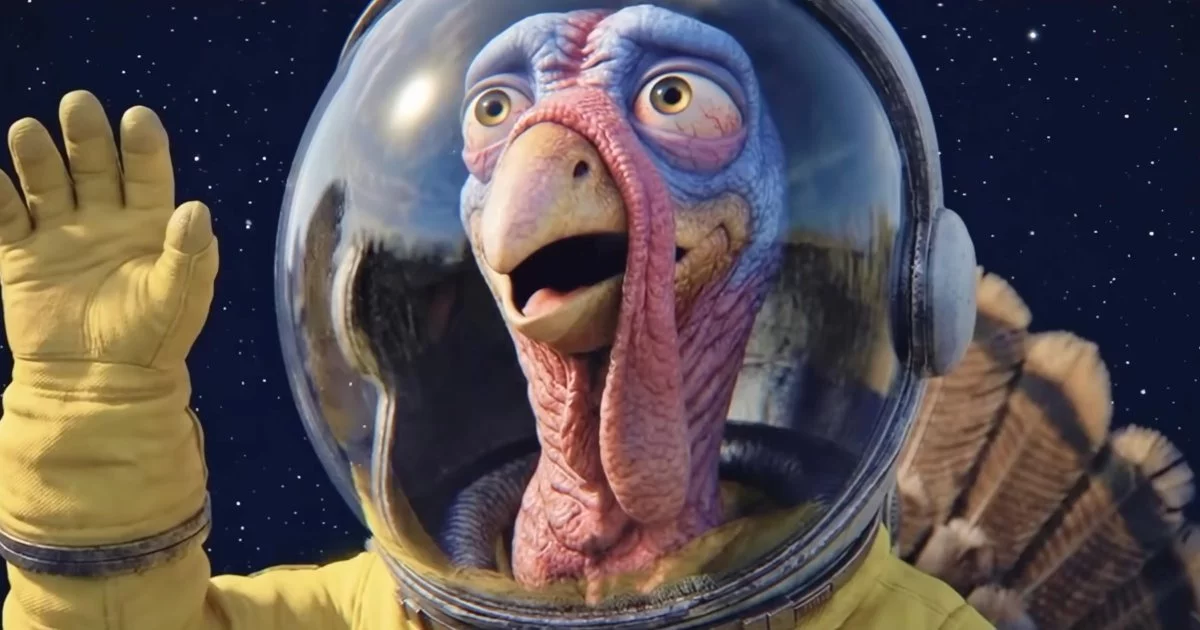
AMC Theatres’ decision to exclude its locations from screening “Thanksgiving Day,” an AI-generated short by Igor Alferov, is less a referendum on a single film than a real-time case study in how quickly audience sentiment can reshape distribution. The short—fresh off a “best picture” win at the Frame Forward AI Animated Film Festival—was slated for a two-week run inside pre-show advertising inventory managed by Screenvision Media. That placement matters: pre-show slots are designed to be low-friction, high-reach exposure, adjacent to premium studio releases and a captive audience.
Instead, the rollout triggered intense online backlash that attached itself not only to the film’s aesthetics, but to AMC’s brand identity. AMC’s clarification—that it does not program Screenvision pre-show content in most locations and instructed Screenvision to keep AMC theatres out of the AI showcase—highlights a structural reality of modern cinema operations: exhibitors may not directly curate every minute of the on-screen experience, but they are still held accountable for it.
For major chains, this is a governance issue as much as a content issue. The incident underscores a growing expectation that exhibitors will maintain clear standards for AI-generated content, even when that content arrives through third-party ad networks rather than traditional film booking channels.
The “Narrative Uncanny Valley” and Why Generative AI Still Struggles on Story
Criticism of “Thanksgiving Day” focused on its montage-heavy construction, thin narrative, and visible dependence on AI tools—reportedly using Gemini 3.1 for story generation and Nano Banana Pro for imagery. Whether those critiques are fair to the creator or amplified by broader cultural anxieties, they map onto a recurring limitation in generative media: AI can often produce stylistically coherent fragments, but sustaining dramatic causality, thematic development, and emotional pacing remains difficult.
This is where the conversation shifts from “uncanny visuals” to something more commercially consequential: a narrative uncanny valley. Viewers may accept synthetic imagery—especially in animation—but still reject storytelling that feels mechanically assembled. The result is not merely dislike; it’s a breakdown in trust that the work is “authored” in a way audiences recognize as intentional.
Several technical and workflow dynamics are at play:
- Toolchain fragmentation: The pipeline described—LLM-generated story elements paired with separate image synthesis—reflects a patchwork stack. Without unified creative tooling, continuity becomes a manual burden, and the final product can feel like a stitched collage rather than a directed piece.
- Coherence vs. creativity: Generative systems can optimize for local consistency (a look, a tone, a prompt) while failing at global structure (setup, payoff, character arc).
- Audience literacy is rising: Viewers increasingly recognize AI signatures—repetition, vague emotional beats, non-sequiturs—and interpret them as shortcuts rather than stylistic choices.
The deeper implication is that AI’s current advantage is production efficiency, not necessarily narrative authority. For mainstream exhibition—where audiences pay for immersion—efficiency alone is rarely a winning value proposition.
Pre-Show Advertising Economics Meets Brand Risk Management
Screenvision’s pre-show inventory is a meaningful business line: it monetizes attention before the feature presentation and offers advertisers scale. But AMC’s move illustrates a hard constraint in media economics: brand equity can outweigh incremental ad revenue, especially when controversy is viral and attribution is sloppy.
This episode also reasserts the power of distribution gatekeepers. Even as digital platforms normalize algorithmic content flows, theatrical exhibition remains a curated environment—one where the theatre brand is part of the product. When a chain’s name trends alongside criticism of AI art, the reputational cost can exceed the value of experimentation.
Key market dynamics exposed by the incident include:
- The fragility of “adjacent” content: Pre-show programming is often treated as peripheral, yet audiences experience it as part of the theatrical package.
- Cost savings don’t guarantee engagement: AI-driven production can compress budgets by automating drafts, storyboards, and visual iteration, but audience reception still determines whether the content enhances or degrades the viewing experience.
- Policy vacuum becomes a liability: Without explicit standards for AI-generated content in ad slots and festival showcases, exhibitors risk reactive decision-making under public pressure.
For creators and festivals, the lesson is equally pointed: awards and novelty do not automatically translate into mainstream acceptance—particularly when the distribution context implies endorsement by a major exhibitor.
What Stakeholders Will Likely Do Next: Standards, Disclosure, and Hybrid Craft
The “Thanksgiving Day” backlash lands amid broader debates over AI transparency, intellectual property, and creative labor displacement. Regulators in the U.S. and EU are already exploring disclosure and rights frameworks, and public skepticism is becoming a market force of its own. That combination pushes the industry toward clearer signaling and stronger quality controls.
Expect near-term strategic moves to cluster around three themes:
- Tiered curation and labeling: Exhibitors and ad networks may adopt categories such as *human-made*, *AI-assisted*, and *AI-generated*, giving audiences context without banning experimentation.
- Quality assurance as a product feature: AI vendors will face pressure to offer more than generation—tools for continuity, narrative coherence checks, and provenance controls will become differentiators.
- A pivot toward “AI + human” teams: Agencies and studios are likely to position hybrid workflows as the commercially viable middle path—using AI for iteration and cost control while preserving human-led direction, writing, and editorial judgment.
AMC’s opt-out is not a blanket rejection of AI in cinema; it is a signal that mainstream venues will demand clearer governance, higher storytelling standards, and more transparent audience expectations. The industry’s next phase won’t be defined by whether AI can generate images—it will be defined by whether AI-enabled production can consistently deliver the one thing theatres ultimately sell: a story that feels worth the room.

 By
By
 By
By

 By
By
 By
By
 By
By

 By
By