
A Texas-sized bet on AI infrastructure—and a new emissions frontier
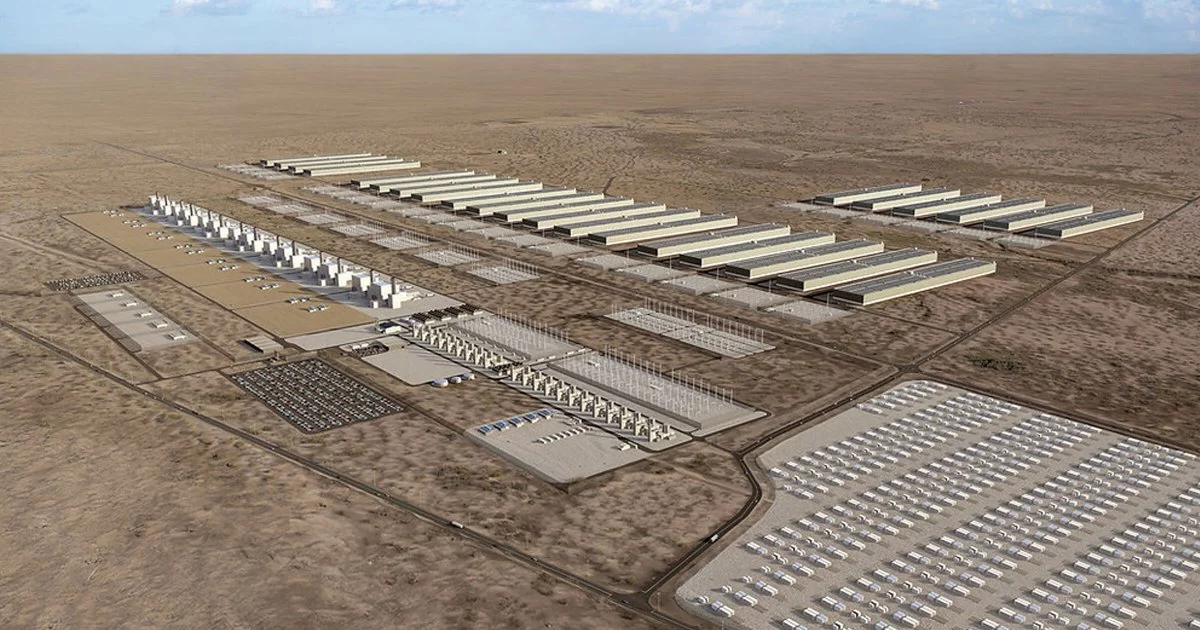
Amazon Web Services’ plan to build an AI-focused data center campus in Pecos County, Texas, backed by a 7.65-gigawatt gas-fired power plant, is more than a regional development story. It is a signal flare for where hyperscale cloud computing is heading as generative AI moves from experimentation to industrial deployment. The reported configuration—35 gas turbines with projected emissions of roughly 33 million tons of CO₂ per year—would place the facility among the most consequential stationary emitters in the United States, with climate impact comparisons that rival national-level footprints.
For AWS, the logic is straightforward: AI workloads are power-hungry, latency-sensitive, and increasingly non-negotiable for enterprise customers. For the broader market, the announcement crystallizes a new reality: the next era of cloud competition may be shaped as much by energy procurement and power-plant economics as by chips, models, and developer tools.
Key factual elements driving the significance of this project include:
- Scale and specialization: a data center designed explicitly for large-scale machine learning training and inference
- Energy verticalization: co-locating compute with dedicated generation to secure capacity and price stability
- Emissions magnitude: a projected CO₂ output that could redefine the emissions profile of a single tech-linked site
Net-zero pledges meet compute reality: the credibility test for climate commitments
The most immediate tension is reputational and strategic: Amazon’s stated goal of net-zero carbon by 2040 now collides with a project that—if built and operated as described—could materially increase absolute emissions in the near term. This is occurring alongside a reported 34% year-over-year increase in AWS electricity consumption, a metric that underscores how quickly AI demand is reshaping the energy baseline for cloud providers.
AWS has indicated that priorities have shifted in an “evolved” global context. That phrasing matters. It reflects an industry-wide reframing in which sustainability targets are increasingly treated as adaptive constraints rather than fixed guardrails—especially when AI leadership is perceived as existential to competitive positioning.
This dynamic is not unique to Amazon. Across the hyperscaler landscape—Google, Microsoft, and Meta among them—AI-driven load growth is stressing renewable procurement timelines, transmission capacity, and the availability of firm, dispatchable power. The bottleneck is not simply “more renewables,” but the system-level challenge of delivering 24/7 high-density power at the pace AI roadmaps demand.
What makes the Texas project especially salient is the implied message to the market: when grid constraints bite, the fastest path to capacity may still be fossil generation—despite the long-term decarbonization narrative that has defined tech-sector ESG positioning for the past decade.
Why AWS would build like a utility: economics, risk hedging, and the commoditization of compute
From a business and technology lens, the project can be read as a pivot toward utility-style vertical integration. If compute is becoming the core commodity of the AI economy, then electricity becomes not just an operating expense but a strategic input—one that can be secured, priced, and controlled.
Several economic drivers likely sit behind this approach:
- Price and volatility insulation: owning or anchoring generation can hedge against rising industrial power prices and market swings
- Capacity assurance: dedicated power reduces exposure to grid congestion and interconnection delays
- AI service reliability: model training and high-volume inference benefit from predictable, uninterrupted supply
- Strategic optionality: a large on-site plant can support phased data center expansion without renegotiating power access each time
Yet this model also introduces structural lock-in. Gas infrastructure is long-lived, and once capital is deployed, incentives shift toward maximizing utilization. That can create a mismatch between short-term compute growth and long-term decarbonization pathways, particularly if carbon pricing, emissions regulation, or customer procurement requirements tighten faster than expected.
In effect, the cloud business begins to resemble heavy industry: competitive advantage is shaped by energy contracts, fuel supply, permitting, and emissions liabilities—not only by silicon performance or model accuracy.
The next battleground: carbon-intelligent cloud, regulatory exposure, and customer-driven “green AI” procurement
The forward-looking implications extend beyond Amazon’s own footprint. If a leading hyperscaler normalizes gas-backed AI expansion at this scale, it may reset expectations for what “AI-ready infrastructure” looks like—and intensify scrutiny from regulators, investors, insurers, and enterprise buyers.
Three pressure vectors stand out:
- Regulatory and financial risk
– Carbon pricing, emissions rules, or carbon border adjustments could raise the effective cost of gas-powered compute
– High-emissions assets may face higher insurance premiums, tougher underwriting, or increased cost of capital
- Enterprise procurement and Scope 3 accountability
– Large customers increasingly track Scope 3 emissions embedded in cloud usage
– Demand for verifiable low-carbon compute—often framed as “green AI”—could become a differentiator in regulated sectors and public procurement
- Disclosure and measurement sophistication
– Stakeholders are moving from annual sustainability reports toward granular carbon intensity per workload, time-matched power claims, and auditable energy attribution
– Offsets and credits face tightening standards, pushing attention toward durable removals and high-integrity accounting
For AWS and its peers, the strategic question is no longer whether AI will expand—it will. The question is whether the industry can scale compute while maintaining credibility on climate commitments, and whether the market will reward providers that deliver carbon-intelligent cloud infrastructure: firm power with lower emissions, transparent accounting, and credible pathways to decarbonize without throttling innovation.
The Texas project puts that trade-off into stark relief—an inflection point where the race for AI capacity begins to look inseparable from the politics, economics, and physics of energy itself.

 By
By
 By
By

 By
By
 By
By
 By
By
 By
By