

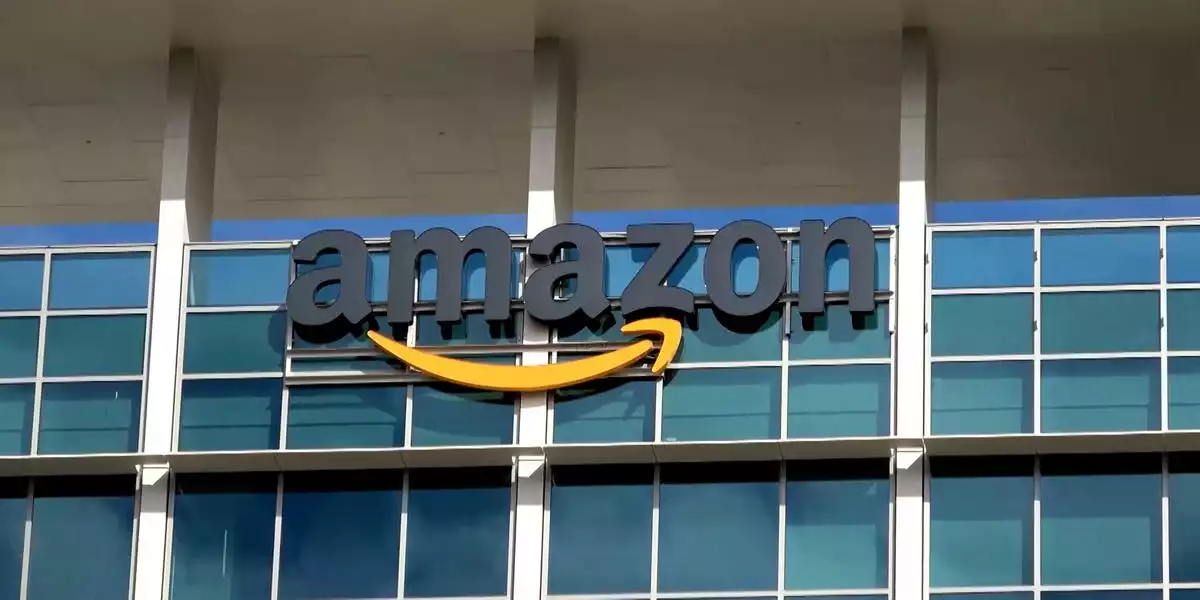

Unraveling Amazon’s Workforce Retrenchment: Signals from the Epicenter of Tech and Labor
Amazon’s decision to trim 14,000 white-collar roles—while still commanding a workforce of 1.6 million—lands with the subtlety of a seismic tremor in the technology sector. The raw number, modest by Amazonian standards, belies its symbolic weight. This move is less about the arithmetic of payroll and more about the tectonic shifts in how technology giants recalibrate for an era defined by AI, capital discipline, and consumer uncertainty.
AI’s Shadow: Between Rhetoric and Restructuring
In the public square, generative AI is cast as both hero and villain. Executives cite AI-driven efficiency as rationale for headcount reductions, yet the underlying calculus remains anchored in more traditional cost-cutting: pandemic-era over-hiring colliding with the reality of normalized e-commerce demand. The true impact of AI is more psychological than operational at this stage. The specter of automation has instilled a “zero-based job design” ethos, compelling teams to justify their existence against a 12- to 24-month automation horizon. This shift, subtle but profound, is already echoing through 2024 workforce strategies across the tech landscape.
Meanwhile, Amazon Web Services—long the company’s profit engine—faces its own margin squeeze. As hyperscalers subsidize customer AI experimentation, cloud margins compress, and tolerance for non-core headcount wanes. The competitive arms race with Microsoft and Google, each bundling AI models into cloud contracts, has only heightened capital intensity. CFOs, ever vigilant, are responding with surgical reductions in SG&A, signaling a new era of operational rigor.
The Macroeconomic Undercurrents: Capital, Consumption, and the “Great Freeze”
Beyond the walls of Amazon, the broader economic climate exerts its own gravitational pull. The cost of capital, whipsawed by Fed policy and persistent inflation, remains stubbornly elevated. Equity markets now reward firms with credible AI narratives—Nvidia’s $5 trillion valuation has become the lodestar—while penalizing those with ambiguity or lagging execution. For Amazon, the pressure to demonstrate cost discipline is no longer just an investor-relations concern; it is a strategic imperative.
Consumer behavior, too, is in flux. Brands like Starbucks are pivoting to “affordable wellness,” a tacit admission that wage growth is cooling and discretionary spending is being reallocated rather than expanded. Amazon’s retail arm faces the same headwinds, forced to defend its logistics economics while consumers grow more selective. The result: a relentless focus on productivity, both in warehouses and in the corporate suite.
Labor-market dynamics have flipped from the “Great Resignation” to what might be called the “Great Freeze.” Open positions across FAANG-adjacent firms are down by more than a third year-over-year. Layoffs, once isolated, now feel systemic as displaced talent finds fewer landing spots. Historical precedent looms large: in previous downturns, a cascade of Fortune 500 layoffs signaled inflection points in white-collar unemployment. The current tally—seven major announcements since October—suggests sentiment is teetering on the edge.
Strategic Inflection: Talent, Capital, and the New Benchmarks
The implications for executives are as nuanced as they are far-reaching. The shift from role-based to capability-based workforce planning is underway, with every function mapped against the probability of AI automation and longer-term redundancy. High-potential employees are being redeployed to revenue-adjacent innovation teams, a move designed to retain institutional knowledge while fostering agility.
Capital allocation strategies are bifurcating. Firms with credible AI monetization paths—those able to translate technological prowess into revenue—can still access cheap leverage, even in a higher-rate regime. Others must self-fund through efficiency, scenario-planning for terminal rates that could swing from 3% to 5%. The M&A landscape, meanwhile, is ripe for opportunists: distressed assets in HR-tech and last-mile logistics are trading at discounts of 30-50%, offering a faster route to capability acquisition than retraining alone.
Boards are benchmarking their AI strategies against the likes of Nvidia, whose meteoric rise has redefined what “leadership” means in this new era. Meta’s earlier cost-cutting now appears prescient, its stock rerated despite regulatory overhangs. Amazon’s current moves, in part, seek to replicate this market response—balancing the need for operational discipline with the imperative to invest in future growth.
The Road Ahead: Fluidity, Automation, and the Reimagined Workforce
As automation, elevated capital costs, and demographic shifts converge, the white-collar labor market is poised to become more fluid and project-based. Traditional headcount metrics will lose their predictive power as organizations pivot to dynamic, capability-driven models. For executives, the challenge is clear: those who proactively realign workforce architecture, capital structure, and AI deployment will transform today’s uncertainty into tomorrow’s competitive moat.
The narrative is no longer simply about layoffs or labor contraction. It is about the reimagining of work, capital, and strategy at the very heart of the digital economy—a story that will continue to unfold well beyond the walls of Amazon, shaping the contours of business for years to come.

 By
By
 By
By

 By
By
 By
By
 By
By

 By
By







