

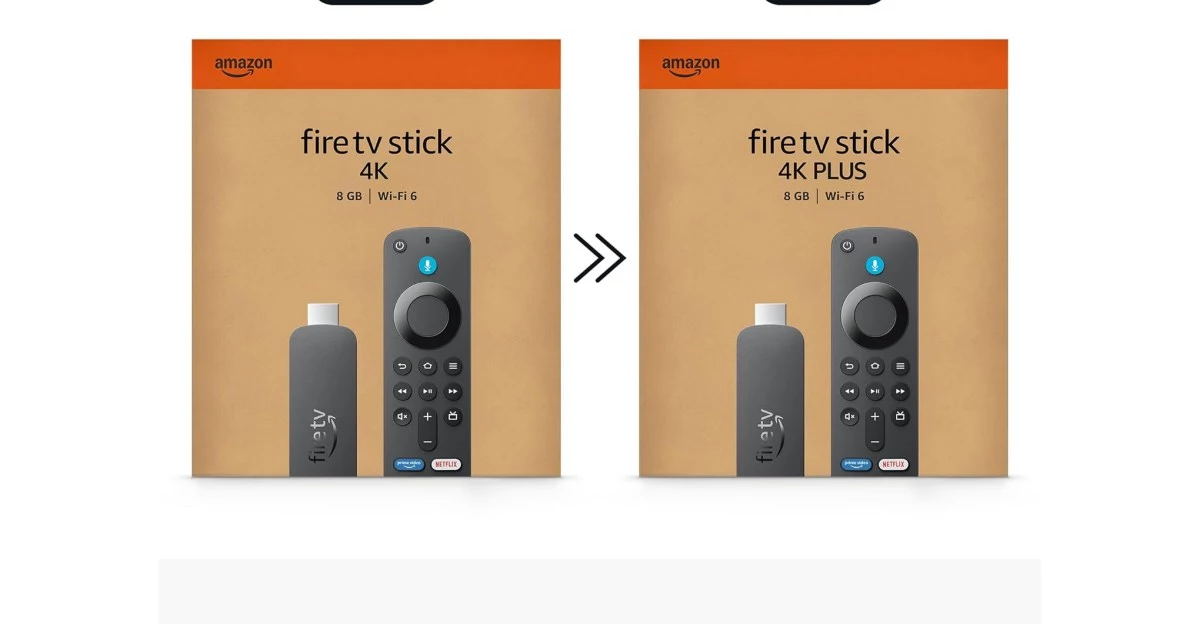

Amazon’s Streaming Hardware Labyrinth: Navigating the New Fire TV Stick Lineup
Amazon’s recent overhaul of its Fire TV Stick lineup is as much a study in behavioral economics as it is a tale of silicon and streaming. With the rechristening of the familiar “Fire TV Stick 4K” as the “4K Plus” and the debut of a new, slightly pared-down “4K Select” at $39.99, the company now fields three 4K-capable dongles, each separated by a mere $10. The result is a product grid that clarifies little, risks consumer bewilderment, and reveals the underlying tension between Amazon’s platform ambitions and the limits of hardware differentiation.
The Art—and Risk—of Micro-Differentiation in Streaming Devices
Today’s streaming hardware landscape is a tableau of functional parity. Whether it’s Roku, Google, or Amazon, consumers can expect 4K HDR, robust voice remotes, and a universe of apps for less than $50. The true battle has shifted away from hardware specs to the subtler terrain of engagement, advertising, and recurring subscriptions. Yet, Amazon’s latest move—wedging the “4K Select” between the “4K Plus” and the flagship “4K Max”—suggests a willingness to test the elasticity of consumer choice, even at the risk of muddying the waters.
- SKU Proliferation as Price Testing: By introducing near-identical devices at slightly staggered price points, Amazon is running a live experiment in price sensitivity. The hardware delta is negligible, but the incremental average selling price (ASP) tiers allow for algorithmic promotions and real-time A/B testing.
- Naming Conundrum: The new “Plus” moniker is meant to elevate the mid-tier, but in practice, it blurs the hierarchy with the “Max” flagship. For mainstream shoppers, the semantic difference between “Select,” “Plus,” and “Max” is anything but clear.
- Cannibalization and Margin Erosion: The 4K Max, often discounted to $34.99, can undercut the new $39.99 “Select.” This may drive a perception of value, but it also trains consumers to wait for deals, undermining baseline profitability.
Platform Economics: Hardware as a Gateway, Not a Destination
Amazon’s hardware strategy is a Trojan horse for a much larger ambition: household platform dominance. Each Fire TV dongle, even if sold at a loss, is a node in a sprawling network designed to capture attention, data, and advertising dollars.
- Advertising-Driven Profit Model: The real profit is not in the $5 swing in hardware margin, but in the annual $20–$25 ad ARPU per Fire TV household. Every new device extends Amazon’s Fire OS footprint, feeding its demand-side platform (DSP) with granular viewing data and deepening its moat in retail media.
- Component Homogenization: By standardizing on a single SoC family and varying only RAM, Amazon simplifies procurement and hedges against supply chain volatility. This enables agile post-production relabeling, converting unsold inventory between SKUs with minimal cost.
- Smart Home Integration: The Fire TV stick is more than a media player; it’s an anchor for Alexa, Ring, and Eero—Amazon’s broader ecosystem play.
Consumer Psychology and the Perils of Choice Overload
While Amazon’s data-driven approach to product segmentation is sophisticated, it is not without risk. Academic research consistently demonstrates that excessive choice can suppress conversion rates by up to 30%. For the average consumer, the current Fire TV lineup may be less a menu and more a maze.
- Choice Paralysis: The crowded assortment may inadvertently steer shoppers toward simpler alternatives, such as Roku’s streamlined two-SKU 4K lineup.
- Brand Trust and Expectancy: Frequent rebranding with minimal substantive improvement can erode consumer trust, particularly among early adopters who prize innovation and clarity.
Strategic Horizons: Lessons for the Streaming Wars
Amazon’s approach is emblematic of a broader industry pivot: hardware is now the subsidized gateway to high-margin, data-rich advertising ecosystems. The company’s willingness to sacrifice short-term clarity in pursuit of long-term platform expansion is a calculated, if risky, gambit.
- Recommendations for Amazon: The next cycle should see a consolidation of SKUs and a shift toward feature-driven tiers—think Wi-Fi 6E or gaming capabilities—rather than vague superlatives. Strategic bundling, such as ad-free Freevee trials or enhanced cloud gaming, could provide the experiential differentiation that mere specs cannot.
- Implications for Competitors: Roku and smart TV OEMs may find opportunity in simplicity, pre-installation partnerships, or international expansion. For executives in adjacent sectors, the lesson is clear: in commoditized hardware, the downstream revenue model—ads, subscriptions, data—is where the real battle is fought.
The Fire TV stick shuffle is not a lapse in marketing discipline, but a high-stakes land grab for household attention. As streaming devices edge ever closer to zero-cost entry, the victors will be those who align hardware, ad tech, and first-party data into a seamless, self-reinforcing flywheel. In this new era, clarity may be a temporary casualty, but platform dominance remains the true prize.

 By
By
 By
By

 By
By
 By
By

 By
By
 By
By







