

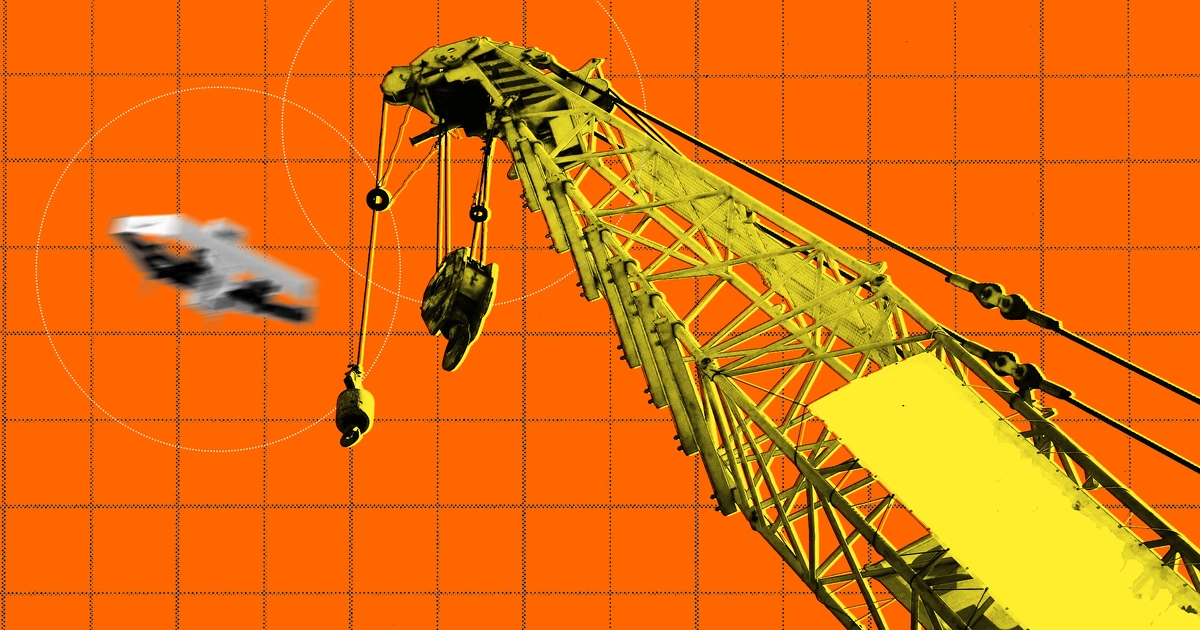

Collision in the Desert: A Drone Dream Meets Urban Reality
At 10 a.m. in Tolleson, Arizona, the sun was already testing the limits of human and machine endurance. Amid the dust and the rising heat, two Amazon MK30 drones—each weighing in at a formidable 80 pounds—collided with a construction crane as it lowered an HVAC unit. Both drones plummeted, igniting a fire and sending one bystander to the hospital for smoke inhalation. The incident forced Amazon to suspend its Prime Air operations in the area and triggered investigations by both the FAA and NTSB.
For Amazon, the Tolleson crash is more than a logistical setback. It’s a moment of reckoning for the company’s audacious goal: 500 million drone deliveries annually by 2030. In the crucible of real-world complexity—urban construction, extreme weather, and regulatory scrutiny—the promise of frictionless, autonomous delivery faces its most formidable test yet.
Sensors, Software, and the Limits of Autonomy
The technical anatomy of the Tolleson incident reveals a web of interconnected vulnerabilities. At its core: the MK30’s sensor architecture and situational awareness systems. The collision with a moving crane suggests a gap in the drones’ ability to detect and avoid dynamic, vertically mobile obstacles—an oversight that’s particularly glaring in urban environments where construction is a constant.
Amazon’s decision to remove certain proximity sensors from newer MK30s, in pursuit of lighter airframes and longer range, now appears fraught. While the company’s AI-driven path planning and multi-rotor redundancy are designed for resilience, Arizona’s relentless heat degrades battery and motor performance, compounding risk. The Prime Air tech stack, meanwhile—a fusion of AWS-hosted routing and onboard compute—relies on uninterrupted 5G/LTE connectivity. Construction zones, notorious for radio-frequency shadowing, can disrupt this digital lifeline, leaving drones vulnerable at the worst possible moment.
These are not isolated issues. The December 2023 propeller failures, traced to sensor removals, and the 2021 Oregon fire, both echo a pattern: the relentless pursuit of scale and efficiency can erode the safety margins that autonomous flight demands.
Economics, Competition, and the Trust Equation
Every MK30 crash carries a price tag—estimated at $33,000 to $38,000 per unit—beyond the hardware itself. Recurring incidents drive up insurance premiums, accelerate depreciation, and force Amazon to set aside larger reserves, undermining the elusive cost-per-delivery equation. In today’s climate of higher interest rates and capital scarcity, the opportunity cost of extended R&D cycles looms ever larger.
Competitors are circling. Alphabet’s Wing and Zipline’s Platform 2, with their lighter payloads and fixed-wing designs, have so far maintained quieter safety records and are less susceptible to thermal derating. Walmart, meanwhile, hedges its bets through partnerships with DroneUp and Zipline, sidestepping the need to own and operate a proprietary fleet.
Perhaps most precarious is the impact on consumer trust. Each Prime Air mishap, amplified by media scrutiny, chips away at Amazon’s carefully cultivated promise of speed and reliability. The Tolleson crash, coming amid unionization debates, risks feeding broader narratives about automation and workplace safety—narratives that can shape regulatory outcomes and labor negotiations alike.
Regulatory Crosscurrents and the Future of Urban Air
The regulatory landscape is shifting under Amazon’s feet. The FAA’s forthcoming Beyond-Visual-Line-of-Sight (BVLOS) rulemaking is poised to set new standards for detect-and-avoid capabilities—standards that incidents like Tolleson will help define. Local governments, newly empowered by recent FAA reauthorization, may impose their own restrictions, fragmenting the economics of drone delivery networks and raising operational hurdles.
Insurers, too, are recalibrating. Premiums for large multirotor fleets operating over populated areas are likely to rise, or come with demands for higher self-insured retentions. The industry’s broader push toward decarbonization—electrified flight as a lever for Scope 3 emissions reduction—runs headlong into the reality of climate-driven heat extremes that sap battery performance, especially in Sunbelt cities.
Setbacks in drone logistics reverberate far beyond Amazon. Investor sentiment toward the entire Advanced Air Mobility sector, including eVTOL passenger craft, is sensitive to high-profile failures. Each incident becomes a data point in the risk models that shape the future of urban airspace.
Strategic Imperatives for a New Era of Autonomy
The Tolleson crash is a clarion call for a more holistic, data-driven, and safety-centric approach to autonomous delivery. The path forward is clear, if not easy:
- Embed real-time dynamic obstacle data—integrating construction permits and crane telemetry into flight-path algorithms, much as high-frequency traders leverage alternative data for split-second decisions.
- Reintroduce redundant sensors—solid-state LiDAR or mmWave radar, even at the cost of payload or range, as the cost of safety lapses now far exceeds marginal efficiency gains.
- Adopt a federated network strategy—deploying drones in exurbs and micro-fulfillment robots in urban cores, orchestrated via a unified data fabric.
- Lobby for performance-based regulation—shifting the conversation from hardware mandates to outcome-driven safety metrics, in partnership with insurers and regulators.
For Amazon and its peers, the era of unchecked optimism in autonomous delivery is over. What lies ahead is a more nuanced, resilient, and collaborative model—one where technological ambition is matched by operational humility and a relentless focus on trust. The companies that thrive will be those that treat each setback not as a failure, but as a catalyst for reinvention.

 By
By


 By
By
 By
By

 By
By
 By
By







