

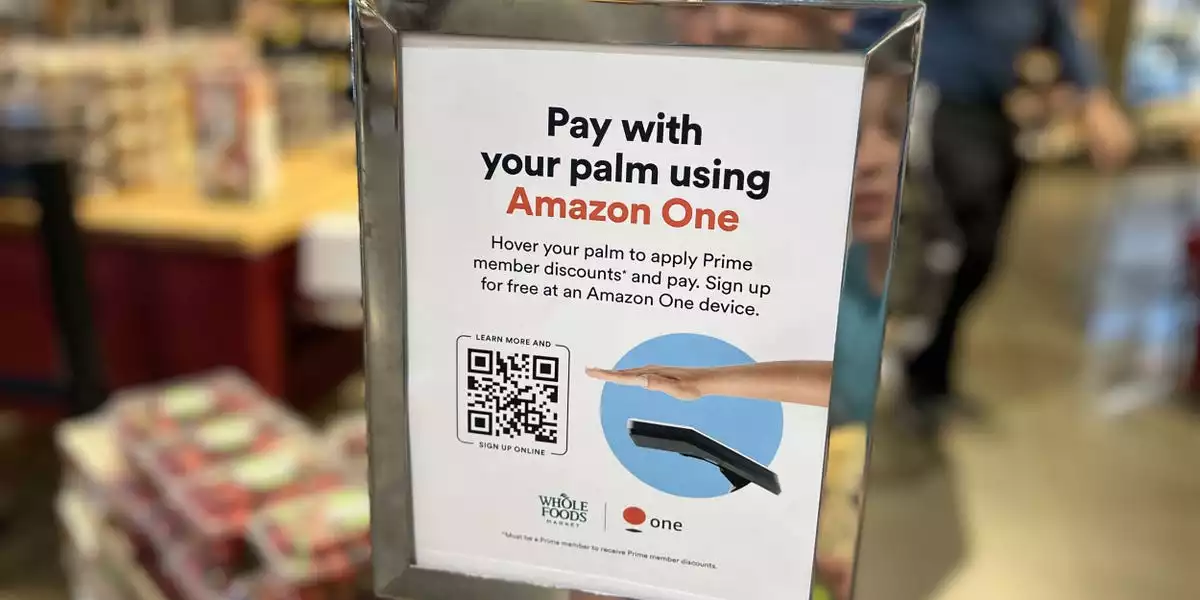

The Quiet Sunset of Palm Payments: Amazon’s Calculated Retreat from Biometric Retail
Amazon’s decision to retire its palm-authentication service, Amazon One, and shutter the majority of its Amazon Go and Amazon Fresh stores marks a pivotal moment in the evolution of retail technology. This move, set against the backdrop of 16,000 corporate layoffs and a sweeping reallocation of capital, signals a profound shift in how the world’s largest online retailer views the future of physical commerce and biometric innovation.
Biometric Promise Meets the Reality of Consumer Reluctance
The allure of palm vein recognition was undeniable: a frictionless, cardless experience promising to redefine the checkout process. Yet, for all its technological elegance, Amazon One never crossed the chasm from novelty to necessity. The service’s adoption curve plateaued at “curiosity,” unable to supplant the near-effortless tap-to-pay experience already embedded in the habits of millions.
Several forces conspired to blunt the promise of biometric payments:
- Behavioral Inertia: For consumers, the marginal gain of palm authentication over phone-based wallets proved insufficient to prompt a behavioral shift.
- Privacy Calculus: Even with Amazon’s assurances of encrypted, on-device biometric templates, the specter of data breaches and the immutable nature of biometric identifiers fostered deep-seated wariness. The mental price consumers assign to biometric risk remains stubbornly high—especially as headlines about data privacy lapses continue to proliferate.
- Regulatory Drag: The emergence of statutes like Illinois’ Biometric Information Privacy Act (BIPA), and similar drafts in California and the EU, has transformed biometrics from a technological frontier into a compliance minefield. Amazon’s early withdrawal deftly sidesteps escalating legal and reputational risks.
Retrofitting palm readers across hundreds of Whole Foods locations introduced a further layer of complexity. The capital expenditure required for edge-compute units, secure enclaves, and ongoing maintenance quickly outpaced the incremental revenue gains—especially in an era of rising interest rates and investor demands for capital discipline.
The Economics of Reinvention: From Physical Retail to Digital Dominance
Amazon’s recent shareholder communications reveal a subtle but significant pivot: efficiency now sits alongside customer obsession as a guiding principle. Physical retail, with its razor-thin grocery margins and heavy operational overhead, simply could not compete with the high-margin, scalable economics of Amazon Web Services (AWS) and digital advertising.
This strategic realignment is reflected in the company’s sweeping layoffs, targeting underperforming tech projects and layers of middle management. The capital and talent liberated from these initiatives are being redirected toward generative AI services, international Prime expansion, and advertising technology—domains where Amazon’s digital DNA confers a decisive advantage.
For the broader industry, Amazon’s retreat sends a chilling signal to venture-backed biometric payment startups. The days of single-modality, hardware-heavy solutions commanding premium valuations are likely over. Investors will now demand:
- Multi-factor authentication systems that extend beyond retail and into sectors with clearer ROI, such as healthcare and workforce management.
- Capex-light, smartphone-centric solutions that leverage existing infrastructure and consumer habits.
Meanwhile, competitors like Walmart, Kroger, and Alibaba have doubled down on computer-vision checkout and mobile scan-and-go—strategies that now appear prescient in their avoidance of costly, hardware-dependent rollouts.
Healthcare’s Biometric Imperative and the Subtle Strategic Ripples
While Amazon One’s presence in retail is fading, its continued deployment in select healthcare partnerships hints at a nuanced understanding of sectoral value. Hospitals, grappling with an estimated $40 billion in annual medical identity fraud, view positive-ID checkpoints as essential. Here, the privacy tradeoff is recalibrated: patients already entrust providers with extensive personal health information, and the imperative to secure identities outweighs residual anxieties.
Beyond the immediate operational calculus, Amazon’s move has broader, less obvious ramifications:
- Antitrust Optics: By curtailing biometric data collection, Amazon subtly reduces its exposure to regulatory scrutiny over data leverage across verticals—a timely maneuver as global antitrust investigations intensify.
- AWS Platform Strategy: Retreating from hardware-heavy deployments does not preclude Amazon from monetizing biometric APIs or secure-enclave services via AWS. This platform-centric approach offers higher margins and lower reputational risk.
- Voice Commerce Resurgence: The internal resources freed from Amazon One may accelerate the evolution of voice-driven commerce through Alexa and large language models, aligning with Amazon’s vision of ambient, hands-free computing—without the privacy baggage of biometrics.
The reverberations of Amazon’s decision will be felt across retail, payments, and technology. For retailers, the lesson is clear: innovation must now clear both a usability bar and a cost-of-capital hurdle. Payment networks and banks are pressed to expedite tokenized, multi-issuer biometric standards, while technology vendors pivot toward privacy-preserving, multimodal solutions. Investors, meanwhile, would do well to treat Amazon’s move as a bellwether for hardware-heavy retail innovation in a high-cost-of-capital world.
In this new era, the winners will be those who can marry technological ambition with economic rigor—delivering not just what is possible, but what is profitable, scalable, and trusted. As the palm scanners go dark, the next chapter in retail innovation will be written not in hardware, but in code, algorithms, and the quiet calculus of capital allocation.


 By
By
 By
By
 By
By
 By
By


 By
By







