
The Invisible Machinery: Algorithmic Management and the Human Cost of Last-Mile Delivery
Beneath the seamless veneer of Amazon’s one-day shipping promise lies a labyrinthine system of algorithmic oversight, contractual insulation, and relentless optimization. The latest report from the Distributed AI Research Institute (DAIR) peels back the curtain on this machinery, revealing a world in which drivers—often subcontracted through a vast network of Delivery Service Partners (DSPs)—navigate not only congested streets, but also a web of AI-driven surveillance and productivity mandates. The result is a system that prizes efficiency yet frequently externalizes risk, with consequences that ripple far beyond the warehouse floor.
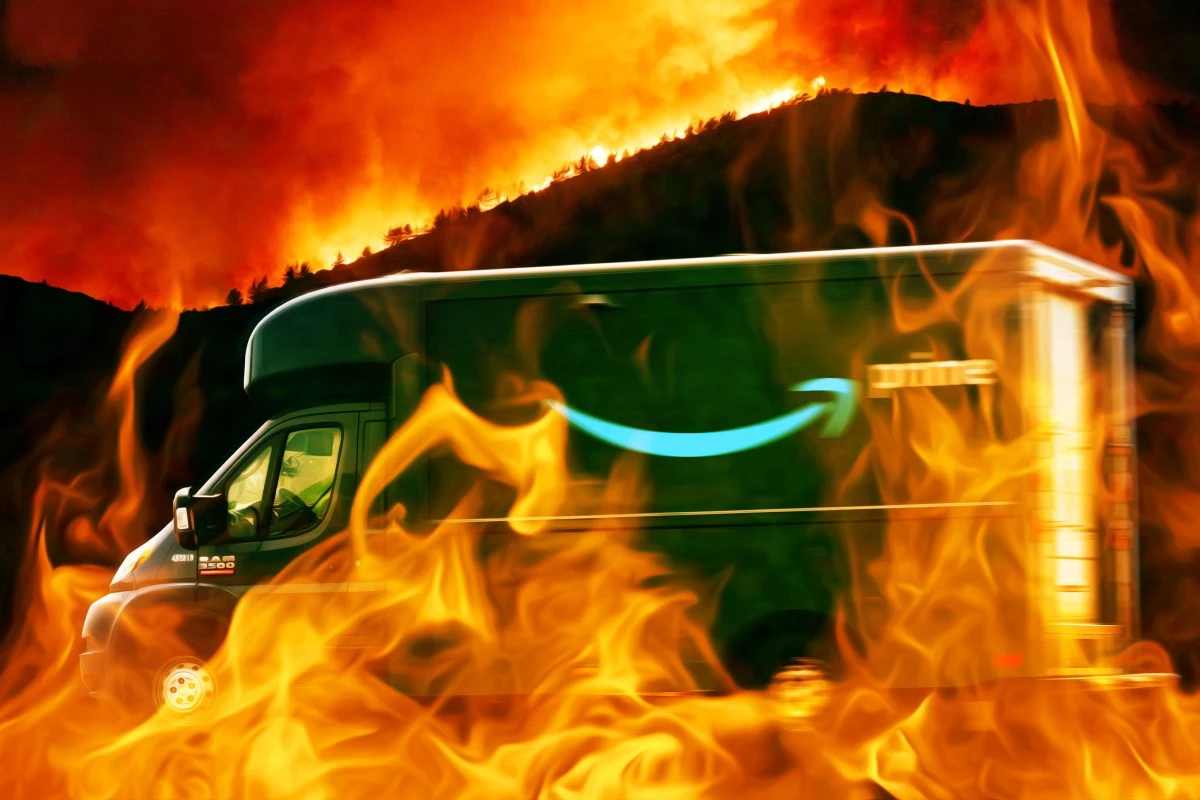
At the core of Amazon’s logistics empire is a suite of technologies that orchestrate every movement. Dynamic route sequencing, real-time driver scoring, and automated exception handling create a feedback loop that is both omnipresent and impersonal. The Netradyne camera system, for example, transforms streams of vision data into “safety scores,” flagging deviations and triggering penalties—often without the nuance that human judgment would afford. In wildfire zones, this machinery has reportedly instructed drivers to continue deliveries, algorithmically indifferent to the hazards on the ground. Such stories underscore a growing tension: the pursuit of hyper-efficiency colliding with the irreducible complexity of human safety and dignity.
Federated Liability and the Economics of Efficiency
Amazon’s reliance on over 2,500 DSP micro-contractors is more than a logistical convenience; it is a strategic shield. By structuring these relationships as third-party contracts, the company insulates itself from direct employment obligations and workers’ compensation claims, while retaining operational leverage through data access and performance dashboards. This federated model compresses costs, but as DAIR’s findings highlight, it also generates a host of hidden liabilities:
- Turnover and Training: High churn rates among drivers lead to escalating recruitment and onboarding expenses.
- Legal and Reputational Risk: Instructing drivers to operate in hazardous conditions exposes the company to litigation and public scrutiny.
- Externalized Emergency Costs: When drivers are sent into wildfire zones, the burden of risk shifts from the enterprise to public agencies and individual workers.
The economic calculus is further complicated by the strategic value of data exhaust. Every route deviation, biometric reading, and customer interaction feeds machine-learning models that not only optimize current operations but also lay the groundwork for future autonomous delivery platforms. Yet, this creates a paradox: the very data harvested from stressed human drivers may be underwriting a future in which those drivers are rendered obsolete.
Regulation, Competition, and the Shifting Sands of Accountability
The regulatory landscape is evolving rapidly. U.S. OSHA investigations, the European Union’s AI Act, and California’s Assembly Bill 701 all converge on the need for algorithmic transparency and worker protections. Asset managers, once enamored with Amazon’s logistics moat, are recalibrating risk models to account for the social dimensions of algorithmic labor management. Board-level ESG metrics now give unprecedented weight to “S” (social) factors, and the narrative of forced productivity has given lawmakers bipartisan cover for stricter oversight.
Meanwhile, competitors such as Walmart, Target, and Shopify are seizing the moment, marketing their supply chains as “people-centric” and using worker welfare as a differentiator in B2B contracts. The insurance market, too, is beginning to reward fleets that can demonstrate not just surveillance, but actual risk reduction through humane oversight. Large enterprises are embedding algorithmic fairness clauses into procurement contracts, signaling that the era of unaccountable AI management is drawing to a close.
Building Resilient and Ethical Supply Chains in an Age of Automation
For decision-makers, the path forward demands a recalibration of both operational and strategic priorities. The operational playbook is already being rewritten:
- Human-in-the-Loop Safeguards: Integrate real-time environmental hazard data into route-optimization algorithms, reducing exposure to natural disasters and the associated insurance claims.
- Incentive Realignment: Shift from punitive scoring to positive reinforcement and discretionary safety pauses, as early European pilots have shown measurable gains in retention without sacrificing delivery performance.
- Contractual Evolution: Embed shared-liability clauses in DSP agreements, aligning safety outcomes with financial incentives and closing the gap on responsibility arbitrage.
Strategically, organizations must scenario-plan for impending algorithmic accountability legislation, map data lineage for auditability, and earmark funds for workforce transition as automation accelerates. Climate risk, once a peripheral concern, is now central to logistics AI design—algorithms that optimize solely for speed and density will erode trust and invite regulatory intervention.
Investors and boards are already revaluing the so-called “efficiency premium.” Discounted cash-flow models that presume perpetual labor arbitrage are giving way to more nuanced assessments that factor in mandated pay floors, benefits parity, and the specter of AI transparency fines. Proactive publication of driver safety KPIs is emerging as a route to sustainability-linked financing and reputational resilience.
Amazon’s wildfire episode is not a mere aberration, but a harbinger of the broader reckoning facing algorithmically mediated labor. As enterprises reengineer their logistics stacks, the imperative is clear: efficiency gains that externalize safety risks are no longer tenable. The future belongs to those who can harmonize advanced analytics with ethical guardrails, building supply chains that are not only fast and cost-effective, but also humane, adaptable, and worthy of trust.
 By
By
 By
By
 By
By
 By
By

 By
By
 By
By