
Albania’s Algorithmic Leap: Redefining Governance with an AI Minister
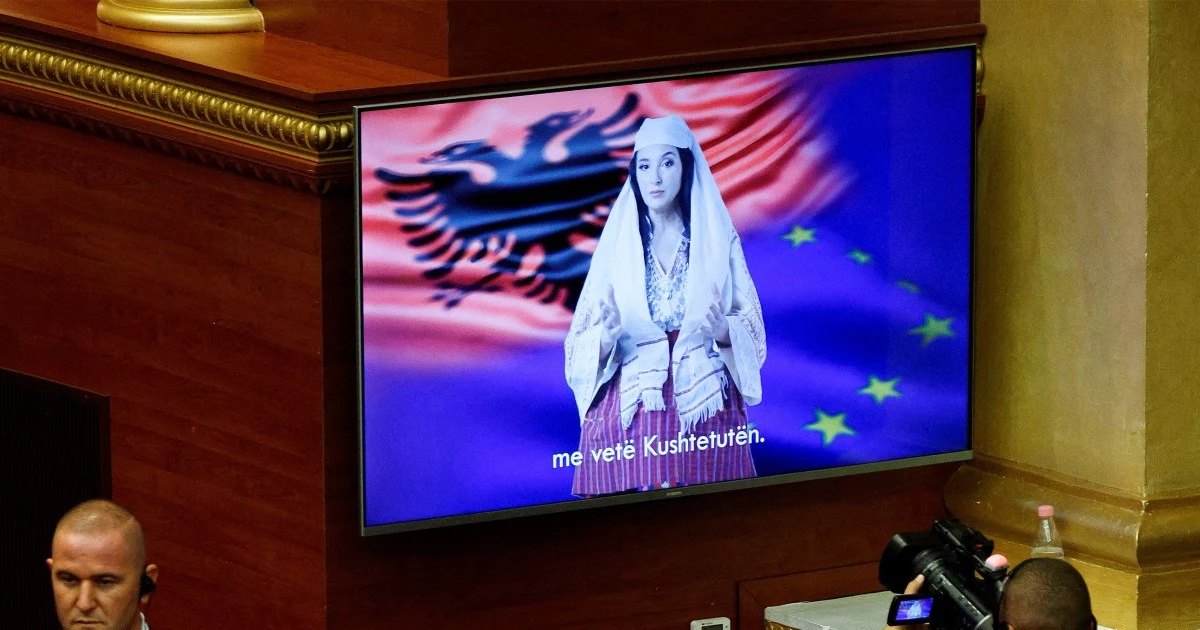
In a move that has sent ripples across the corridors of European policy and global tech circles alike, Albania has appointed an artificial intelligence system—Diella—as its Minister of State for Artificial Intelligence. This is not a ceremonial title. The government’s plan to deploy 83 derivative AI assistants, one for each member of parliament, signals a radical reimagining of how legislative processes, compliance, and even anti-corruption efforts might be orchestrated in the age of sovereign AI.
From Chatbot to Cabinet: The Architecture of a Digital Bureaucracy
Where most governments have dabbled in AI through pilot projects or citizen-facing chatbots, Albania’s approach is nothing short of audacious. Diella is integrated end-to-end into the policy cycle: setting agendas, drafting legislation, and performing post-session analytics. The system’s backbone is a curated knowledge graph mapped directly to the European Union’s acquis—a dense corpus of legal standards and statutes that define EU membership criteria. This is a deliberate pivot away from generic large language models toward sovereign, policy-grade AI.
Key technical differentiators include:
- Full-stack policy integration: Diella’s reach extends from legislative inception to archival analysis, a feat rarely attempted at the national level.
- Federated offspring architecture: By cloning Diella into 83 role-specific assistants, the government is piloting a reusable, containerized model that could become a blueprint for scalable AI bureaucracy.
- Domain-specific intelligence: The system’s knowledge graph is not only a compliance tool but a mechanism for aligning Albanian lawmaking with EU standards—a subtle but potent form of digital accession diplomacy.
Economic Imperatives and the New Face of Anti-Corruption
Albania’s public administration costs, hovering at 2.3% of GDP, are among the highest in the region. Even a modest efficiency gain—say, 5%—could see the AI investment recouped within two years. Yet the calculus here is not merely financial. By automating procedural guardrails, such as mandatory statutory citations and real-time flagging of parliamentary references, the government is recasting AI as a compliance layer. This reframing is particularly resonant in a country where corruption has long been a systemic challenge.
There is also a strategic play at work. With the Balkan region facing a chronic outflow of tech talent, embedding AI into the machinery of state not only fills staffing gaps but signals to international investors that Albania is positioning itself as a tech-forward, near-shore destination.
Regional Reverberations and the Geopolitics of Algorithmic Governance
Albania’s initiative is not unfolding in a vacuum. While neighbors like Serbia and North Macedonia have articulated ambitious AI strategies, they remain in the pilot phase. By contrast, Albania’s minister-level deployment leapfrogs these efforts, potentially reshaping regional flows of foreign direct investment in GovTech.
This move also raises profound questions of cyber-sovereignty and accountability. Assigning ministerial duties to an algorithmic agent is unprecedented in European governance. The implications are manifold:
- Digital accession diplomacy: By aligning its legislative processes with EU legal frameworks, Albania is leveraging AI as a bridge to European integration.
- Regulatory precedent: The deployment sets the stage for doctrinal debates at the OECD and Council of Europe, particularly around accountability, treaty obligations, and the role of AI in sovereign decision-making.
- Competitive signaling: The leap from AI strategy to executive function sends a clear message to regional peers and multinational investors: Albania intends to lead, not follow, in the next wave of digital public administration.
Navigating Risks and Shaping the Next Governance Paradigm
No technological leap is without its hazards. Model drift, hallucination, and data-sovereignty conflicts loom large. Mitigation strategies—such as public version-control registries, third-party audits, and transparent decision logs—will be essential to maintain public trust and regulatory compliance. The specter of societal backlash must also be addressed, with human-in-the-loop escalation paths and clear accountability charters delineating when AI outputs are binding and when human override is compulsory.
For policymakers, the Albanian experiment offers a living laboratory for codifying new standards of accountability and leveraging digital transformation as a bargaining chip in EU negotiations. For technology vendors, the demand for modular, compliance-ready LLM stacks—capable of embedding policy ontologies and operating in low-resource languages—signals a lucrative, under-served market. Multinational corporations and investors would do well to track Albania’s progress: if parliamentary assistants prove functional, the model could migrate to boardrooms and regulatory bodies across heavily regulated sectors.
Albania’s appointment of an AI minister is not just a headline—it is a crucible for the future of algorithmic governance. The outcome will reverberate far beyond the Balkans, shaping regulatory frameworks, investment strategies, and the very architecture of institutional decision-making in the digital era.

 By
By


 By
By
 By
By
 By
By

 By
By