
From Factory Floor to Museum Hall: China’s Robotic Dinosaurs Herald a New Era in Consumer Robotics
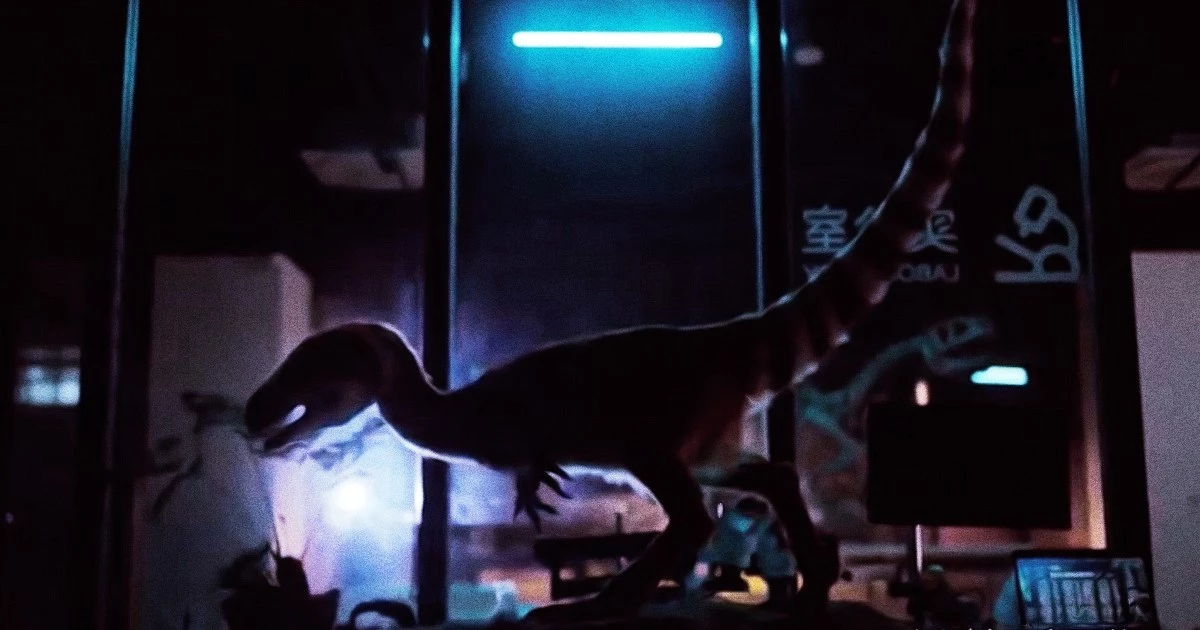
In a country where industrial robotics once reigned supreme, a new breed of automaton is stalking the public imagination—and the polished marble floors of China’s museums and shopping malls. The recent unveiling of AI-powered robotic dinosaurs by LimX Dynamics and Yuejiang Technology (Dobot) marks a watershed moment, signaling the robotics sector’s pivot from the utilitarian to the experiential. These animatronic marvels—TRON1, a T-Rex–inspired platform, and Sinosauropteryx, a sensor-laden, museum-ready creature—are more than crowd-pleasers. They are strategic harbingers of a maturing domestic robotics ecosystem, one that is now chasing differentiated revenue streams, softer brand equity, and the data advantages that come from public deployment.
The Anatomy of a Robotic Dinosaur: Modular Design Meets AI Integration
What distinguishes these new entrants is not a single technological breakthrough, but the artful integration of multiple innovations into a coherent, cost-effective system. Both TRON1 and Sinosauropteryx are built on converged technology stacks, blending high-torque electric actuators with multi-modal perception suites—stereo vision, depth cameras, and inertial measurement units. Their motion is governed by reinforcement learning algorithms, enabling lifelike movement and adaptive interaction.
Dobot’s approach to modularity is particularly noteworthy. The Sinosauropteryx robot features interchangeable “feathery” skins, allowing the same electro-mechanical core to don different guises for retail, security, or elder-care applications. This echoes the smartphone paradigm: hardware sameness, software and content differentiation. Such modularity is not merely aesthetic; it is a platform strategy, laying the groundwork for a future in which a single robotic chassis can be endlessly reimagined through software and physical “skins.”
Meanwhile, the edge/cloud architecture ensures that real-time locomotion remains on-board for safety and responsiveness, while content personalization and analytics are handled in the cloud. This split enables continuous improvement and the capture of rich behavioral data across venues—a crucial advantage in the age of AI.
Economic Imperatives and the Shifting Landscape of Robotics
The market context in China is both crowded and cutthroat. Industrial robotics, once the domain of rapid expansion, now suffers from thin margins and fierce competition. The move downstream—into education, leisure, and “retailtainment”—offers a lifeline. Here, gross margins are healthier (30–45%), and the potential for recurring software and content revenue is substantial.
Several macro trends reinforce this shift:
- Demographic Pressures: Shrinking teacher-to-student ratios and an aging population create parallel markets for autonomous engagement devices.
- Supply Chain Sovereignty: By field-testing domestic servo motors, controllers, and AI chips in public venues, Chinese vendors build volume and resilience, a strategic necessity amid ongoing U.S. export controls.
- Policy Tailwinds: Beijing’s 14th Five-Year Plan prioritizes “robotics+” in culture and tourism, with municipal subsidies and expedited safety certifications accelerating pilot deployments.
This convergence of economic necessity, demographic opportunity, and policy alignment is catalyzing a new era in consumer robotics—one where public spaces become living laboratories for human-robot interaction.
Strategic Stakes: Data, Ecosystems, and the Soft Power of Dinosaurs
The choice of dinosaurs as the vanguard of this movement is no accident. These creatures tap into universal curiosity and sidestep geopolitical sensitivities, positioning Chinese firms as benign innovators in the eyes of the public. For museums and civic spaces, dynamic robotic exhibits promise to boost engagement and foot traffic; for vendors, they offer a distribution footprint and a data goldmine.
The real prize, however, lies in the data flywheel. Unlike factory robots, which operate in controlled environments, these public-facing automatons generate rich affective datasets—speech, gaze, crowd flow—that feed emotion-recognition and human-robot interaction (HRI) models. These models are transferable to service, security, and healthcare robots, vastly expanding total addressable markets.
The battle lines are being drawn between platform approaches (as seen with LimX’s TRON1) and vertical-solution bundling (Dobot’s Sinosauropteryx). Observers should watch closely to see which strategy attracts ecosystem partners and venture capital, as these alliances will shape the competitive moats of tomorrow.
For decision-makers across retail, education, and capital markets, the implications are profound:
- Retail and Experience Economy: Autonomous “living exhibits” can drive merchandise sales and loyalty programs, transforming shopping malls and theme parks.
- Curriculum Integration: Educational publishers have an opportunity to license content—augmented reality overlays, gamified quizzes—that sync with robotic SDKs, creating blended learning experiences.
- Cross-Border Ventures: Western institutions may import these platforms, but must navigate cybersecurity, data-sovereignty, and localization hurdles.
- Workforce Augmentation: Motion-control IP developed for dinosaurs could soon power warehouse runners and delivery bots, with cost efficiencies rivaling global incumbents.
As the sector evolves, insightful executives will recognize these robotic dinosaurs not as novelties, but as testbeds for scalable, data-driven HRI platforms. The next phase of service-robotics competition is already taking shape—one animatronic footstep at a time.

 By
By


 By
By
 By
By
 By
By
 By
By
 By
By