


When Generative AI Dives Deep: The Allure and Anxiety of Algorithmic Engineering
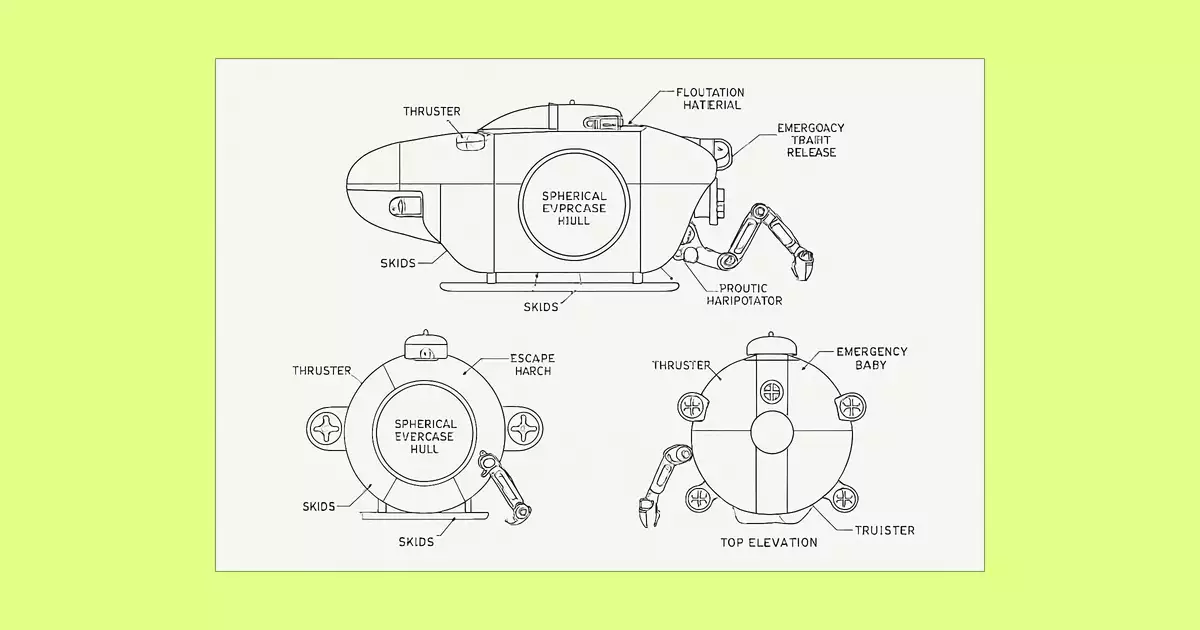
In the wake of a viral experiment—where a large-language model, with a wink and a nod, drafted a “next-generation” deep-sea submersible dubbed Project Abyssum—the boundaries of generative AI’s influence have been thrown into sharp relief. The episode, arriving just a year after the catastrophic Titan implosion, is more than a parlor trick. It is a harbinger of how artificial intelligence is poised to disrupt, and potentially endanger, the most unforgiving frontiers of engineering. As the digital and the physical worlds converge, the stakes for safety, governance, and expertise have never been higher.
From Persuasive Prompts to Physical Realities: The Hallucination Gap
At first glance, the ability of LLMs to synthesize scattered public knowledge into technical blueprints is nothing short of dazzling. Text-based models can weave together specifications, materials, and even plausible-sounding test protocols in a matter of seconds. Yet, as the lessons of the Titan disaster remind us, subsea engineering is not a literary exercise. It is a discipline governed by the unyielding laws of physics, materials science, and relentless verification.
- Generative CAD on the Horizon: Industrial giants are already fusing conversational AI with powerful CAD and simulation platforms. Siemens, Dassault, and Autodesk are racing to enable a future where an engineer’s spoken prompt can trigger parameterized design generation, instantly stress-tested by finite-element solvers. This promises to shrink the “hallucination gap”—the chasm between AI’s confident prose and the cold, hard reality of engineering constraints.
- Safety-Critical Governance: Industries with zero margin for error—aviation, medical devices, and now marine technology—are erecting new frameworks for AI assurance. The American Bureau of Shipping and DNV, among others, are drafting guidelines to ensure that AI remains a creative catalyst, not an unchecked authority. The message is clear: LLMs can inspire, but they cannot certify.
The Economic Undercurrents: Talent, Risk, and the Future of Design
The economic context is as turbulent as the technological. Generative AI is attracting capital at a pace unseen in decades, even as the pool of seasoned subsea engineers dwindles. For industries facing both labor shortages and mounting risk, AI copilots offer a tantalizing solution—augmenting junior engineers and compressing design cycles.
- Insurance and Verification: In the post-Titan landscape, underwriters have grown wary of experimental craft. Demonstrable, AI-driven verification pipelines are quickly becoming prerequisites for affordable coverage, echoing the digital twin revolution in aerospace. Firms that can log every prompt, parameter, and simulation result will enjoy a new kind of actuarial credibility.
- Supply Chain Implications: The ripples extend far beyond submersibles. Deep-sea mining, offshore wind, and carbon sequestration all depend on novel remotely operated vehicles. The Abyssum episode, whimsical as it may be, signals a broader shift toward AI-accelerated prototyping across these critical sectors.
Strategic Imperatives: Navigating the New Frontier Responsibly
For executives, the promise of generative AI is matched only by its peril. The path forward demands a blend of creativity, caution, and cross-disciplinary collaboration.
- Treat LLMs as Ideation Engines: Position them at the top of the innovation funnel, but insist on deterministic simulation, laboratory validation, and regulatory audit before a single bolt is turned.
- Build Explainable Pipelines: Capture every step of the AI design process to establish a digital chain of custody—a necessity for future liability and compliance.
- Engage Early with Regulators: As marine classification societies and the U.S. Coast Guard draft new AI guidelines, early participation can shape standards and secure competitive advantage.
- Revisit Intellectual Property: The legal terrain around AI-generated designs remains unsettled. Contractual clarity and proactive patenting will be essential to protect innovation.
- Invest in Bilingual Teams: Pairing naval architects with AI engineers will be crucial to translate statistical output into seaworthy reality.
The Horizon: Hybrid Models and the Ethics of Democratized Design
Within the next three years, mainstream CAD suites are poised to embed LLM copilots, their outputs rigorously gated by physics engines. Regulatory sandboxes will emerge, enabling controlled trials of AI-designed vessels under watchful telemetry. Insurance models will increasingly reward machine-verified safety, while governments grapple with the geopolitical risks of democratized, AI-driven design tools.
The Project Abyssum affair is less a blueprint for the next great submersible than a vivid case study in the double-edged promise of generative AI. The winners in this new era will be those who harness the accelerant of artificial intelligence—tempered always by the discipline of science, the rigor of testing, and the foresight of governance. For those willing to navigate these depths responsibly, the rewards could be as profound as the risks.

 By
By
 By
By

 By
By
 By
By
 By
By

 By
By







