


The Sub-$50,000 Electric Vehicle Surge: A New Era for North American Mobility
A seismic shift is quietly brewing in the North American automotive landscape. After a year marked by stagnant demand and the evaporation of federal incentives, a formidable cohort of automakers is preparing to unleash more than 40 battery-electric models priced below $50,000 between late 2025 and 2026. This ambitious price reset—heralded by models like the $25,000 Slate Truck, Kia’s $35,000 EV3, Rivian’s R2, and revitalized icons like the Nissan Leaf and Chevy Bolt—signals the dawn of a second act for the electric vehicle market. But beneath the headline numbers lies a complex interplay of technology, economics, and geopolitics that will define whether this wave becomes a tidal force or a fleeting swell.
Battery Chemistry, Modularity, and the New Economics of EVs
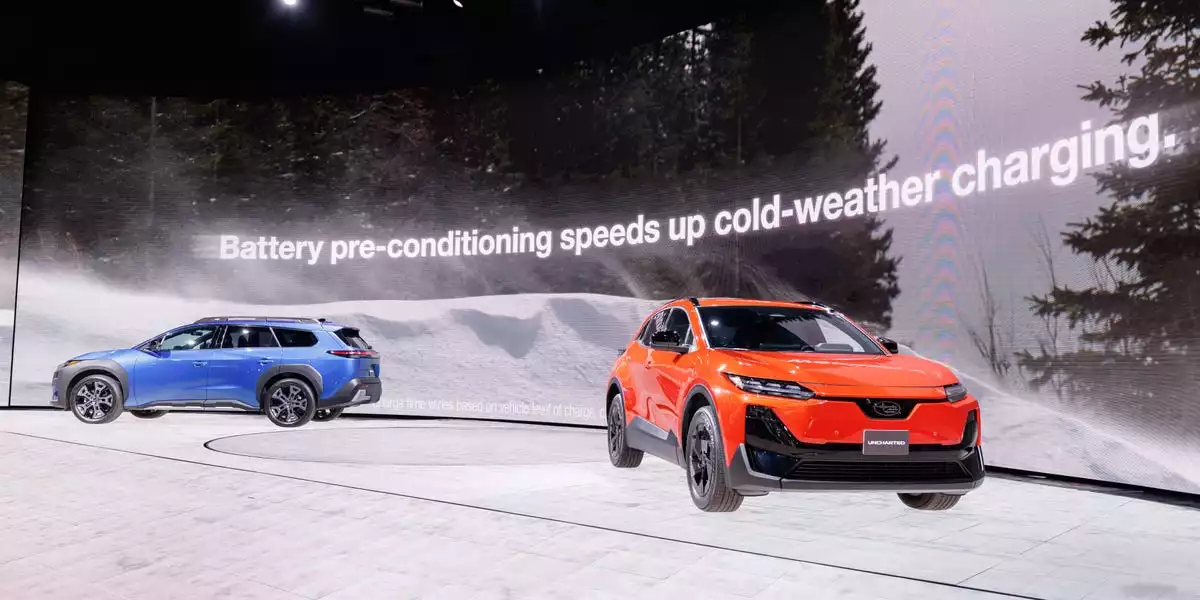
At the heart of this transformation is a radical rethink of battery technology. Automakers are pivoting away from nickel-heavy chemistries toward lithium iron phosphate (LFP) and lithium manganese iron phosphate (LMFP) cells. This shift is not merely an exercise in cost-cutting—though it slashes cell expenses by up to 30%—but a calculated wager that mainstream buyers will accept modest performance in exchange for affordability and longevity. The chemistry recalibration is complemented by a new generation of modular “skateboard” platforms, such as the Toyota-Subaru 40PL and Nissan-Renault CMF-BEV. These architectures, inspired by the logic of software-as-a-service, allow manufacturers to spin off multiple models from a single chassis and codebase, squeezing more value from every dollar of capital expenditure.
Power electronics are also coming home. New U.S.-based inverter and e-axle plants, like the Toyota-LG joint venture in North Carolina, are strategically timed to align with domestic content rules under the Inflation Reduction Act. This localization not only protects margins but also insulates supply chains from the volatility of global trade winds—an increasingly urgent concern as Chinese suppliers eye North American markets through backdoor routes.
On the software front, adaptive firmware is quietly redefining the driving experience. Brands such as Kia, Rivian, and GM are rolling out intelligent drive modes that dynamically manage power output, extending real-world range without the need for ever-larger battery packs. In this new paradigm, code becomes as critical as chemistry, and the line between hardware and software blurs to the point of irrelevance.
Market Dynamics: Price Elasticity, Dealer Tensions, and the Used-EV Squeeze
The return of price elasticity is perhaps the most significant macroeconomic development. With the median new-vehicle price hovering around $48,000, every $5,000 drop below this threshold is projected to unlock a quarter-million incremental EV sales annually—assuming charging infrastructure keeps pace. Yet, the disappearance of the $7,500 federal tax credit for many trims has forced automakers to engineer profitability through manufacturing efficiencies, vertical integration, and the promise of future software subscription revenues.
Dealers, meanwhile, face a paradox. Lower sticker prices mean thinner per-unit margins, even as EVs require roughly 40% fewer mechanical service hours—a double blow to traditional revenue streams. This tension is likely to reignite debates over direct-to-consumer and agency sales models, as the old calculus of dealership profitability is upended.
The surge of affordable new EVs will also compress the residual values of three-year-old premium models, complicating lease economics for incumbents like Tesla and Mercedes. In a market where depreciation risk is suddenly front and center, the used-EV segment may become a crucible for innovation—or a graveyard for legacy strategies.
Strategic Imperatives Amidst Geopolitics and Policy Shifts
For original equipment manufacturers, the race is on to lock in battery procurement through joint ventures and secure LFP capacity before Chinese exporters establish tariff-bypassing footholds in Mexico or Canada. Differentiation will hinge less on drivetrain specs and more on user experience—over-the-air feature unlocks must be seen as value-adds, not opportunistic upcharges.
Utilities and charging networks must brace for a surge in evening loads, particularly in secondary suburbs where these affordable EVs will cluster. Dynamic pricing and accelerated infrastructure deployment are no longer optional—they are existential.
Suppliers are being called to position LMFP and sodium-ion pilot lines in anticipation of a second wave of demand, while investors must vigilantly monitor the delicate balance between margin compression and volume uplift. The threshold for positive free cash flow on sub-$40,000 EVs is high—requiring annual sales of 150,000 to 180,000 units—and will only be met if charging anxiety is decisively addressed.
The 2026 Inflection: Brand, Infrastructure, and the Battle for Loyalty
The window for capturing brand loyalty in the $30,000–$35,000 EV segment is narrow but decisive. The first automakers to deliver a credible 250-mile range at this price point will lock in early-majority customers for an entire ownership cycle, pre-empting both domestic rivals and the looming threat of Chinese entrants like BYD.
Charging infrastructure will become a primary battleground, as the industry-wide shift to NACS plugs opens rare opportunities for collaboration and regulatory pre-emption. Meanwhile, designing battery packs for second-life applications—such as stationary storage for data centers and microgrids—offers a vital backstop for residual values.
Ultimately, the narrative must evolve. The case for EVs will hinge less on environmental virtue and more on total cost of ownership, as lower maintenance and energy costs offset the sting of high financing rates. As price, policy, and platform innovation converge in 2026, the North American market stands at a crossroads. Those who synchronize battery sourcing, software monetization, and charging partnerships will not just survive this transition—they will define its legacy.

 By
By
 By
By
 By
By
 By
By
 By
By

 By
By








