


A sudden stop-and-go for Gulf aviation, with Abu Dhabi at the center of attention
The latest disruption to commercial aviation in the UAE—triggered by a widening arc of military activity in the Middle East and punctuated by the interception of an Iranian drone over Abu Dhabi—highlights how quickly a globally connected hub can be forced into operational triage. Etihad Airways’ decision to ground all departures and then restart service in phases is not unusual in crisis playbooks; what stands out is the speed of the swing from suspension to selective restoration, and the degree to which the public now witnesses these decisions in real time.
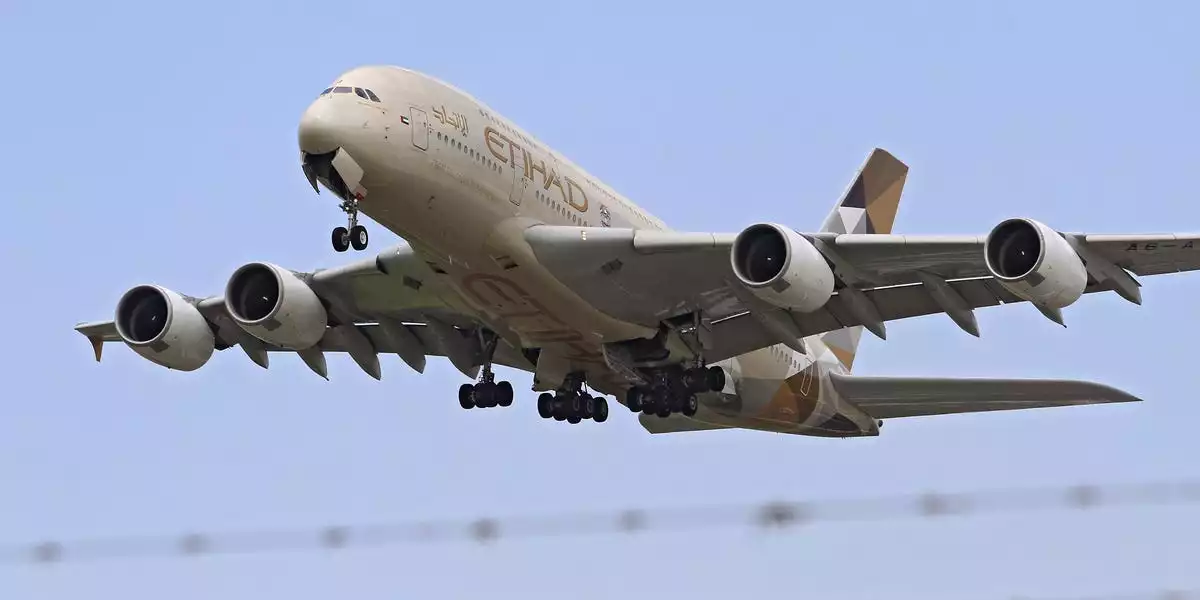
When Etihad reinstated a limited set of flights—among them an Airbus A380 service to London—the aircraft became a proxy for broader market confidence. Nearly 100,000 live viewers tracking the flight on Flightradar24 was more than curiosity; it was a signal that passengers, corporate travel managers, insurers, and competitors increasingly treat flight-tracking platforms as a public dashboard for operational stability. The resumed routes—spanning Paris, Amsterdam, Moscow, Mumbai, New Delhi, Cairo, Karachi, Islamabad, Jeddah, and Riyadh—also reveal a pragmatic prioritization: major hubs, high-demand corridors, and politically and economically significant city pairs that help restore network integrity fastest.
Yet the human cost—one Nepali national killed and seven injured by debris—anchors the story in the central constraint aviation can’t optimize away: safety risk is not theoretical. In parallel, flight suspensions across Dubai, Qatar, Bahrain, and Kuwait underscore that this is not a single-airline event but a regional airspace stress test affecting hub-and-spoke networks that have become essential infrastructure for global trade, tourism, and long-haul connectivity.
Airspace management under asymmetric threat: where legacy processes meet real-time transparency
Modern aviation is built on predictability: stable air corridors, dependable crew positioning, and tightly sequenced airport slots. The abrupt suspension and partial resumption of operations in the UAE illustrates how airspace management under duress can expose fragilities not only in technology, but in process design.
Two dynamics are especially visible:
- Centralized coordination meets fragmented risk: Even when air traffic control systems remain functional, the decision to fly depends on a layered assessment—airspace restrictions, threat intelligence, airport security posture, and airline risk tolerance. In asymmetric threat environments (including drones and missile debris), the “safe” boundary can shift faster than traditional aviation decision cycles were designed to accommodate.
- Transparency reshapes passenger behavior: Platforms like Flightradar24 provide valuable situational awareness, but they also amplify uncertainty. A widely tracked A380 departure becomes a public referendum on whether the system is “back,” even when the reality is a cautious, conditional restart.
The Lufthansa episode adds a less-discussed but operationally decisive constraint: crew logistics. A separate empty Lufthansa A380 repositioning flight departed Abu Dhabi after months of maintenance, while passenger service plans were reportedly constrained by the inability to mobilize cabin crew under the evolving restrictions. This is a reminder that airline resilience is not only about aircraft availability; it hinges on the mobility of qualified personnel—pilots, cabin crew, engineers—whose deployment still relies heavily on legacy rostering, positioning flights, and regulatory duty-time limits.
For airline operations leaders, the emerging lesson is that crisis readiness increasingly requires dual modernization: airspace decisioning that can ingest fast-changing threat inputs, and workforce systems that can redeploy people as dynamically as aircraft.
Counter-UAV realities: integrating defense technology with civilian aviation without breaking the system
The interception of drones near a major international hub underscores a rapidly maturing threat vector: uncrewed aerial systems (UAS) and drone debris can disrupt aviation even when they do not directly strike an aircraft. That matters because the aviation system is designed around extremely low tolerance for uncertainty—particularly near terminal airspace, approach paths, and ground operations.
Aviation stakeholders now face a difficult integration challenge: how to incorporate counter-UAS measures—radar, radio-frequency detection, electro-optical sensors, acoustic arrays, jamming, and kinetic interceptors—into civilian airport environments without triggering cascading disruptions. False positives, interference with legitimate communications, and overly broad airspace closures can impose costs comparable to the threat response itself.
What this moment suggests for airports and regulators in the Gulf and beyond is a need for standardized, interoperable threat-response architecture, including:
- Layered detection tuned for dense urban and coastal environments
- Clear protocols for when detection triggers operational restrictions (ground stops, reroutes, approach holds)
- Data-sharing frameworks between airports, airlines, and national security agencies that preserve speed without sacrificing accountability
- Operational “playbooks” that translate security events into predictable aviation actions, reducing ambiguity for crews and passengers
The objective is not to militarize civil aviation, but to ensure that defensive systems and civil air traffic procedures do not operate as parallel universes—especially when minutes matter.
The business impact: cost shock, insurance repricing, and a new market for risk analytics
Short-notice ground stops are among the most expensive disruptions in commercial aviation. Widebody aircraft parked unexpectedly create immediate liabilities—parking and handling fees, disrupted rotations, crew standby, passenger reaccommodation, and downstream schedule dislocation that can take days to unwind. For Gulf carriers, often perceived as structurally advantaged by geography and state backing, the episode is a reminder that margin erosion can arrive instantly when airspace volatility rises.
Several second-order effects are likely to shape executive decision-making:
- Insurance and financing pressure: Heightened regional risk can translate into higher war-risk premiums, tighter underwriting, and more conservative lender assumptions. This is where parametric insurance—policies that pay out automatically when defined triggers occur, such as airspace closure duration—may gain traction, provided triggers are precise and data feeds are trusted.
- Network resilience recalibration: Hub-and-spoke models in Abu Dhabi, Dubai, and Doha thrive on reliability. Repeated disruptions could accelerate interest in redundant routing, secondary hubs, and contingency commercial agreements (code-shares, block-space, charter partnerships) that preserve connectivity when primary corridors are constrained.
- A new monetizable asset: operational risk intelligence: The surge in public flight tracking points to broader demand for real-time risk scoring and “digital twin” simulations—tools that model route viability under changing threat conditions. Airlines and airports sit on rich operational datasets; packaging them into subscription dashboards for freight forwarders and corporate travel managers could turn volatility into a measured, decision-grade service.
The near-term story remains fluid, and official commentary from Etihad and Abu Dhabi International Airport is still pending. But the strategic signal is already clear: in an era where drones, debris risk, and rapid airspace shifts can interrupt global networks overnight, the competitive edge will belong to carriers and hubs that treat resilience as a product—engineered across security integration, crew mobility, financial hedging, and transparent operational intelligence—rather than as an improvised response to the next disruption.

 By
By
 By
By
 By
By
 By
By

 By
By
 By
By







