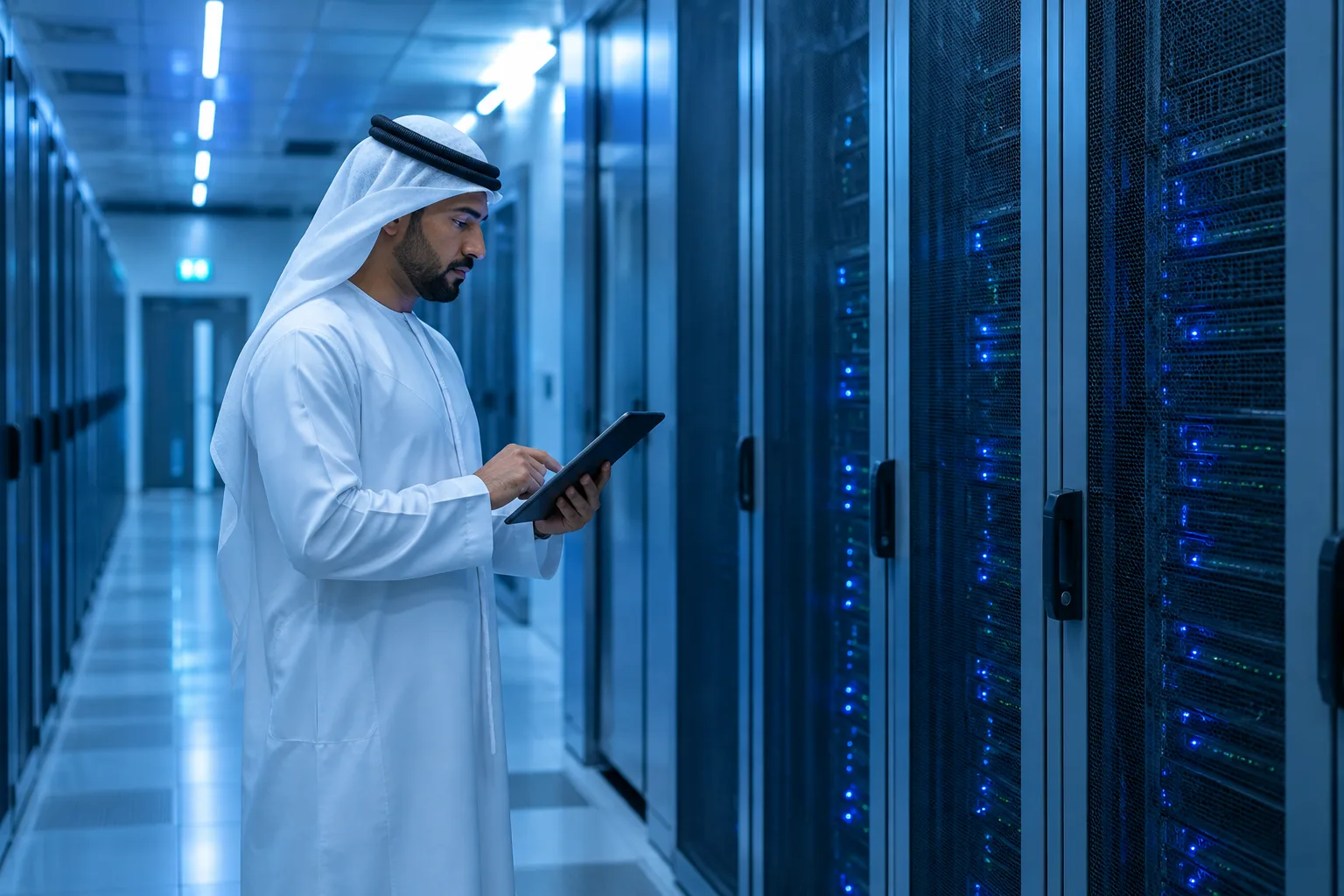

Microsoft has unveiled a Middle East framework that it says will direct more than $10 billion in capital and operating expenses into Kuwait, Qatar, Saudi Arabia and the United Arab Emirates by 2030, with another more than $400 million earmarked for subsea and terrestrial connectivity. The headline is big, but the reason it matters is more specific: after recent conflict exposed how heavily cloud customers depend on a small number of data centers and network routes, Microsoft is pitching continuity and recovery alongside AI growth.
That makes this more than another hyperscaler expansion story. The real question for CIOs, governments and regulated businesses is whether Microsoft’s plan creates materially more resilient regional infrastructure, or simply a larger footprint. For now, the answer is mixed but meaningful: the framework targets the right weak points — capacity, route diversity, sovereign controls, local cyber response and workforce readiness — yet it does not show how much new capacity will arrive in each country, when it will be available, or how services will perform under real failure conditions.
What Microsoft says the package will buy
At a United Nations General Assembly sideline roundtable in New York, Microsoft Vice Chair and President Brad Smith and Microsoft Middle East and Africa President Naim Yazbeck framed the initiative as a long-term regional buildout rather than a single data-center project. In Microsoft’s September 23 blog post, the company tied the spending to cloud and AI infrastructure, digital resilience, cybersecurity cooperation and workforce training.
That distinction matters because the more-than-$10 billion figure is not a disclosed construction budget. Microsoft is combining capital spending and operating expenses, and it has not published a country-by-country schedule, capacity target or completion timeline. Buyers therefore know the scale of the commitment, but not yet the delivery map.
The named country partners show how Microsoft is approaching the region: HUMAIN in Saudi Arabia, G42 in the UAE, QAI in Qatar and the Government of Kuwait. The package also points to public-sector and national-AI programs already underway, including TAMM in the UAE, SDAIA’s ALLaM in Saudi Arabia, TASMU in Qatar and Microsoft 365 Copilot adoption across the Government of Kuwait.
The infrastructure mechanism is broader than server count. Microsoft says it will build on SeaMeWe-6, a subsea cable system with landings in Qatar, Saudi Arabia and the UAE, alongside a global terrestrial and subsea fiber network spanning more than 275,000 miles. It is also packaging a Middle East Digital Resilience initiative, data-protection and sovereignty commitments, Sovereign Public Cloud and Sovereign Private Cloud capabilities, Project Digital Shield and dedicated Microsoft cybersecurity champions in each of the four countries.
Taken together, that is a bet that regional trust in AI infrastructure will depend as much on where workloads can fail over, who controls the data and how incidents are handled as on how many GPUs are installed.
Why the resilience pitch lands differently now
The timing is what turns this from a routine growth announcement into a testable resilience claim. As Semafor reported, AWS said in September that it would not restore one of its three UAE availability zones or its Bahrain network after damage from Iranian strikes. Whether or not customers used those specific facilities, the episode sharpened a basic point: cloud redundancy can still fail at the physical-infrastructure layer.
That is the unresolved counterexample hovering over Microsoft’s announcement. A region can be large and still fragile if customer workloads, identity systems, backup copies or network exits remain concentrated in one physical or legal location. More compute on its own does not solve that. What improves resilience is the combination of additional capacity, multiple cable and terrestrial paths, tested recovery procedures, local incident response and clear sovereignty controls for moving or containing workloads when something breaks.
This is why governments and regulated sectors are likely to read Microsoft’s package differently from a pure AI-capacity expansion. If you are a ministry, bank, healthcare provider or critical-infrastructure operator, the key question is no longer just where you can run AI workloads cheaply or quickly. It is whether those workloads can keep running when a cable landing is damaged, a partner network is unavailable, a facility is impaired or a jurisdictional boundary suddenly matters.
The practical scorecard for cloud buyers
Microsoft’s framework is credible enough to change procurement conversations now, even before the new capacity is fully visible. But it is not detailed enough to settle them.
For buyers, the useful response is to treat the announcement as a scorecard, not a guarantee. The questions that now matter most are:
- Are primary and recovery workloads separated across different physical sites and, where necessary, different legal jurisdictions?
- Has failover been tested across both availability-zone paths and cable routes, not just assumed on a diagram?
- What data-residency, access-control and sovereignty options apply to multinational workloads that cannot stay entirely inside one border?
- What recovery-time and recovery-point evidence can the provider show for the services a customer actually uses?
- What happens if a local partner, government network or landing station becomes unavailable?
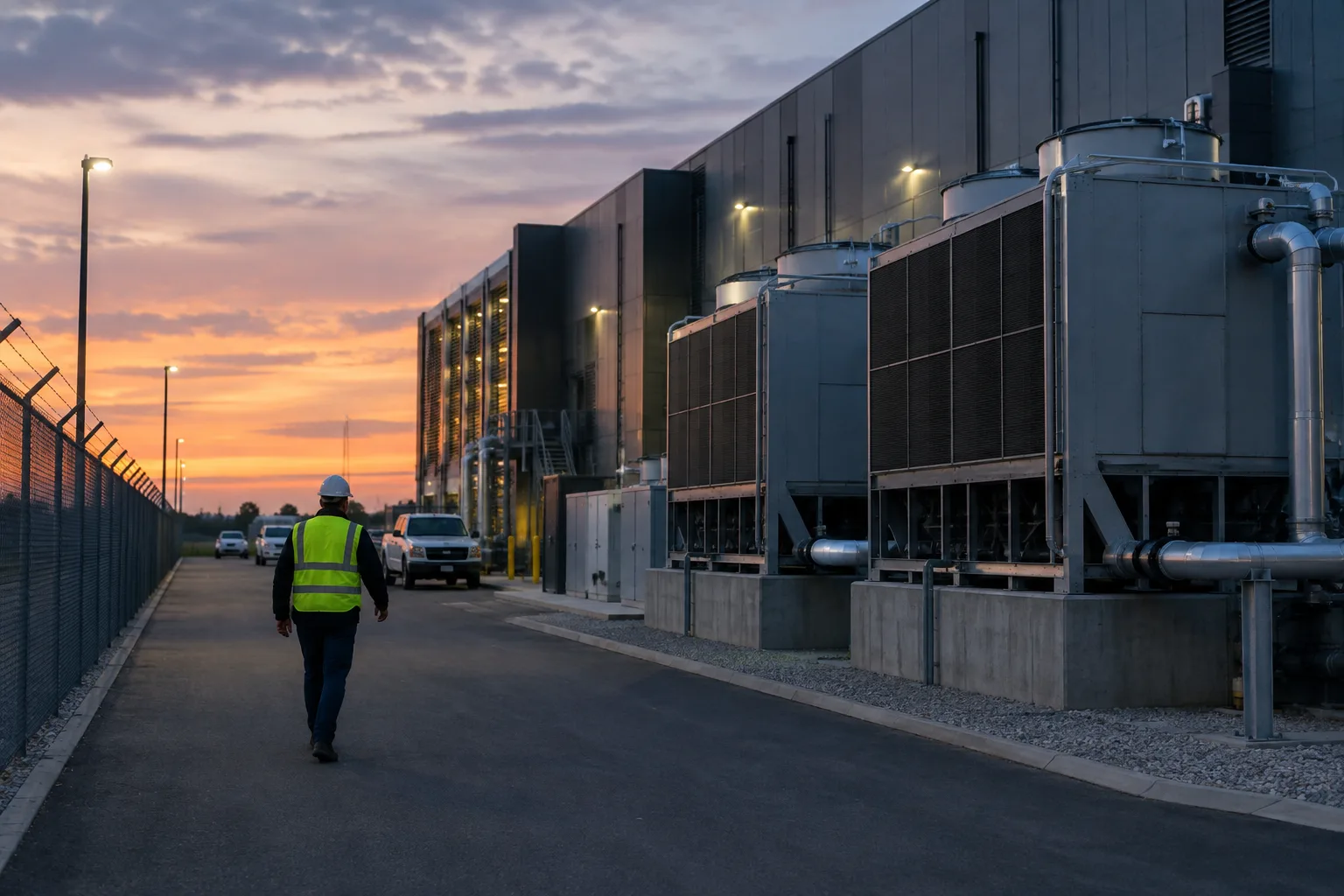
- How will new AI capacity be powered and cooled, and what does “carbon-free electricity procurement” mean in practice at those locations and times?
Those questions are especially important because Microsoft has not disclosed how much of the $10 billion is new spending versus previously planned investment, how the total divides between capex and opex, which facilities and connectivity projects are already contracted, or when customers will receive specific capabilities. The more-than-$400 million connectivity figure signals intent, not a promise that every customer will have a redundant route.
The workforce side of the package matters too, but here again the details are directional rather than dispositive. Microsoft says it will build on a commitment to help skill more than 4.2 million people across the four countries by 2030 and continue work with the Responsible AI Future Foundation, which it co-founded with G42 and the Mohamed bin Zayed University of Artificial Intelligence. Local talent is part of resilience: someone has to run the systems, secure them and adapt them under pressure. Still, a skills target is not the same thing as proven hiring outcomes or productive deployment at scale.
For investors and policymakers, the deeper issue is concentration risk. Gulf governments increasingly have the option to buy cloud, cables, sovereign controls, cybersecurity coordination and workforce programs as one package. That can accelerate national AI capability. It can also bind public services and local AI ecosystems more tightly to a single provider. So the most honest reading of Microsoft’s announcement is that it makes the company’s regional position more serious and its resilience pitch more plausible — but the hard proof will come later, in contracted infrastructure, tested failover and customer evidence that the system still works when a facility, route or partner does not.
 By
By
 By
By
 By
By

 By
By
 By
By
 By
By