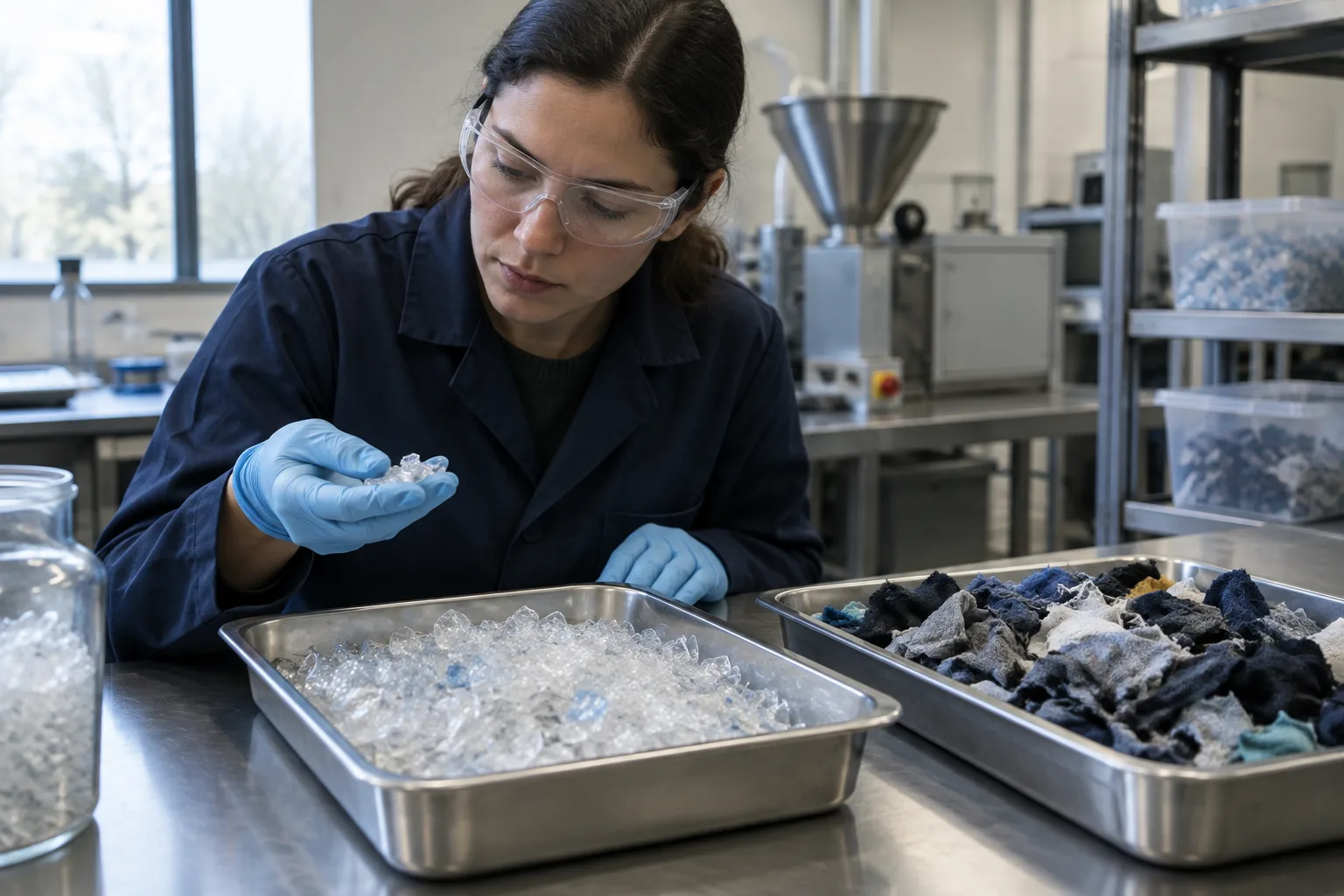

Meta has signed an unusual climate-supply-chain agreement with plastics-recycling startup MacroCycle that could help get the company’s first U.S. plant built. As reported by TechCrunch, Meta will pay for the rights to environmental attribute credits tied to emissions avoided by MacroCycle’s recycled PET output, rather than simply buying the plastic itself.
That distinction is the point. For climate hardware startups, the hardest commercial step is often not proving a process in the lab but financing a first factory before enough physical buyers are willing to sign long-term contracts. Meta’s agreement suggests a different route: monetize the environmental value of lower-carbon material now, and use that cash flow to reduce early project risk.
The practical question for buyers, investors, and other recyclers is whether this is a durable financing model for real industrial capacity or mainly a bookkeeping bridge while the underlying plant economics are still unsettled. Right now, the answer is: potentially useful, but far from self-proving.
A financing tool, not a resin order
Meta’s spokesperson told TechCrunch this is the first deal of this type the company has signed. What makes it notable is not just that a major tech company is backing a plastics-recycling startup, but how it is doing so.
This does not appear to be a conventional purchase order for physical recycled PET resin. The agreement instead assigns value to the claimed emissions benefit associated with MacroCycle’s future output. In effect, Meta is creating an advance-market signal around lower-carbon material production, even though it may never take delivery of the plastic tied to those certificates.
That can matter for project finance. A first commercial plant usually needs more than technical promise; it needs revenue visibility. If environmental attribute credits become a credible, auditable revenue stream, they can help bridge the period when a startup is still building capacity and courting physical customers. TechCrunch reported that MacroCycle is still seeking buyers for the material its first plant will produce, which makes the Meta contract more consequential than a standard sustainability announcement.
But the undisclosed terms also limit what can be concluded. The contract’s price, duration, certificate volume, verification method, and total value are not public. So while the agreement may help accelerate construction, it is impossible to tell from the available reporting whether this is a modest signal of support or a meaningful share of first-plant economics.
What MacroCycle still has to prove
MacroCycle, a three-year-old startup based in Cambridge, Massachusetts, is developing a process aimed at mixed and contaminated PET waste, including textile waste. The company says it dissolves and purifies PET with solvents rather than relying primarily on heat, then reforms the polymer through an intermediate “macrocycle” step. It also says the resulting material is indistinguishable from new plastic and that the process produces 80% fewer carbon emissions than virgin, non-recycled PET.
Those are the company’s claims, and they are commercially important ones. If true at scale, they would address a difficult corner of the recycling market: dirty or blended feedstocks that are poorly served by simpler mechanical systems. They would also speak directly to brands and manufacturers that want recycled inputs without sacrificing quality.
The problem is that the market questions sit beyond the headline. MacroCycle says its demonstration plant would produce 5,000 metric tons of recycled plastic per year, and future facilities could reach 50,000 metric tons annually. Those are planned capacities, not current operating output. The company has not publicly disclosed plant capital costs, financing sources, site, permitting status, construction schedule, commissioning date, solvent-recovery rate, electricity mix, or a full life-cycle assessment.
Those omissions matter because they determine whether the process is a viable industrial system rather than an appealing decarbonization story. A solvent-based route can look strong in concept and still struggle on energy use, solvent handling, uptime, feedstock variability, or purification yields. MacroCycle’s first plant will also need enough usable PET and textile waste under contract, not just theoretical supply.
Physical offtake is another unresolved test. The Meta agreement may help support the plant, but it does not prove that packaging companies, textile makers, or hardware suppliers will buy the resin itself at prices that compete with virgin PET or imported alternatives. That is especially relevant because MacroCycle’s stated ambition includes making recycled textiles domestically at prices competitive with overseas suppliers.
There is a broader industrial backdrop for that pitch. U.S. apparel-manufacturing employment fell 85% from 1990 to 2016, and textile-mill employment fell 76%, according to the Bureau of Labor Statistics. That decline helps explain the appeal of domestic recycling and textile-to-textile production. It does not, by itself, show that one recycling plant can rebuild a local manufacturing base or overcome the price pressure that hollowed it out.
The real test is verification
For this deal structure to scale, the accounting has to be as solid as the engineering. Environmental attribute credits are not the same as physical recycled-content delivery, and they are not automatically interchangeable with generic carbon offsets. Their credibility depends on basics that are still unknown here: the baseline against which avoided emissions are measured, who verifies the reductions, how chain of custody is defined, how certificates are retired, and whether more than one party could claim the same benefit.
Those details will determine whether Meta is helping create a new market for low-carbon materials or simply pulling a future environmental claim into the present. They will also shape how other corporate buyers respond. Supply-chain and sustainability teams at technology companies, along with packaging and textile manufacturers, will want to know whether a contract like this can sit alongside later physical resin purchases or whether it remains a standalone accounting instrument.
If the verification is rigorous and the plant performs, the second-order effect could be significant. Environmental attributes could become a repeatable bridge for climate-hardware projects whose physical offtake markets are still forming. That would matter not just for plastics, but for other industrial decarbonization technologies that need early revenue before conventional procurement catches up.
If verification is weak or operating results lag, the opposite lesson will land just as quickly: corporate climate claims can move faster than the supply chain they are supposed to support.
That is why the most important fact about the Meta-MacroCycle agreement is not that a big tech company signed a novel contract. It is that the deal turns a young recycling process into a business-model test. The next milestones are no longer just technical. They are whether a U.S. plant gets built, whether it runs, whether the resin finds paying buyers, and whether the claimed emissions benefit stands up to independent measurement.

 By
By
 By
By
 By
By
 By
By
 By
By


 By
By