
Austin’s Robotaxi Reality Check: When Ambition Meets Street-Level Variance
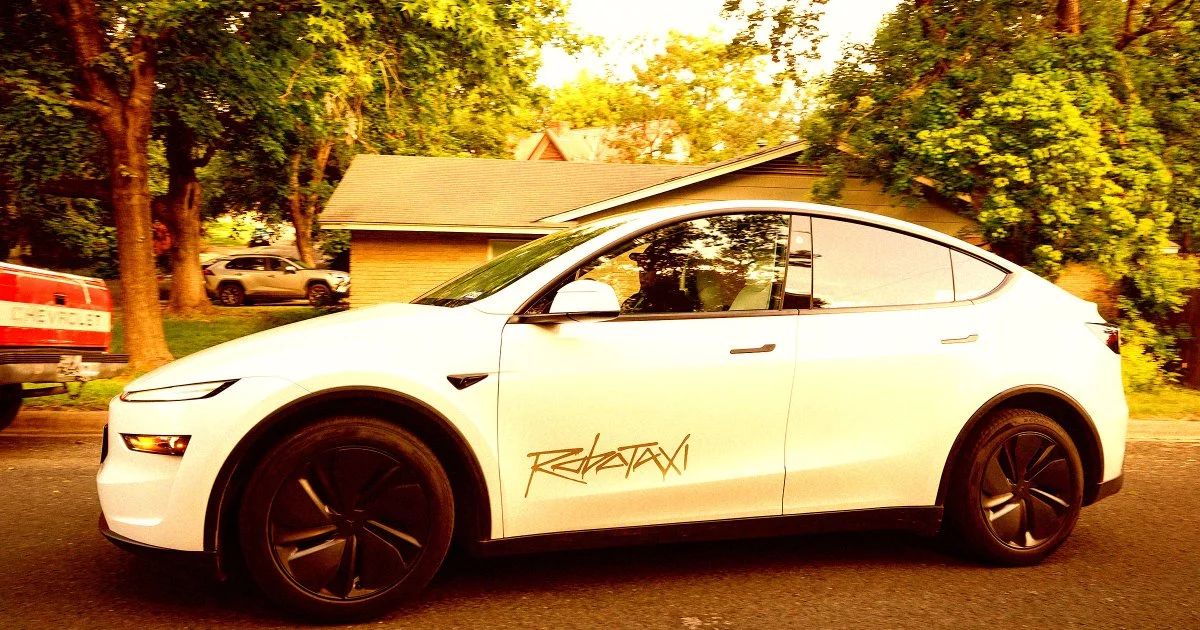
Tesla’s Robotaxi rollout was framed as a rapid step-change: more than 1,000 fully autonomous vehicles operating within months. More than a year later, the reported fleet remains under 100, and the most telling signals are not in press releases but in the lived experience of riders and the operational “tells” of a system still searching for consistency.
Accounts emerging from Austin, Texas—and amplified through social media—describe a service that can appear functional one moment and erratic the next. Riders report vehicles that hesitate at road edges, become “stuck” in traffic ambiguities, or require human intervention to resolve scenarios a human driver would treat as routine. Even when trips complete safely, the reliability gap shows up in the most commercially sensitive metric of all: time.
One widely cited example—a 2.3-mile trip—illustrates the volatility: an initial estimate of 1 hour and 6 minutes, then 16 minutes, then back to 57 minutes. For a ride-hail product, fluctuating ETAs are more than an inconvenience; they undermine the core promise of predictable urban mobility. Just as damaging are allegations of customer-support failures and a perceived reluctance to acknowledge faults publicly—an approach that can read as confidence internally, but as opacity externally, especially when the service is already under scrutiny.
Against this backdrop, the competitive contrast is stark. Waymo reports roughly 500,000 paid rides per week across ten U.S. cities, a scale that signals not only operational maturity but also a compounding advantage: more rides produce more edge-case exposure, which improves performance, which attracts more rides.
—
The Technical Tradeoffs Behind Tesla’s Autonomy Bottleneck
At the heart of Tesla’s Robotaxi challenge is a set of deliberate architectural choices—particularly its camera-first “Tesla Vision” strategy. The bet is clear: cameras are cheaper, aesthetically unobtrusive, and scalable across a consumer fleet. The cost, however, is that cameras can struggle in precisely the conditions that define dense urban driving: low light, glare, occlusion, complex intersections, and unpredictable pedestrian behavior.
Several constraints appear to be converging:
- Perception and sensor fusion limits: A camera-centric stack can be highly capable, but edge cases—construction zones, unusual vehicle postures, ambiguous lane markings—demand exceptionally robust real-time interpretation. Reports of “stuck” behavior and near-misses suggest perception uncertainty is still surfacing in live operations.
- Human intervention as a diagnostic signal: The intermittent need for safety drivers or remote assistance indicates gaps in path planning and dynamic obstacle avoidance. Even if interventions are rare, their presence matters: each intervention is a reminder that the system is not yet consistently self-sufficient.
- End-to-end ML opacity: Heavy reliance on end-to-end neural networks can accelerate capability gains, but it complicates root-cause analysis when failures occur. If engineers can’t easily isolate why the system hesitated or misread a scenario, targeted fixes can take longer, and patch cycles can become more iterative than surgical.
- Mapping and infrastructure posture: Tesla’s approach has historically leaned away from high-definition maps and geo-fenced constraints, while competitors like Waymo use them as stabilizers. Without frequent, high-fidelity mapping updates—or V2X-style infrastructure support—routing and situational context can degrade, feeding into inconsistent ETAs and suboptimal path selection.
The result is not simply a “good vs. bad” technology story; it is a story of engineering philosophy. Tesla is pursuing a generalized autonomy model that can, in theory, scale broadly. Waymo has prioritized a more conservative, geo-fenced model that can scale city-by-city with strong reliability. In the near term, the market tends to reward the approach that delivers repeatable performance.
—
Business Consequences: Brand Premium, Unit Economics, and the Waymo Benchmark
Robotaxi is not a side project; it is a strategic pillar tied to Tesla’s broader narrative around AI leadership, Full Self-Driving (FSD) monetization, and platform-like margins. Underperformance therefore carries layered risk.
Key business implications include:
- Delayed revenue recognition and margin pressure: If Robotaxi utilization remains constrained, the pathway to meaningful ride revenue and expanded FSD subscription economics slows—while R&D and capex intensity remain high.
- Brand equity exposure: Tesla’s consumer brand has historically benefited from a “future-forward” halo. Persistent reliability complaints—especially in a high-visibility market like Austin—risk turning that halo into skepticism, with spillover effects on vehicle demand and retention.
- Network effects working against Tesla (for now): Waymo’s reported 500,000 paid rides per week is not just a headline number; it is a data flywheel. More paid rides generate more operational learning under real constraints, which can widen the performance gap over time.
- Regulatory and liability escalation: High-profile incidents or near-misses can accelerate calls for stricter oversight. That raises compliance costs and could impose operational constraints. Meanwhile, unresolved questions around product liability and insurance frameworks may force Tesla to absorb disproportionate risk if incidents scale with deployment.
Capital markets are also less forgiving than they were during the peak autonomy hype cycle. With a broader tech valuation reset, investors increasingly demand operational proof—measurable safety performance, clear unit economics, and credible timelines.
—
What a Credible Reset Could Look Like: Reliability as the New Growth Strategy
If Tesla’s Robotaxi program is to regain momentum, the next phase likely needs to look less like a moonshot and more like an airline: disciplined, metrics-driven, and operationally transparent. Several strategic moves stand out as both pragmatic and reputationally stabilizing:
- Geo-fenced, stepwise expansion focused on a few well-mapped zones, optimizing for safety and on-time performance before scaling fleet size.
- Hybrid sensor architecture that revisits selective LIDAR deployment in high-risk corridors or complex downtown routes, while retaining Tesla Vision where it performs strongly.
- Simulation-driven acceleration via partnerships with high-fidelity simulation ecosystems to generate rare, high-impact edge cases without waiting for in-fleet miles to accumulate.
- Public performance reporting through a metrics dashboard—interventions per 1,000 miles, on-time pickup rate, disengagement categories—building trust with regulators, riders, and investors.
- Insurance and liability innovation with usage-based frameworks tailored to autonomous operations, clarifying risk allocation before scale forces the issue.
The Robotaxi race is increasingly defined by a simple commercial truth: riders don’t benchmark autonomy against a press event—they benchmark it against the last ride that arrived on time, took the right route, and felt safe. Tesla’s challenge now is to convert its bold autonomy thesis into that kind of repeatable, street-level reliability, because that is where market leadership is ultimately decided.

 By
By
 By
By
 By
By
 By
By