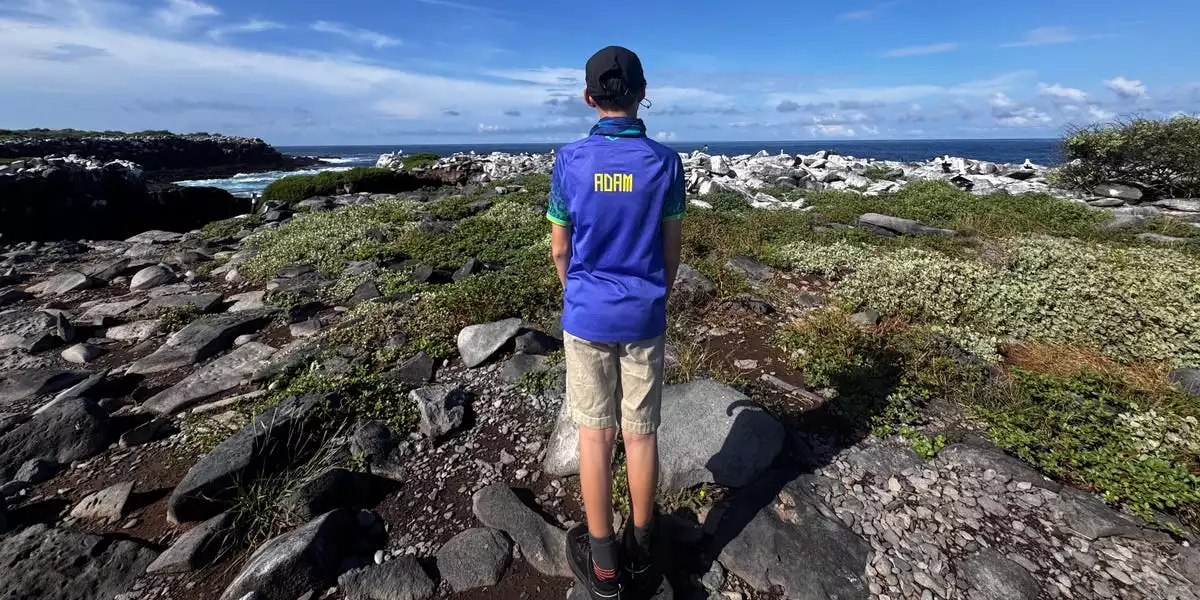

A family return to the Galápagos as a signal of where premium travel is headed
Jamie Davis Smith’s decision to revisit the Galápagos Islands—breaking a personal rule of “never return to the same place”—reads like a human-scale story with outsized relevance for the business of travel. The narrative is not simply about nostalgia; it’s about how expedition cruising is being re-engineered for a market that increasingly values *meaning*, *education*, and *measurable impact* alongside comfort and convenience.
What stands out is the shift from a youthful, awe-driven encounter with biodiversity to a deliberately designed, multigenerational travel experience. Her children’s excitement—snorkeling with marine iguanas, sea lions, and reef sharks—is paired with structured learning: naturalist-led conservation briefings and hands-on activities like cooking classes. That blend reflects a broader industry recalibration: travelers are no longer satisfied with passive sightseeing, and operators are responding by productizing immersion.
For the Galápagos—an ecologically sensitive, UNESCO-protected destination—this matters. The archipelago’s appeal is inseparable from its fragility, and the commercial opportunity increasingly depends on proving that tourism can be not only “less harmful,” but actively supportive of conservation goals. In that context, a family trip becomes a case study in how regenerative tourism is being packaged, priced, and operationalized.
Digital personalization turns expedition travel into a curated learning platform
The modern expedition cruise is evolving into something closer to a data-informed experience engine. The underlying business logic is straightforward: multigenerational groups have divergent needs—activity levels, dietary constraints, attention spans, and learning preferences—and personalization reduces friction while increasing perceived value.
Key technology-driven shifts implied by this kind of trip include:
- AI-assisted itinerary design that matches excursions to family profiles
Operators can use data-driven planning to recommend the right mix of snorkeling, beach hikes, wildlife viewing, and cultural workshops—optimizing for both safety and delight. For families, this is not a luxury feature; it’s a conversion driver.
- Mobile engagement layers that deepen on-site participation
Apps that support real-time wildlife spotting, interpretive content, and even augmented reality species identification can turn children (and adults) into active observers rather than spectators. In destinations like the Galápagos, that engagement is commercially valuable because it increases satisfaction without increasing physical footprint.
- Storytelling as a distribution advantage
Family narratives—especially those framed around learning and stewardship—perform well in direct-to-consumer channels. As travel distribution continues shifting toward social platforms and creator ecosystems, operators that can translate conservation programming into compelling, shareable moments gain an edge over traditional agent-led sales.
The strategic implication is that “education” is no longer an onboard add-on. It is becoming a core product pillar—one that supports premium pricing, repeat visitation, and brand differentiation in a crowded experiential travel market.
Sustainability technology becomes a license to operate, not a marketing accessory
In environmentally regulated destinations, sustainability is increasingly a matter of operational permission and reputational resilience. The Galápagos’ visitor caps, permits, and conservation mandates create scarcity value—but they also raise the bar for compliance and transparency. That pushes innovation onto the vessel itself and into the accounting systems behind it.
Emerging practices shaping expedition cruise competitiveness include:
- Hybrid-electric and low-carbon ship design
Investments in hybrid propulsion, solar augmentation, advanced wastewater treatment, and shore-power connectivity are not merely about emissions reduction; they reduce regulatory risk and align with traveler expectations for greener travel.
- Transparent carbon accounting and verifiable offsets
The rise of blockchain-based carbon tracking reflects a market response to skepticism around vague sustainability claims. When operators can link emissions calculations to auditable offset mechanisms—and direct funding to local conservation projects—they strengthen trust with both regulators and high-intent customers.
- Tech-enabled conservation narratives
Integrating IoT sensors, wildlife monitoring data, and guest-facing impact dashboards can convert sustainability from a promise into a measurable experience. For premium travelers, “proof” increasingly matters as much as purpose.
For the Galápagos specifically, the business model that survives long-term is likely high-yield, low-volume: fewer visitors paying more for deeper programming, smaller ecological footprints, and stronger partnerships with local institutions.
The market economics of “regenerative” tourism and the rise of revisitation strategy
The story also highlights a subtle but important commercial trend: revisitation—once seen as a failure of novelty—can be reframed as a loyalty strategy. When a destination is iconic, a second trip can be positioned as a “deeper dive,” not a repeat. That creates room for premium upsells and lifetime customer value growth.
Operators are increasingly monetizing:
- Second-visit differentiation (citizen science, nocturnal treks, research participation, advanced naturalist programming)
- Multigenerational packaging (gear, youth education tracks, flexible activity tiers, private guides)
- Ancillary services (personalized photo logs, specialized equipment, workshops that blend local culture with conservation themes)
At the macro level, rising disposable incomes in key outbound markets continue to support demand for premium expedition travel, while tightening environmental regulation raises compliance costs—favoring operators with capital to invest in cleaner vessels and stronger governance. Meanwhile, the Galápagos’ reported contribution of roughly 8–10% of Ecuador’s tourism GDP underscores the balancing act: protecting ecosystems while sustaining local livelihoods through tourism revenue, NGO partnerships, and community development.
The most durable competitive advantage may belong to companies that treat conservation education as product infrastructure, not branding—building trips where families don’t just witness biodiversity, but leave with the tools, context, and motivation to defend it. In a market increasingly shaped by accountability, that is what turns a once-in-a-lifetime destination into a long-term relationship.

 By
By
 By
By
 By
By
 By
By
 By
By


 By
By