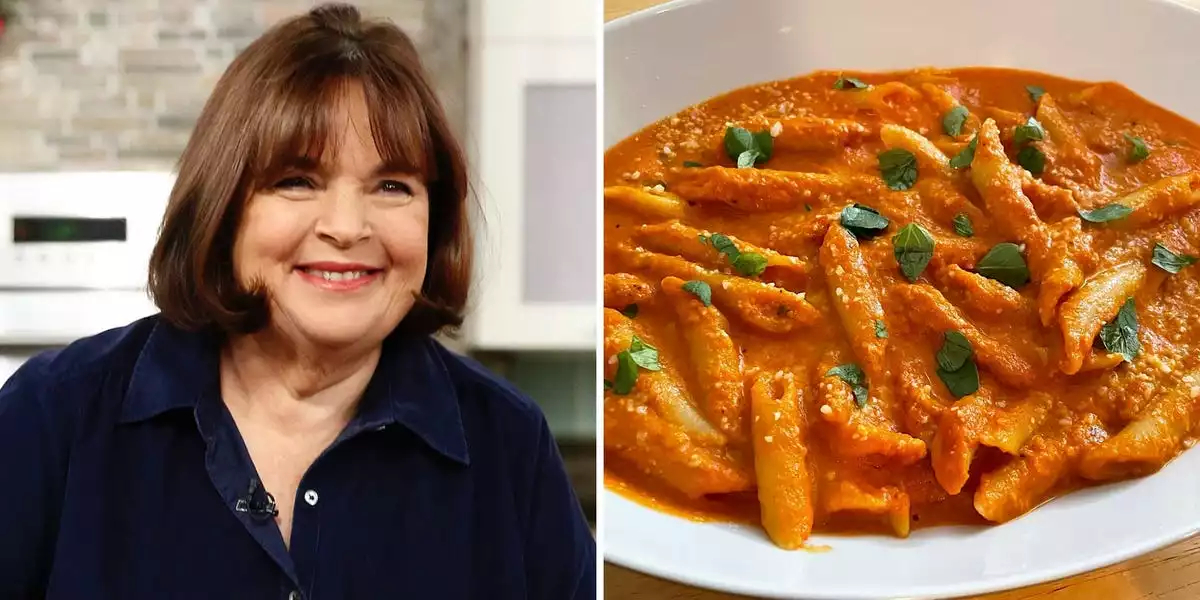

A “restaurant-worthy” pasta moment that signals a broader shift in at-home dining
Ina Garten’s penne alla vodka is being framed not merely as another dependable weeknight recipe, but as a breakout flagship within her pasta canon—one that captures a powerful consumer mood: the desire for high-impact, low-friction indulgence at home. The appeal is rooted in disciplined simplicity. A short list of familiar inputs—penne, onion, whole peeled tomatoes, garlic, vodka, cream, Parmesan, olive oil, oregano, and red pepper flakes—is transformed through a process that feels almost industrial in its repeatability: sautéing aromatics, slow-roasting tomatoes for caramelized depth, reducing vodka for aromatic lift, then emulsifying cream and cheese into a cohesive, glossy sauce.
The result—often described as a vivid orange, velvety sauce that avoids heaviness—matters beyond taste. It demonstrates how modern “signature” dishes succeed: they deliver sensory payoff (color, texture, aroma) while remaining operationally scalable for home cooks, meal kits, and even delivery-first food brands. The nod to Garten’s garlic bread pairing further reinforces the recipe’s positioning as a complete, crowd-pleasing experience—an at-home analogue to the restaurant bundle of pasta plus bread that consumers instinctively recognize as comfort and value.
Smart kitchens, AI cooking assistants, and the rise of data-driven flavor design
This recipe’s multi-stage method—roast, reduce, purée, emulsify, finish—reads like a blueprint for the next generation of voice-guided and sensor-assisted cooking. As smart kitchen adoption grows, dishes with clear phases and measurable cues become ideal candidates for natural-language cooking assistants and app-based orchestration.
Key technology implications emerge:
- Voice-activated step management (Alexa, Google Assistant): Penne alla vodka requires timing coordination (roasting vs. boiling vs. reduction). Voice interfaces can reduce cognitive load by:
– prompting stage transitions (“start pasta water now”),
– adjusting quantities for servings,
– and translating technique into accessible checkpoints (“reduce until syrupy, about X minutes”).
- AI-driven personalization and ratio optimization: The recipe’s success hinges on balancing acid (tomato), fat (cream/cheese), heat (pepper flakes), and aromatics (vodka reduction). That balance is precisely what machine learning models can learn from professionally tested recipes:
– recommending substitutions (e.g., spice tolerance, lactose constraints),
– predicting “creaminess” outcomes,
– and optimizing for nutrition without sacrificing mouthfeel.
- Cloud kitchens and virtual brands: The dish’s standardized steps and pantry-staple supply chain make it well-suited to delivery-first operations. In a cloud kitchen context, the sauce can be produced in batches with controlled consistency, while pasta finishing becomes a last-mile execution step—critical for quality retention in delivery.
The deeper story is that recipes like this are increasingly “machine-readable”: they can be decomposed into stages, variables, and sensory targets—exactly the structure that enables automation, personalization, and scalable content-to-commerce pipelines.
Ingredient economics: inflation pressure, premiumization, and new retail bundling opportunities
Behind the comfort-food narrative sits a more pragmatic reality: tomatoes, dairy, and logistics are not cost-neutral. For food operators and consumer packaged goods (CPG) players, penne alla vodka becomes a case study in how a popular recipe can amplify both opportunity and exposure.
Notable economic dynamics include:
- Dairy and tomato volatility: Cream and Parmesan are sensitive to feed costs, transportation constraints, and seasonal supply patterns. Tomatoes fluctuate with harvest variability and processing capacity. For restaurants, meal kits, and prepared-food retailers, these inputs can compress margins unless mitigated through:
– diversified sourcing,
– regional supplier partnerships,
– or selective hedging and forward contracts.
- Premiumization of at-home dining: Labeling a dish “restaurant-worthy” is not just marketing—it reflects consumer willingness to trade up on staples. That creates room for:
– premium pasta and imported tomato SKUs,
– higher-quality dairy,
– and even curated vodka tie-ins that turn a pantry recipe into an “occasion.”
- Meal kits and direct-to-consumer (DTC) leverage: A recognizable, high-satisfaction recipe can anchor premium subscription tiers. It also simplifies procurement: the ingredient list is short, repeatable, and compatible with standardized packaging—an advantage in a category where complexity drives cost.
For grocers and CPG brands, the commercial play is straightforward: convert attention into basket size through bundles—pasta + tomatoes + cream + cheese—supported by shoppable recipes and short-form video.
Brand strategy and product innovation: from content to commerce to hybrid experiences
Ina Garten’s influence illustrates a broader strategic pattern: culinary authority now functions as a platform, not just a persona. When a recipe hits cultural velocity, it becomes a launchpad for adjacent growth across retail, media, and experience.
Several strategic pathways stand out:
- Content-driven brand extension: A dish with strong recognition and repeatability can justify:
– private-label vodka tomato sauce,
– ready-to-heat pasta kits,
– or cookware collaborations designed around roasting and blending workflows.
- Social video as a conversion engine: Penne alla vodka is visually optimized for TikTok and Instagram Reels—orange sauce, steam, pour shots, finishing cheese. That makes it ideal for:
– step-by-step “cookalong” formats,
– shoppable ingredient lists,
– and interactive Q&A that keeps audiences inside owned channels longer.
- Hybrid dining and the experience economy: The recipe’s accessibility supports live and virtual formats:
– pop-up demonstration kitchens in premium grocery environments,
– cooking school modules,
– and corporate well-being programming that reframes cooking as both skill-building and stress relief.
Forward-looking innovation is likely to focus on format and shelf life—such as chilled or frozen vodka sauce using modern preservation methods (including high-pressure processing where appropriate) to extend distribution without leaning on additives. The winners will be those who treat the recipe not as static content, but as a repeatable system—one that connects discovery, personalization, purchasing, and community into a single loop.
Penne alla vodka may look like comfort food, but its trajectory reflects something more structural: the convergence of culinary craft, digital interfaces, and commerce, where a single “must-make” dish can become an engine for product strategy, supply-chain planning, and the next wave of smart-kitchen experiences.

 By
By


 By
By
 By
By
 By
By
 By
By