
Texas’ AI data-center surge meets the hard limits of the ERCOT grid
Texas has become a focal point in the global race to build AI data centers, drawn by historically business-friendly policies, abundant land, and a power market designed to reward new generation. That momentum is now colliding with a constraint that no amount of venture capital can wish away: electricity and water infrastructure scale.
The headline number is stark. More than 1,800 data-center projects reportedly sit in the ERCOT interconnection queue, implying potential demand of roughly 474 gigawatts (GW)—over five times Texas’ all-time peak load. Even if only a fraction of that pipeline materializes, the queue signals a structural shift: AI compute is no longer a marginal load that can be absorbed quietly at the edges of the system. It is becoming a grid-defining industrial demand, comparable in consequence to petrochemicals or heavy manufacturing—except it runs 24/7 and scales in step with model training cycles.
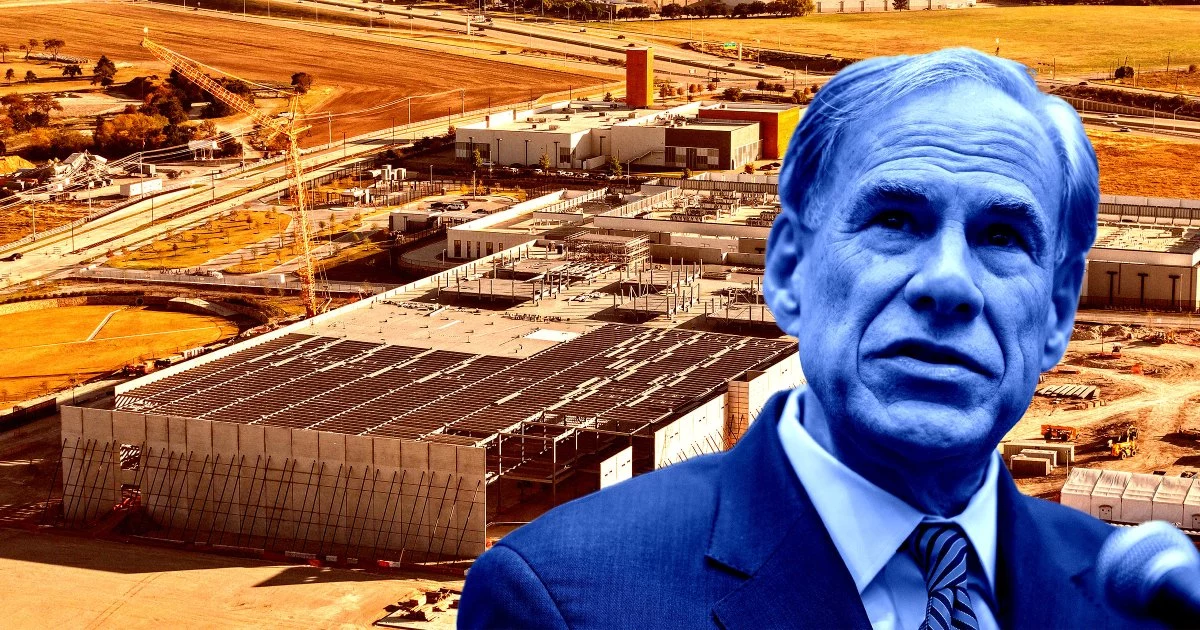
Governor Greg Abbott’s temporary moratorium on new data-center approvals is therefore less a political surprise than a systems response. Framed around “safety and quality of life,” the pause gives regulators room to audit power draw, water use, and local impacts before the next wave of permits converts speculative plans into irreversible commitments. For Texas, the immediate question is not whether AI infrastructure will grow, but whether it can grow without destabilizing ERCOT reliability—especially under the state’s extreme-weather stress tests.
Why AI workloads are different: continuous demand, extreme power density, and local bottlenecks
AI data centers are not simply larger versions of traditional enterprise facilities. They are built around GPU-heavy racks, high-speed networking, and dense cooling systems that concentrate demand into tight geographic footprints. That combination creates a new load profile with three defining characteristics:
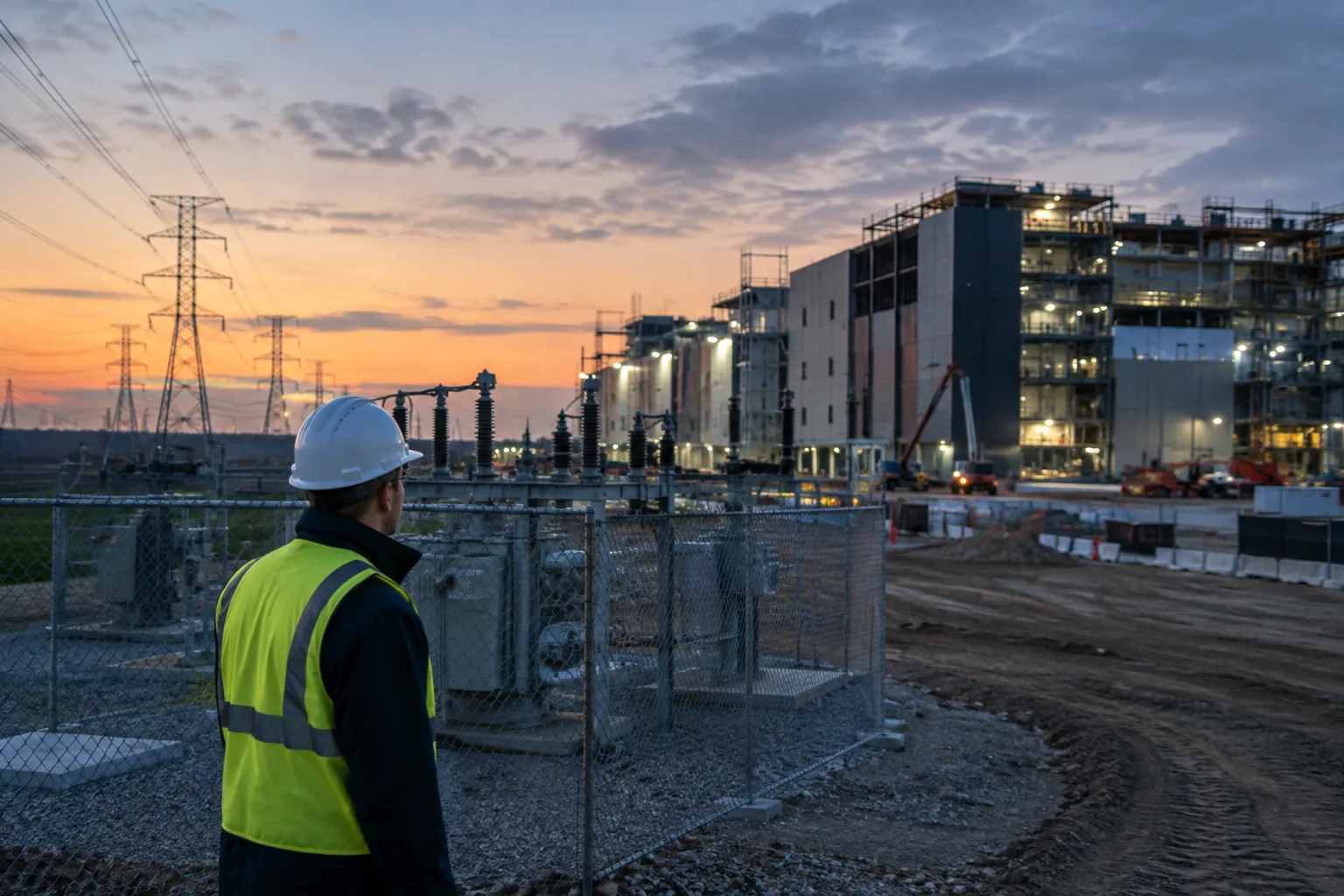
- High power density per site: Modern AI clusters can require tens to hundreds of megawatts per campus, pushing substations, feeders, and transformers to their limits.
- Near-constant utilization: Training and inference workloads often run continuously, reducing the grid’s ability to “recover” during off-peak hours.
- Localized fragility: Even if ERCOT has sufficient generation in aggregate, the limiting factor can be transmission capacity, substation availability, and distribution upgrades in specific counties or industrial corridors.
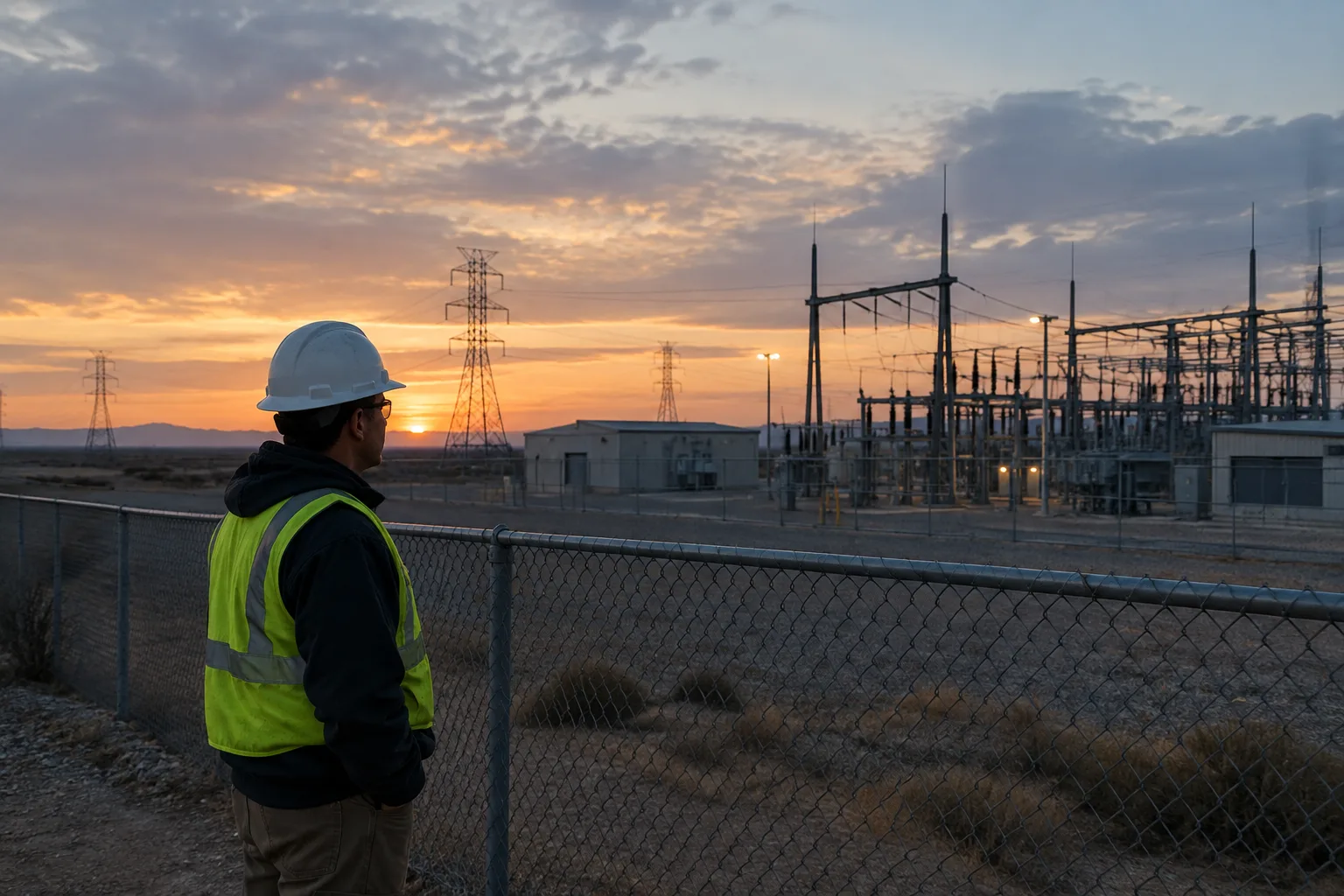
This is where the queue number matters beyond optics. Interconnection requests are not just a tally of projects; they are a proxy for future congestion, upgrade costs, and timelines. ERCOT’s network was built for more predictable growth patterns, not a sudden, clustered influx of hyperscale compute. Without accelerated investment in high-capacity transmission, substation expansion, and intelligent distribution automation, the risk shifts from theoretical to operational: localized brownouts, constrained industrial development, or higher system-wide reliability costs.
Diesel generators as a stopgap—and a flashpoint for ESG, health, and permitting
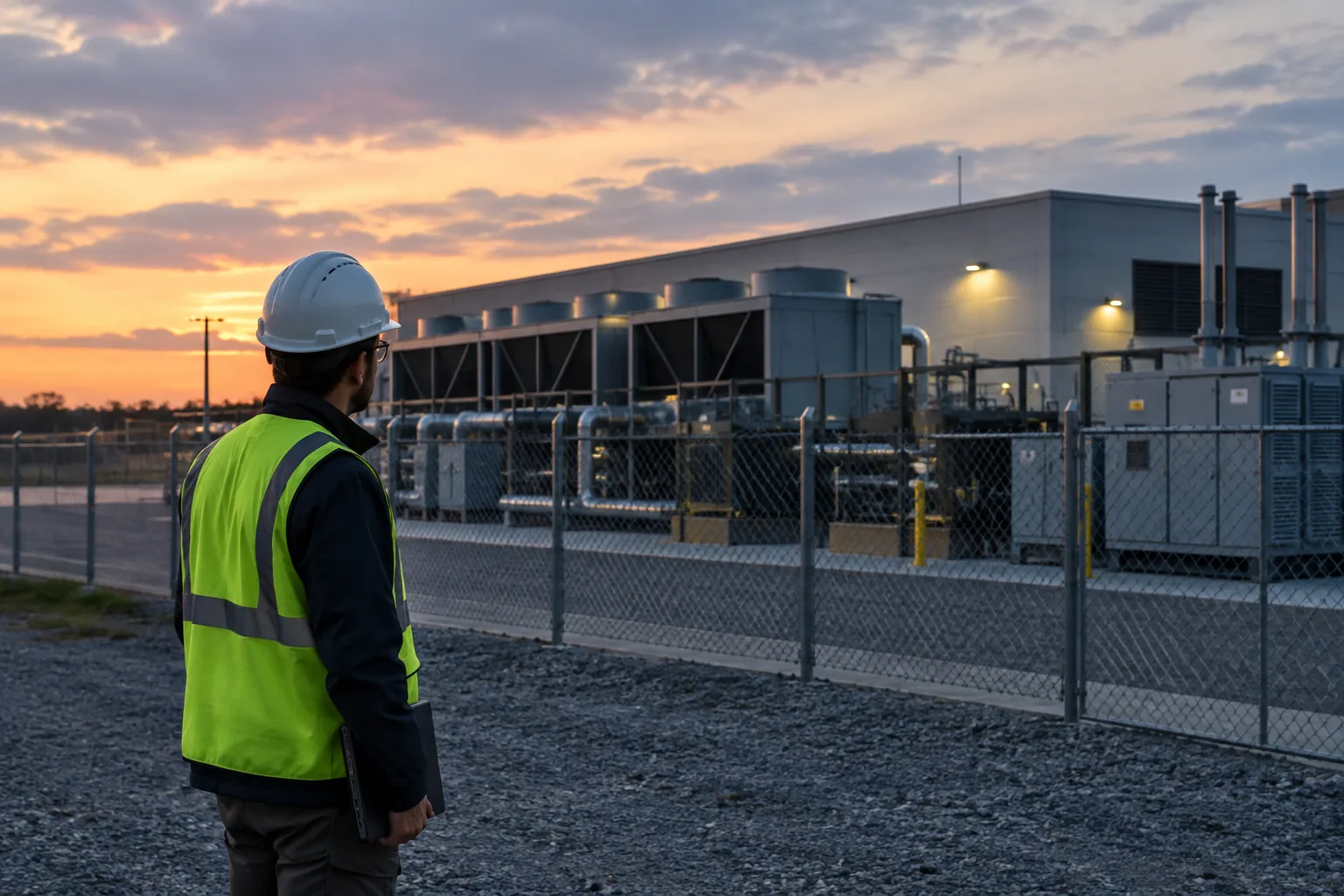
As grid constraints tighten, a growing number of facilities are leaning on on-site diesel generators to bridge capacity gaps and ensure uptime. From an operator’s perspective, diesel is familiar, dispatchable, and fast to deploy. From a public-policy perspective, it is combustible—literally and politically.
The trade-offs are increasingly difficult to ignore:
- Emissions and local air quality: Backup generation that runs more frequently than “emergency” use can elevate NOx, particulate matter, and carbon emissions, intensifying community opposition.
- Fuel logistics and resilience risk: Diesel depends on supply chains that can be disrupted during extreme weather—precisely when reliability is most critical.
- Permitting and reputational exposure: What begins as a temporary reliability measure can become a long-term operating pattern, complicating ESG reporting and inviting tighter regulation.
Alternatives exist but remain under-deployed at scale: battery energy storage systems (BESS) for peak shaving and ancillary services; fuel cells for lower-emission firm power; and solar-plus-storage or other embedded resources that reduce grid dependence. The challenge is that these solutions require coordinated market design and interconnection planning—areas where Texas’ moratorium could become a forcing function.
The political economy of AI infrastructure: growth engine or socialized cost?
Data centers bring real economic benefits—construction employment, long-lived property tax bases, and spillovers into fiber, networking, and specialized electrical contracting. Yet the backlash now building in Texas reflects a familiar pattern in infrastructure booms: benefits are concentrated, while costs can be diffuse.
Public concerns cited around the state—higher utility rates, water shortages, noise, and environmental impacts—are amplified by a governance problem: opacity. Lawmakers from both parties have criticized the sector’s limited disclosure, underscored by reports that only 28 of 377 operators responded to a state survey. When communities cannot get clear answers on electric load, cooling water withdrawal, or generator run-time, skepticism hardens into opposition—and opposition turns into permitting risk.
Texas is not alone. New York’s statewide ban on large-scale data-center expansion (March) signals that regulatory headwinds are no longer hypothetical. Across the U.S., jurisdictions are experimenting with moratoria, conditional-use permits, emissions limits, and water constraints. For hyperscalers and colocation providers, the strategic calculus is shifting: site selection is no longer just about cheap power and fast permits, but also about regulatory durability, community acceptance, and credible decarbonization pathways.
For investors, another risk emerges: asset stranding. The AI “arms race” can incentivize overbuilding ahead of proven demand or grid readiness. If compute demand plateaus, efficiency improves, or workloads migrate to regions with surplus low-carbon generation, today’s rushed projects could face underutilization and accelerated depreciation.
What Texas does next will be watched closely. The moratorium window can either become a temporary pause before business-as-usual—or the starting point for a more durable framework built on standardized reporting (power, water, PUE, emissions), third-party verification, and grid-aware development that ties project phasing to measurable transmission and generation milestones. If Texas succeeds, it may set a national template for how AI data centers scale without eroding reliability or public trust; if it fails, the regulatory tightening seen in New York may look less like an outlier and more like the new baseline for AI infrastructure everywhere.

 By
By
 By
By

 By
By

 By
By
 By
By