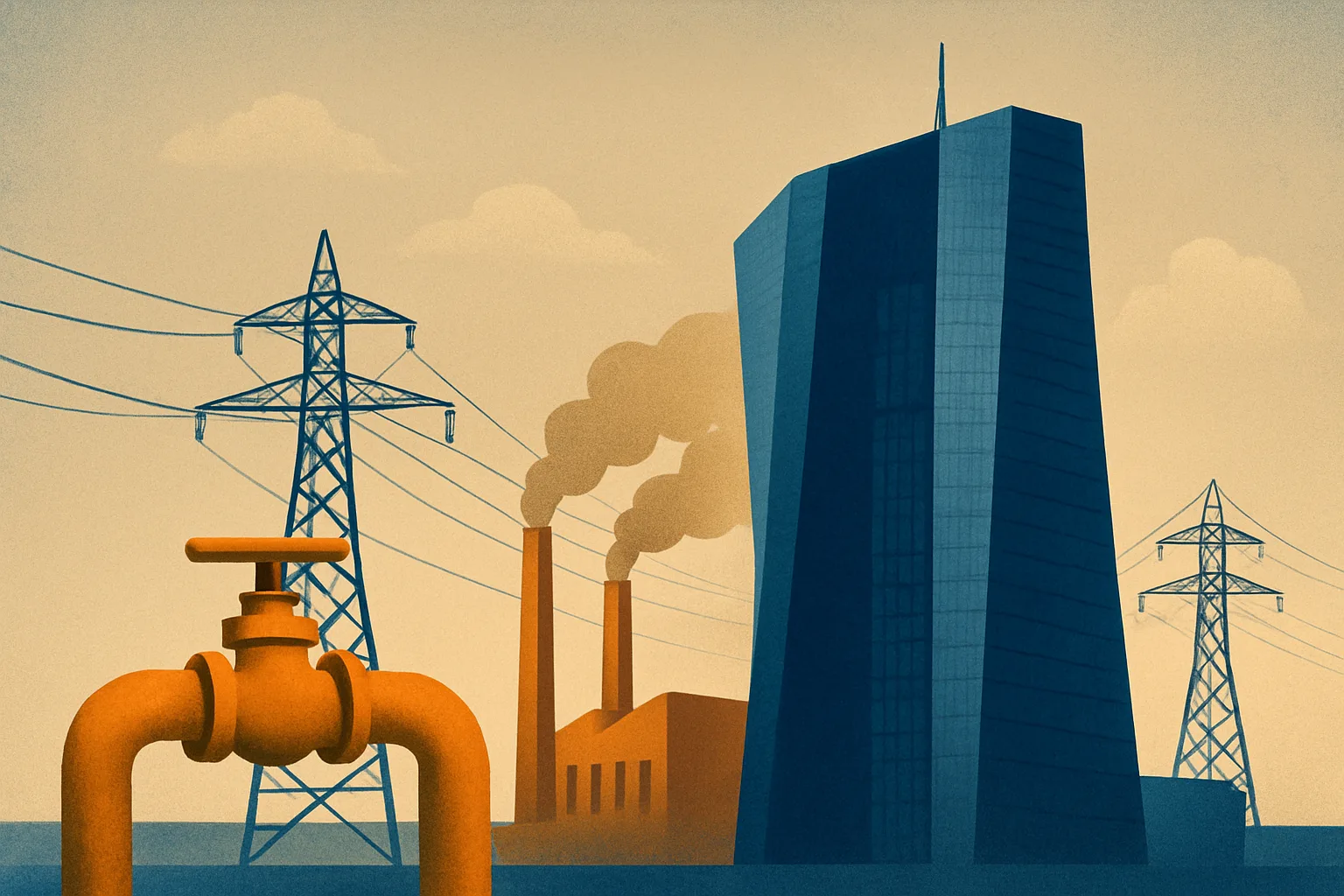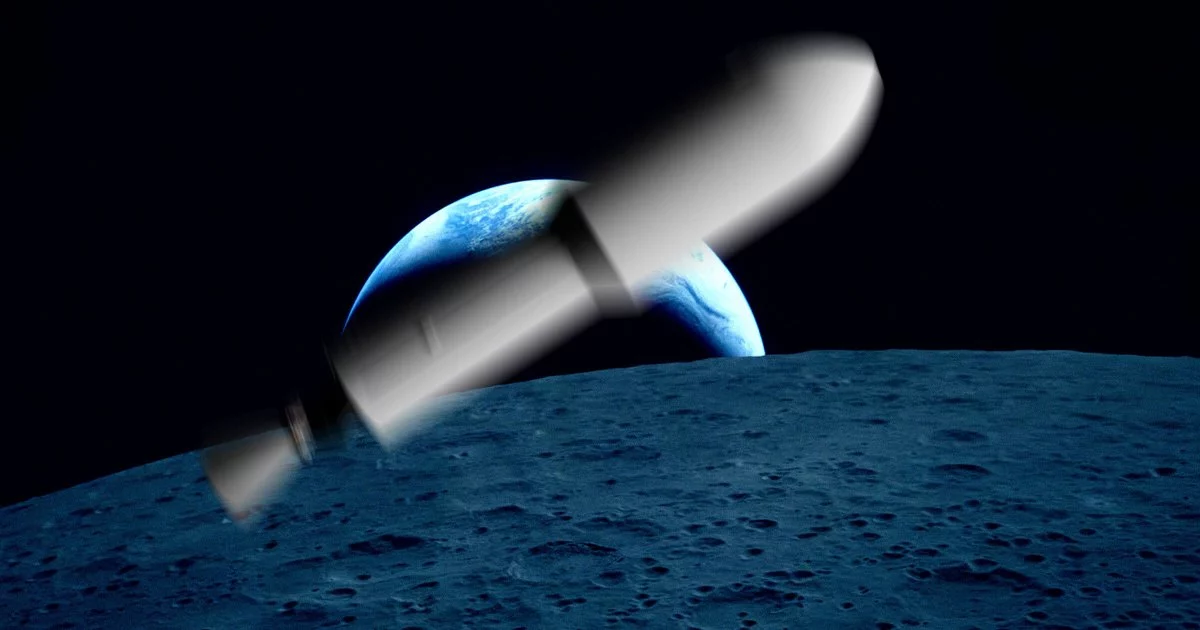

A private rocket stage meets the Moon—and exposes the governance gap in cislunar space
Astronomers confirmed that a spent SpaceX Falcon 9 upper stage, left over from a January 2025 mission, struck the lunar surface at roughly 5,400 mph, carving a crater estimated at 60–100 feet wide. In purely physical terms, the Moon absorbs impacts routinely—natural collisions occur on the order of every few days. Yet this event lands differently in the public and policy imagination because it was unplanned, human-made, and tied to a commercial launch provider operating in an increasingly crowded lunar corridor.
The stage had been tracked for more than a year after deploying payloads associated with Firefly’s Blue Ghost and ispace’s Hakuto-R landers. That long tail—hardware lingering in lunar orbit without a clear end-of-life plan—highlights a central tension in the modern space economy: commercial cadence is accelerating faster than the rules, incentives, and technical norms needed to manage shared orbital environments, including the emerging “cislunar” region between Earth and the Moon.
For business leaders and policymakers, the significance is less about the crater itself and more about what it signals: the Moon is no longer a distant destination; it is becoming an operational theater, and operational theaters require traffic rules, accountability, and infrastructure.
The collision as a scientific datapoint—and an engineering warning light
From a technology perspective, a high-velocity lunar impact offers a rare, instrumentable case study. In a near-vacuum and low gravity, crater formation and ejecta behavior differ markedly from Earth analogs. If telescopes and lunar assets capture plume signatures or reflectance changes, researchers may extract incremental insights into:
- Ejecta dispersal mechanics in low gravity
- Regolith layering and subsurface structure, inferred from plume composition and crater morphology
- Impact modeling validation, improving predictions for future missions and lunar surface operations
But the more consequential lesson is operational. The incident underscores a persistent gap in end-of-life mission engineering for stages that transit or linger near lunar orbit. Passive disposal—effectively “leave it and track it”—can become unacceptable as lunar activity scales. The engineering toolkit exists, but it must be designed in from the start:
- Dedicated deorbit or retargeting propellant margins for controlled impacts
- Small auxiliary thrusters or modular “end-of-life kits” attached to stages
- Electrodynamic tethers or momentum-exchange concepts (longer-term, higher complexity)
- Pre-planned controlled-impact corridors that minimize interference with scientific sites and future infrastructure
Equally important is the data layer. The stage was tracked successfully, reflecting advances in ground-based surveillance and the growing role of amateur and academic observers. Yet successful tracking is not the same as effective governance. The episode strengthens the case for standardized, real-time debris catalogs and data-sharing protocols that include commercial operators, civil agencies, and research networks—especially as lunar navigation and timing demands become more stringent.
Liability, insurance, and reputation: the business mechanics of “uncontrolled” lunar outcomes
As commercial lunar missions proliferate, the economic consequences of unplanned impacts are likely to be mediated less by immediate damage—there may be none—and more by liability interpretation, insurance pricing, and reputational risk.
Under the umbrella of the 1967 Outer Space Treaty and evolving UN guidelines, states remain central actors because they authorize and supervise national space activities, including commercial launches. That creates a pathway—still legally and politically complex—for questions such as:
- What constitutes harm on the Moon: physical damage, scientific interference, or environmental degradation?
- How should responsibility be allocated when an impact is foreseeable but not targeted?
- What standard of care will regulators and courts infer as lunar operations become routine?
Insurers and reinsurers rarely wait for perfect legal clarity. If uncontrolled lunar outcomes are perceived as a preventable operational risk, underwriters may push the market toward performance-linked coverage, requiring demonstrable debris-mitigation measures as a condition of favorable terms. Over time, that can raise costs for operators who treat disposal as optional—and reward those who treat it as a core reliability feature.
For SpaceX specifically, the strategic picture is nuanced. The company’s broader lunar ambitions—especially around heavy-lift economics and high-cadence logistics—depend on trust from national agencies, scientific institutions, and commercial partners. Even if the scientific impact is minor, the narrative risk is real: lunar sustainability may become a procurement criterion, not merely a public-relations preference.
A crowded Moon demands new institutions—and creates new markets
The geopolitical backdrop matters. China, Europe, India, Japan, and multiple commercial consortia are accelerating lunar programs. As more actors operate in lunar orbit and on the surface, unregulated debris becomes less a curiosity and more a systems risk—complicating navigation, increasing conjunction uncertainty, and raising the probability of politically charged incidents.
This is where governance debates begin to resemble familiar terrestrial precedents. Maritime shipping evolved from fragmented norms into enforceable environmental regimes such as MARPOL, pairing standards with certification and compliance mechanisms. A comparable “cislunar pollution” framework is no longer far-fetched, particularly as the Artemis Accords and COSPAR planetary-protection standards are pressured to address inadvertent contamination and debris accumulation beyond Earth orbit.
At the same time, regulation tends to create markets. This incident is likely to accelerate demand for:
- Cislunar traffic-management software and standardized ephemeris reporting
- On-orbit servicing and disposal services, including rendezvous, capture, and retargeting
- Modular end-of-life hardware that can be integrated into upper stages and tugs
- Verification and audit tooling that proves compliance to regulators and insurers
The deeper signal is that lunar activity is shifting from exploration to operations—and operations reward the firms that can turn sustainability into measurable performance. In the next phase of the lunar economy, the competitive edge may not belong solely to the company that can launch the most mass, but to the one that can prove—transparently and repeatedly—that it can clean up after itself while keeping the highway open for everyone else.


 By
By
 By
By

 By
By
 By
By