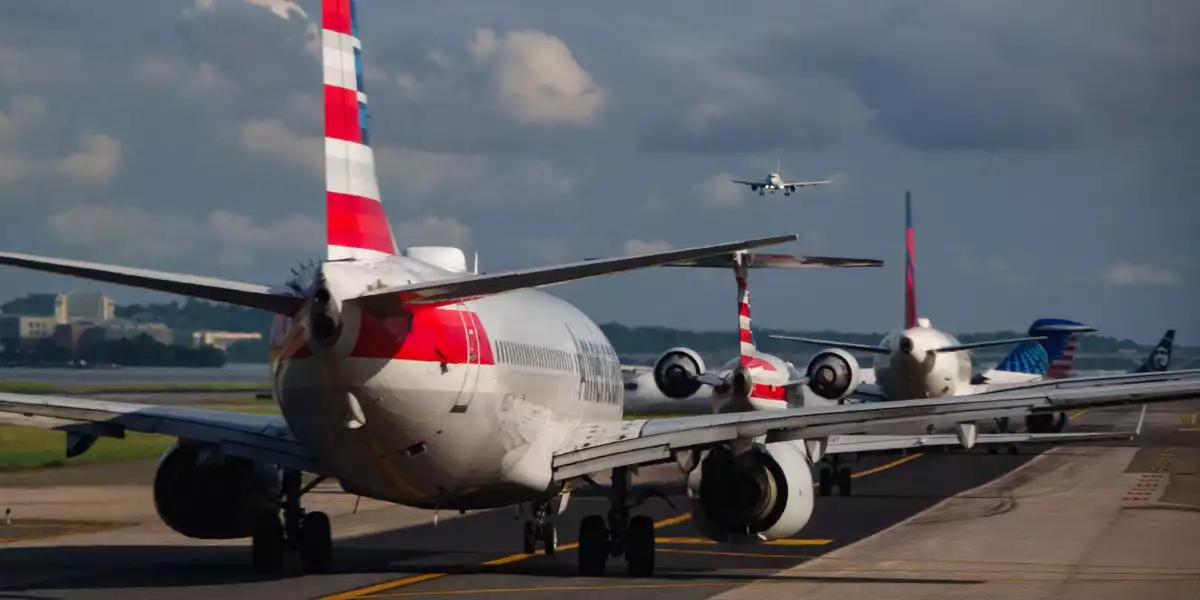

When in-flight Wi‑Fi becomes a routing decision, not a perk
SpaceX President Gwynne Shotwell’s disclosure—made during the company’s first post‑IPO earnings call—that some passengers are choosing flight itineraries based on Starlink availability marks a subtle but potentially consequential shift in commercial aviation. The most striking detail was anecdotal but telling: an unnamed airline reportedly observed travelers accepting additional layovers specifically to secure a seat on a Starlink-equipped aircraft. If borne out at scale, that behavior would represent a new kind of consumer preference in air travel—one where connectivity is not merely a comfort feature, but a primary attribute of the product.
Notably, external validation remains limited. Business Insider’s outreach to 13 partner airlines did not yield confirmations of the “extra layover for Starlink” phenomenon. Yet the absence of public corroboration does not negate the underlying signal: airlines and satellite broadband providers are converging on a new competitive frontier where reliability, bandwidth, and consistency at 30,000 feet can influence brand choice, loyalty, and yield.
For airlines, the implication is structural. In-flight connectivity has historically been uneven—slow speeds, patchy coverage, and confusing pricing. Starlink’s pitch is different: high-throughput, low-latency broadband via low-Earth orbit (LEO) satellites, marketed as a modern internet experience rather than a compromised airborne substitute. If passengers begin to treat connectivity as essential—especially business travelers, remote workers, and digitally dependent leisure travelers—then route selection, carrier preference, and even corporate travel policies could start to reflect “network quality” in the same way hotels are filtered by Wi‑Fi ratings.
Key strategic pressure points for airlines include:
- Cabin segmentation: whether to keep Wi‑Fi as a premium upsell or make it universally available to protect competitiveness
- Ancillary revenue models: how to price connectivity without eroding fare elasticity on competitive routes
- Brand positioning: whether “best connectivity” becomes a durable differentiator akin to on-time performance or seat comfort
Starlink’s airline momentum and the economics behind the headlines
SpaceX continues to expand Starlink’s aviation footprint, recently announcing a 500-aircraft deal with American Airlines, adding to existing agreements with Southwest, Virgin Atlantic, Iberia, and Aer Lingus. The scale matters: aviation connectivity is not only a revenue line, but also a high-visibility showcase for Starlink’s broader consumer proposition. Every aircraft effectively becomes a moving billboard for the idea that satellite broadband can be fast, stable, and mainstream.
Financially, the earnings picture underscores a familiar tension in capital-intensive platform plays. SpaceX reported $7.8 billion in quarterly revenue, up 92% year-over-year, while still posting a $541 million net loss. Investors rewarded the topline beat with attention, but not with sustained confidence: SpaceX shares are down roughly 30% since the June IPO, signaling market unease about the pace and magnitude of spending required to sustain growth.
That skepticism is sharpened by CEO Elon Musk’s defense of nearly $16 billion in AI infrastructure investment, alongside expansive long-range ambitions—space-based data centers, lunar factories, and the transformation of Starlink Mobile into a full-scale telecom carrier. Musk’s projection of $1 trillion in annual revenue by 2029 is the kind of forward narrative that can inspire, but it also invites a more exacting investor question: what is the credible pathway from today’s cash burn to durable profitability, especially in businesses that require continuous capex to maintain technological advantage?
For airlines, the economic calculus is more immediate. Starlink can enable:
- Higher willingness to pay among connectivity-sensitive travelers
- New loyalty levers, potentially bundling Wi‑Fi with elite status or co-branded subscriptions
- Operational benefits, including better real-time telemetry and crew connectivity (depending on airline implementation)
But airlines will also weigh vendor concentration risk, service-level guarantees, and the reputational downside of promising “fast Wi‑Fi” that fails under peak loads.
A vertically integrated telecom play—now with an AI edge
The most strategically disruptive element of the call may not be aviation at all, but the ambition to evolve Starlink into a fourth U.S. wireless carrier. That signals a pivot from being a connectivity wholesaler to becoming an orchestrator of the full telecom stack—satellites, gateways, spectrum strategy, and consumer-facing services. If Starlink Mobile matures into a broad carrier offering, incumbents could face pressure in precisely the segments where terrestrial economics are weakest: rural coverage, underserved regions, and certain enterprise and government use cases.
At the same time, SpaceX is sketching a future where AI and edge computing converge with satellite networks. The notion of space-based data centers is not merely science fiction branding; it reflects an emerging infrastructure thesis: place compute closer to the network, reduce latency, and support data-intensive workloads where terrestrial constraints—geography, power availability, or security requirements—create friction.
This convergence could open new architectures for:
- Global AI inference with distributed compute nodes
- Defense and disaster-response communications with resilient, decentralized infrastructure
- Enterprise connectivity + compute bundles, where bandwidth and processing are sold as an integrated service
Yet it also raises regulatory and governance questions. A Starlink expansion into terrestrial-style mobile service would invite deeper scrutiny from the FCC and global spectrum regulators, while a denser LEO environment intensifies competition for orbital slots, ground station capacity, and dynamic spectrum sharing.
What to watch as connectivity becomes a product category in travel and telecom
Shotwell’s passenger anecdote may prove to be an early indicator rather than a statistically established trend, but it aligns with a broader reality: consumers increasingly treat connectivity as foundational infrastructure, not an optional add-on. If airlines begin competing on broadband quality the way they compete on schedule and price, travel search and booking could evolve to surface connectivity as a first-class filter—reshaping how carriers allocate aircraft, market routes, and design loyalty programs.
Meanwhile, capital markets appear to be applying a more stringent rubric to high-capex technology platforms: growth is necessary, but not sufficient. SpaceX’s revenue surge alongside continued losses, heavy AI spending, and ambitious multi-decade bets creates a valuation environment where execution discipline matters as much as vision.
If Starlink succeeds in turning airborne connectivity into a passenger decision driver—and then leverages that brand halo into mobile telecom and AI-adjacent infrastructure—SpaceX won’t just be selling internet in the sky. It will be attempting to redefine how connectivity, compute, and mobility are packaged, regulated, and monetized across the global economy.

 By
By
 By
By
 By
By

 By
By
 By
By

 By
By