
A charting hit meets a new kind of authorship crisis
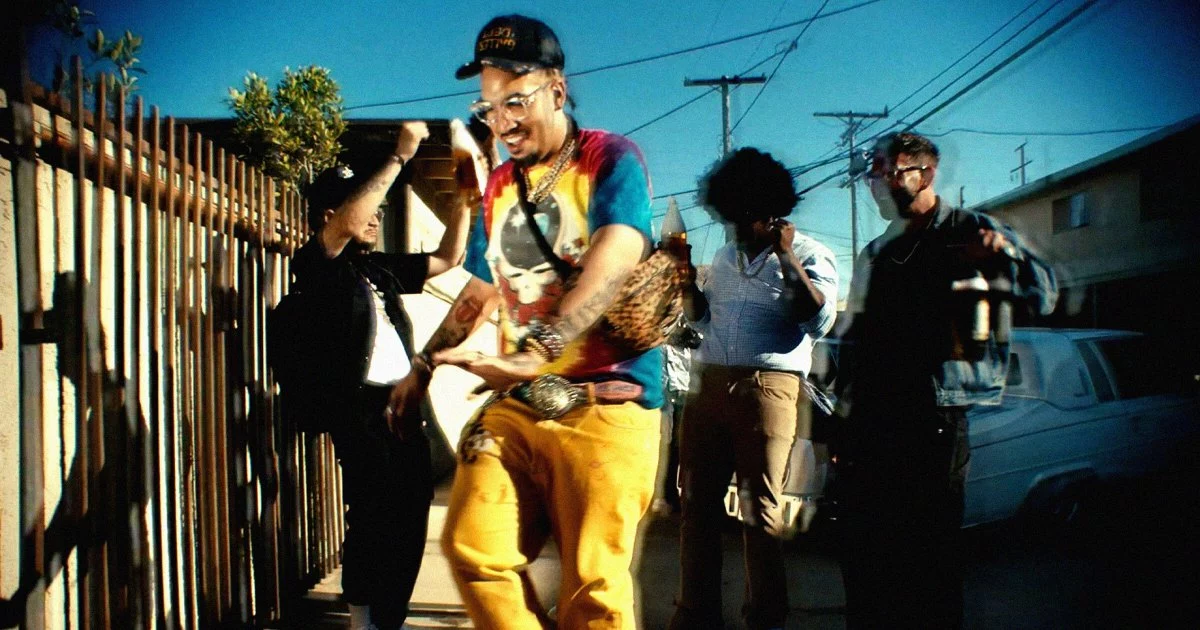
Fenix Flexin’s “Rubberz” is, on its face, a familiar summer narrative: a Los Angeles rapper lands a breakout moment as the track climbs to No. 58 on the Billboard Hot 100. Yet the song’s ascent has been accompanied by a more modern storyline—one that sits at the intersection of generative AI music, creative identity, and the fragile economics of streaming-era fame.
The controversy is not rooted in a single smoking gun, but in a constellation of signals that, taken together, have proven difficult to ignore. Fans and peers point to uncharacteristic vocal choices—notably high notes and a British accent—paired with a stylistic pivot into 1980s synth-pop textures that some listeners argue feels less like evolution and more like algorithmic pastiche. Live appearances have added fuel: lip-sync mishaps and performance inconsistencies have been interpreted as circumstantial evidence that the recorded vocal may not be fully human-performed, or at least not fully performed by the credited artist.
On the technical side, producer Medasin and outlets including The Verge have highlighted audio artifacts often associated with AI-generated music pipelines: brittle hi-hats, low-bitrate chorus elements, and unnatural reverb tails that can emerge when a model’s output is post-processed to sound “radio-ready.” A leaked session file referencing “Sonauto”—reported as a recent alias for a known AI music engine—intensified scrutiny. Fenix Flexin’s subsequent Pro Tools demo, intended to rebut the claims, has not settled the debate; skeptics argue that a session can be staged or reconstructed after the fact.
Crucially, no definitive forensic proof has been published. But the episode illustrates how, in 2026’s attention economy, credibility is not decided solely in courtrooms or label boardrooms—it is negotiated in public, in real time, with technical breadcrumbs and social consensus shaping the outcome.
The technology behind the suspicion: why AI provenance is so hard to prove
“Rubberz” has become a case study in the authenticity vs. innovation trade-off now facing the music business. Generative audio models can approximate mid-tier production quality at a fraction of the time and cost, and they can do so across genres with startling fluency. That versatility is precisely what makes provenance disputes so thorny: the more capable the tools become, the less “obvious” their fingerprints are.
Detection, meanwhile, is an arms race. Current approaches often rely on spectral and statistical anomalies—patterns such as:
- Quantization noise that doesn’t match typical recording chains
- Unnatural formant transitions in vocals (especially during expressive runs)
- Over-smoothed transients or oddly consistent dynamics
- Reverb behavior that feels spatially incoherent across stems
Yet these signals can be masked through conventional post-production: EQ, saturation, transient shaping, re-amping, and stem-level mixing can all reduce detectability. The alleged “Sonauto” reference underscores another complication: AI engines can rebrand, fork, or be wrapped in new interfaces, making attribution harder for outsiders and even for industry partners.
This is not merely a technical parlor game. If AI can convincingly “wear” an artist’s persona—tone, cadence, stylistic signatures—then the industry’s traditional assumptions about authorship, performance, and originality begin to blur. The question shifts from “Is this good?” to “Who made this, and what does ‘made’ mean now?”
The business stakes: cost disruption, royalties, and brand equity in the AI music era
The economic implications extend far beyond one track’s chart position. Generative AI threatens to reshape the cost structure of music production, potentially cutting budgets by up to 70% in workflows that previously required session players, engineers, and multiple studio days. For labels, that efficiency is tempting—particularly in a market where streaming payouts often reward volume and consistency more than craft.
But the savings come with new liabilities, especially around rights management and revenue allocation. Today’s royalty frameworks are not designed to cleanly distribute value among:
- The credited artist and their label
- The AI tool or model developer
- Potential contributors embedded in training data (where licensing is disputed or unclear)
Without widely accepted standards, the industry risks a surge of micro-litigation: small claims multiplied at scale, with reputational damage often arriving faster than legal clarity.
Just as important is the strategic question of market differentiation. If AI-generated tracks can flood catalogs, authenticity itself becomes a competitive asset. A plausible near-term outcome is a two-tier market:
- “Human-certified” releases positioned as premium, culturally meaningful, and scarcity-driven
- Commoditized AI-forward releases optimized for playlists, mood listening, and high-volume consumption
“Rubberz” sits uncomfortably in the middle—commercially successful enough to matter, yet critically “lukewarm” enough that the authorship debate becomes part of the product’s identity rather than a footnote.
What industry leaders will take from “Rubberz”: governance, disclosure, and the next creative workforce
For executives, managers, and platform operators, the most instructive element of the Fenix Flexin episode is the speed at which trust can erode when authenticity is questioned. Crisis response in the AI era is no longer just PR; it is a hybrid discipline combining communications, digital forensics, and metadata governance.
Several strategic trajectories are now coming into focus:
- Disclosure pressure on platforms: Spotify, YouTube, and others may face growing calls to require AI-use tagging in metadata—akin to labeling regimes in other industries. Early, transparent adopters could gain trust and reduce backlash risk.
- Audit trails as a competitive advantage: AI-music startups that can provide robust provenance—model lineage, prompt logs, stem histories, rights integrations—will be better positioned for label partnerships than “black box” generators.
- New roles and reskilling: The labor market may bifurcate between displaced session professionals and a rising class of AI-augmentation specialists—prompt engineers, model tuners, and training-data curators responsible for licensing hygiene and sonic quality control.
- Blockchain-backed provenance experiments: Permissioned ledgers that store track metadata and model hashes could offer immutable records, borrowing from authentication playbooks in luxury goods and supply-chain compliance.
The “Rubberz” controversy ultimately signals a broader recalibration: the industry is moving from debating whether AI belongs in music to negotiating how it is disclosed, governed, and monetized. The next phase won’t be defined by whether generative tools can make hits—they already can—but by which stakeholders can build durable trust frameworks around them while keeping creativity, compensation, and accountability aligned.

 By
By
 By
By

 By
By
 By
By
 By
By

 By
By