
A standout quarter signals Disney’s pivot from “streaming service” to “entertainment operating system”
Disney’s latest quarter reads like a company leaning into its structural advantages rather than fighting the last war of subscriber counts. Revenue rose 7% and adjusted diluted EPS climbed 28%, a performance CEO Josh D’Amaro attributes to the enduring pull of Disney’s storytelling engine—franchises that travel fluidly across theaters, streaming, consumer products, and theme parks.
What stands out is not only the financial beat, but the strategic posture behind it: Disney is framing its future less as a battle for attention inside a crowded streaming grid and more as a bid to become a daily-use destination—a place where fandom is not merely consumed, but continuously expressed through play, shopping, sharing, and personalized discovery. In a market defined by subscription fatigue and price sensitivity, the company is effectively arguing that the next growth curve will come from fan lifetime value, not just monthly subscriptions.
This is a familiar arc in consumer technology: platforms that win tend to reduce friction between adjacent behaviors. Disney’s advantage is that those behaviors—watching, buying, visiting, collecting, and role-playing—are already native to its brand.
Disney+ “super app” ambitions: convergence of streaming, games, commerce, and social discovery
The headline strategic move is D’Amaro’s plan for a Disney+ “super app” by spring 2027, integrating gaming, e-commerce, personalization, and curated TikTok content. If executed well, it would reposition Disney+ from a content library into a holistic entertainment ecosystem—closer in spirit to the “everything app” model seen in Asia (e.g., WeChat) and to Western attempts at lifestyle hubs (e.g., Amazon’s expansion beyond retail).
The economic logic is straightforward: a super app can expand ARPU by layering revenue streams that don’t depend on adding more shows. The operational logic is harder: convergence only works when the user experience feels seamless and the data layer is coherent.
Key implications for Disney’s platform strategy include:
- Platform convergence as differentiation
– Embedding games and commerce directly into Disney+ creates a “closed loop” where content drives transactions and transactions reinforce content affinity.
– This shifts Disney from competing purely with streamers to competing with ecosystem players—Netflix’s content-plus-games strategy and Apple’s services-plus-hardware flywheel.
- Curated TikTok integration as a Gen Z acquisition channel
– Bringing social-native formats into Disney+ could broaden reach and open advertising or sponsorship opportunities.
– More strategically, it hints at a new development pipeline: spotting trends and creators on social platforms, then scaling them into premium IP.
- Personalization as the glue
– The super-app model rises or falls on personalization that feels helpful rather than intrusive—recommendations, commerce suggestions, and game prompts that respect context.
– This requires robust identity, consent, and cross-service data integration—areas where execution risk is substantial.
The opportunity is to make Disney+ a “front door” to the entire company. The risk is fragmentation: if games, shopping, and social clips feel bolted on, the product could become noisy, undermining the very engagement it aims to deepen.
AI as a creative co-pilot: productivity gains without brand dilution
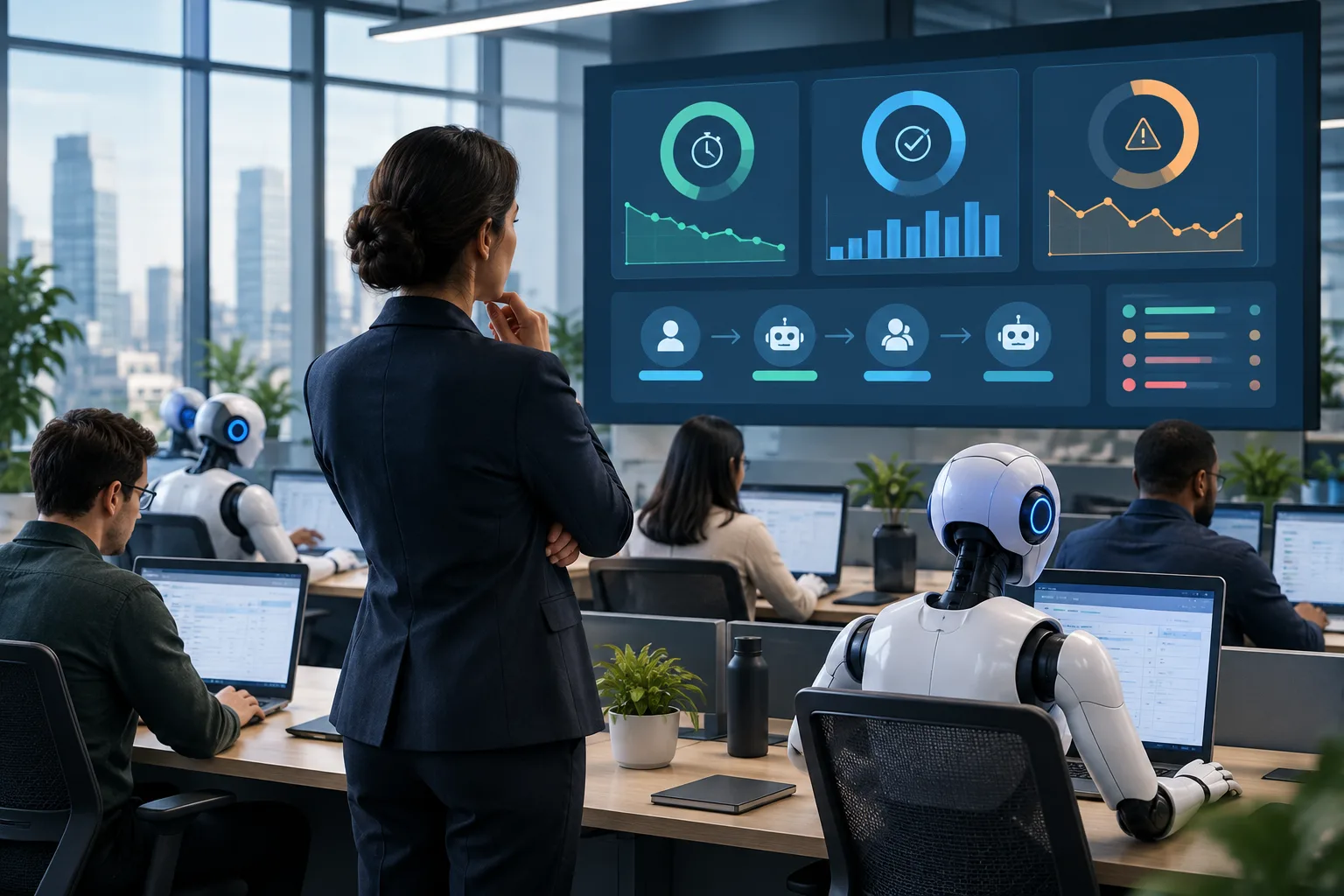
Disney’s stated intent to use AI to augment creativity rather than replace human storytellers is both a cultural signal and a brand-protection strategy. In an industry where algorithmic content generation is often framed as a cost-cutting lever, Disney is emphasizing stewardship: the idea that the “Disney feel” is not easily automated without eroding trust.
Practically, AI can still deliver meaningful leverage across the value chain:
- Creative development and production
– Script analysis, storyboarding support, localization workflows, and VFX pipeline acceleration can reduce cycle times while keeping creative control human-led.
- Discovery and personalization
– Better recommendations can increase watch time and reduce churn—especially important as streaming audiences become more selective.
- Operational intelligence
– Forecasting demand for merchandise tied to releases, optimizing marketing spend, and improving park capacity planning.
This approach also raises governance questions that will matter to regulators, creators, and consumers alike: data privacy, IP protection, and transparency about AI’s role in production. For Disney, the reputational downside of missteps is higher than for a pure-tech studio, making policy and guardrails a competitive necessity, not a compliance afterthought.
Parks, box office, and franchise flywheels: the physical-digital feedback loop tightens
While the super-app narrative is digital-first, Disney’s quarter also underscores the resilience of its physical experiences. Theme-park attendance and bookings are up, with a reported 4% uptick in attendance and higher per-capita spending on food, lodging, and premium add-ons—an important signal amid inflationary pressure and cautious discretionary spending.
At the same time, theatrical performance remains a force multiplier. Releases such as Toy Story 5 and Spider-Man: Brand New Day exceeding box-office expectations reinforce the central Disney thesis: franchise IP scales best when it is orchestrated across channels, not siloed.
The most strategically potent element is the emerging feedback loop between physical and digital:
- Parks can become acquisition engines for the super app via in-park perks, QR-triggered experiences, and loyalty-linked benefits.
- The app can, in turn, personalize park planning, merchandise offers, and content recommendations based on real behavior—tightening the bond between fandom and spending.
- Gaming inside Disney+ could evolve into narrative-driven virtual experiences that extend franchises between releases, functioning as a low-friction “metaverse-lite” layer without requiring new hardware adoption.
Disney is effectively building a model where each business line is not merely additive, but catalytic. If the company can deliver a super app that feels coherent, govern AI in a way that protects creative integrity, and keep parks and franchises firing, it won’t just be reporting strong quarters—it will be redefining what a modern entertainment company looks like when storytelling, technology, and commerce are designed to reinforce one another at scale.

 By
By
 By
By
 By
By
 By
By
 By
By
 By
By

 By
By