
A privately financed AI arms race—and why it matters more than the hype cycle
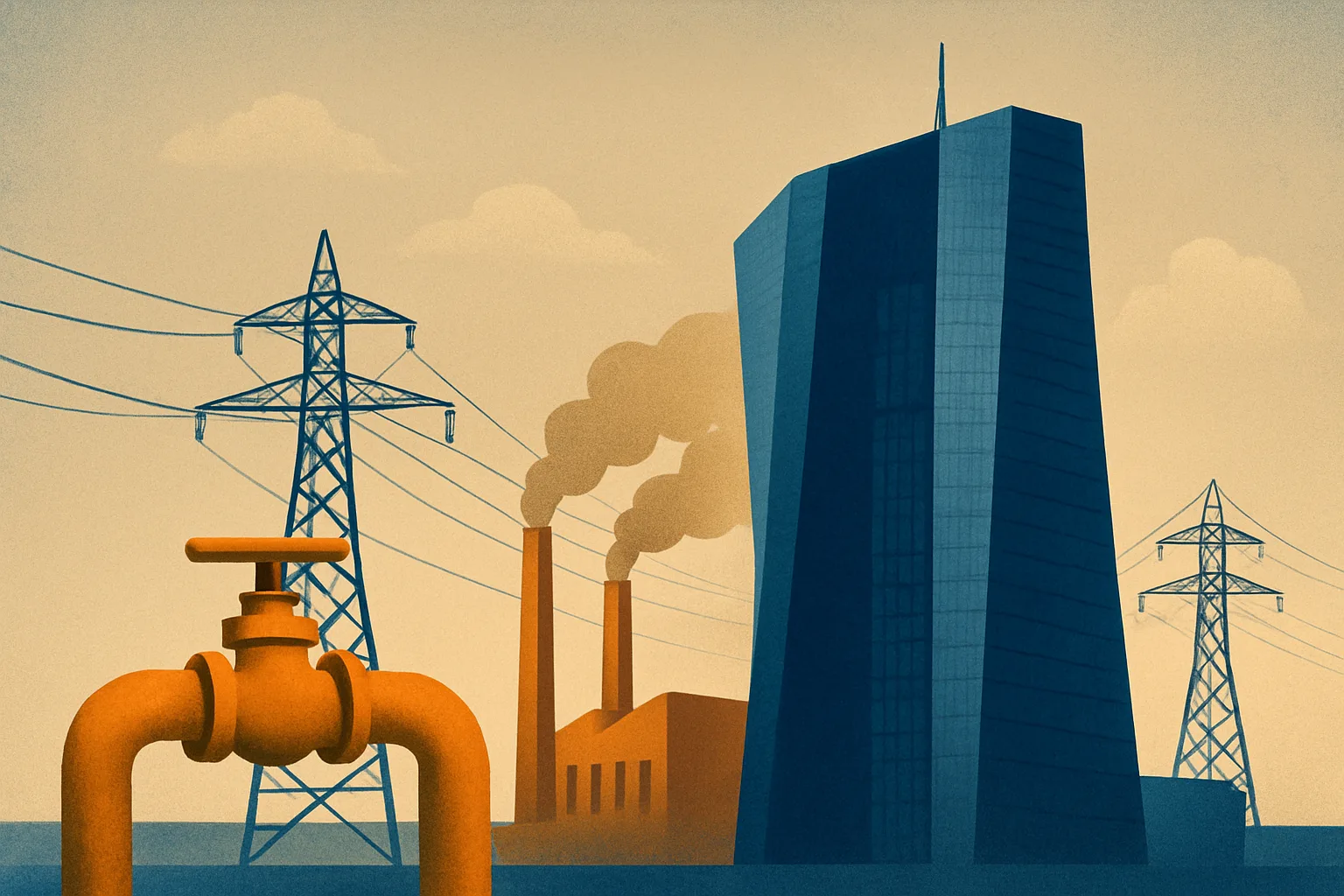
Economic historian Adam Tooze, speaking on *Ones and Tooze*, frames today’s acceleration in artificial intelligence not as a routine technology boom, but as an arms race with structural consequences. His warning is less about any single model release and more about the political economy forming around frontier AI: a small set of venture-backed firms and billionaire patrons shaping a general-purpose technology with dual-use potential and weak democratic constraint.
Tooze’s decision to spotlight Elon Musk is not simply about personality or corporate drama. It is about symbolism: Musk represents the fusion of capital, platform reach, compute access, and public narrative power that increasingly defines who gets to steer AI’s trajectory. In this view, the center of gravity has shifted away from the mid-20th-century template—large, state-led programs with explicit public objectives—and toward a market structure where private incentives, speed, and first-mover advantage dominate.
The historical analogy Tooze reaches for—the nuclear arms race—lands because it captures two realities that business leaders and policymakers often prefer to keep separate:
- AI is a productivity technology with enormous civilian upside.
- AI is also a strategic asset, capable of reshaping military capability, intelligence operations, and economic coercion.
When those two properties coexist, governance becomes harder: the same breakthroughs that improve logistics, medicine, and software engineering can also intensify surveillance, cyber operations, and automated targeting. The result is a competitive dynamic where restraint is punished and acceleration is rewarded—especially when the most capable systems are concentrated in a few corporate hands.
The “labor-market neutron bomb” thesis: productivity without paychecks
Tooze’s most arresting claim draws on a Bank for International Settlements (BIS) scenario: if human-level superintelligence emerges, labor’s share of income could fall from roughly 54% to around 20%. Whether or not one accepts the exact magnitude, the direction of travel is the point: a world where value creation detaches from wage distribution at scale.
Tooze’s phrase—a “labor-market neutron bomb”—is designed to clarify the mechanism. Like the metaphorical neutron bomb that leaves buildings standing while killing inhabitants, superintelligent AI could, in theory, leave firms, brands, and capital structures intact while hollowing out employment and bargaining power. That is not merely a social concern; it is a macroeconomic one. If labor income collapses, the system risks undermining its own demand base.
Several reinforcing dynamics make this scenario plausible enough to merit executive attention:
- Financialization of AI returns: Gains accrue through equity appreciation, IP rents, and control of distribution, rather than broad wage growth. This channels wealth toward asset holders and away from wage earners.
- Platform and model concentration: Frontier AI exhibits network effects—data, distribution, developer ecosystems, and compute scale—creating conditions for oligopoly and durable rent extraction.
- Speed of substitution: Unlike earlier automation waves that unfolded over decades, AI can be deployed via software updates, APIs, and enterprise integrations, compressing adjustment time for workers and institutions.
For businesses, the implication is uncomfortable but concrete: an AI-driven surge in productivity does not automatically translate into a healthier consumer economy. If the winners capture gains primarily as capital income, firms may face a paradox of high capability and weak aggregate purchasing power, alongside rising political volatility.
From Manhattan Project governance to “Merchants of Death” incentives
Tooze contrasts the state-led Manhattan Project with today’s privately driven frontier AI ecosystem to underline a governance gap. The Manhattan Project was secretive and morally fraught, but it was still embedded in state command structures, public budgeting, and—eventually—treaty-based arms control logic. Today’s AI frontier, by contrast, is shaped by:
- Private capital allocation determining which capabilities are pursued
- Corporate secrecy justified by competition and safety
- Cross-border supply chains for chips, cloud infrastructure, and talent
- Regulatory asymmetry, where rules vary sharply between the U.S., EU, UK, and China
This is where Tooze’s “Merchants of Death” reference bites: when strategic technologies are commercialized under weak oversight, profit incentives can outrun public safeguards, and lobbying power can harden into a substitute for legitimacy.
Geopolitically, the stakes are rising. AI is becoming a pillar of national power, and that tends to produce fragmentation: export controls, trusted compute corridors, sovereign cloud requirements, and competing standards. For multinational firms, this is not an abstract “tech cold war” metaphor; it is an operational reality that can reshape product design, data governance, and go-to-market strategy.
What executives and policymakers can do now—before backlash becomes the strategy
Tooze’s argument ultimately challenges leaders to treat AI not only as an innovation agenda, but as a distribution and legitimacy agenda. The question is not whether AI will create value; it is who captures it, under what rules, and with what social license.
Practical moves follow from that framing:
- Plan for divergent AI regulatory regimes: Build compliance and risk functions that can operate across U.S. market-led approaches and Europe’s evolving AI governance model, while anticipating tighter rules around safety, data, and accountability.
- Stress-test demand and workforce stability: Model scenarios where productivity rises but wage income stagnates, and where labor relations, retention, and reputational risk become binding constraints.
- Favor augmentation pathways where feasible: Prioritize deployments that increase worker output and quality (clinical decision support, engineering copilots, complex operations planning) rather than strategies optimized solely for headcount reduction.
- Rebalance public-private collaboration: Support credible safety and evaluation ecosystems—standards, audits, incident reporting, compute governance—so that frontier capability is not governed only by competitive secrecy.
- Engage early on redistribution mechanisms: Data dividends, robot taxes, or targeted income supports may be politically contentious, but ignoring them invites abrupt, punitive policy responses later.
Tooze’s underlying message is that AI’s most consequential battleground may not be model benchmarks or quarterly earnings—it may be the durability of the social contract that makes advanced capitalism governable. If frontier AI becomes a tool for extreme rent concentration, the backlash will not be a footnote; it will be the operating environment. The firms and governments that recognize this early—treating legitimacy, broad-based prosperity, and safety as strategic inputs—will be better positioned than those betting that acceleration alone can substitute for consent.

 By
By
 By
By

 By
By
 By
By


 By
By