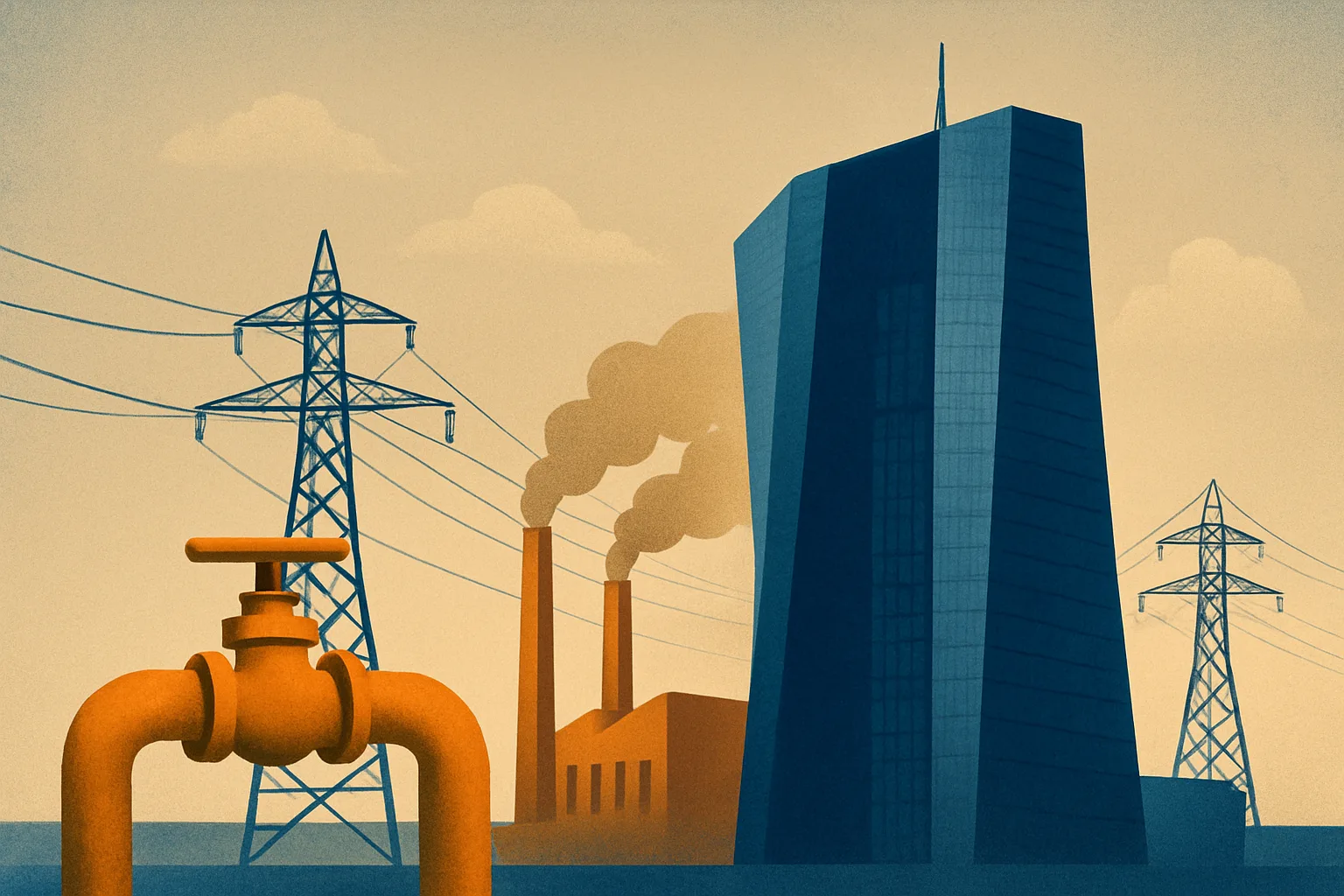

A measurable cooling of America’s AI mood—despite rising AI literacy
The latest Bentley University–Gallup polling points to a notable shift in the U.S. public’s relationship with artificial intelligence in 2026: not a rejection rooted in ignorance, but a skepticism emerging alongside greater familiarity. The share of Americans who say AI does “more harm than good” has climbed to 39% (up from 31% in 2025), while only 9% believe AI is more beneficial than harmful. At the same time, 70% now describe themselves as somewhat or extremely knowledgeable about AI—an upward trend that, on its face, should have supported adoption.
That paradox is the story. As AI moves from novelty to infrastructure—embedded in workplaces, classrooms, creative tools, and public services—public opinion appears to be shifting from curiosity and experimentation toward risk assessment and accountability demands. In practical terms, the U.S. is entering a phase where AI’s “social license to operate” is no longer assumed; it must be earned, repeatedly, and in public.
Several forces likely converge here:
- Experience replacing abstraction: As more people encounter AI-generated content, automated decisions, and workplace tooling, the debate becomes less theoretical and more personal.
- A maturing narrative beyond hype: The public conversation is increasingly shaped by concerns about bias, error rates, opacity, and misuse, rather than only productivity gains.
- Trust becoming the bottleneck: The question is less “Can AI do this?” and more “Should it—and under what rules, disclosures, and safeguards?”
For business and technology leaders, this is not merely a reputational issue. It is a market signal that adoption curves may flatten in certain consumer and professional segments unless governance, transparency, and tangible benefits become more visible than the risks.
Creative authenticity, labor anxiety, and the emerging stigma of AI assistance
One of the most culturally charged fronts in this shift is the creative economy. As generative AI becomes more capable at mimicking styles and producing passable outputs at scale, it collides with deeply held norms about authorship, originality, and earned craft. The result is not only legal friction around intellectual property, but also social friction—where AI use can be interpreted as shortcutting, devaluing human labor, or blurring authenticity.
This matters because creative industries often function as cultural bellwethers. When writers, designers, musicians, and filmmakers debate AI, they are also shaping broader public expectations about what “ethical use” looks like. That debate is likely to intensify around several pressure points:
- Provenance and disclosure: Growing demand for clear labeling of AI-assisted work, especially in commercial media and advertising.
- Creative labor arbitrage: Anxiety that AI enables cheaper, faster production that undercuts human professionals—raising questions about fair compensation and market dilution.
- Rights and training data legitimacy: Continued scrutiny over whether models were trained on copyrighted works without consent, and what remedies are appropriate.
For product teams and platform operators, the strategic implication is straightforward: ethics features are becoming product features. Tools that can demonstrate content provenance, enable opt-out/consent frameworks, and support human-in-the-loop workflows may gain an advantage as customers seek both efficiency and legitimacy.
Data centers become the visible “cost” of AI—and communities are pushing back
If generative AI is the cultural flashpoint, data centers are becoming the physical one. A separate Politico survey finds that 41% of Americans oppose building data centers within three miles of their homes, up sharply from 28% in January, and overall support for data center construction has dropped by 13% in six months. This is a critical development: it translates abstract concerns about AI into concrete local politics—zoning meetings, permitting battles, and community campaigns.
Opposition is often less about the concept of “AI” and more about its perceived externalities:
- Energy demand and grid strain, particularly in regions already facing capacity constraints
- Water usage for cooling, a sensitive issue amid drought risk and climate volatility
- Noise, land use, and local disruption, including construction impacts and perceived changes to community character
- Skepticism about local benefits, especially if job creation is limited relative to footprint
This “infrastructure visibility” changes the economics of scaling AI. If permitting timelines lengthen and siting becomes politically contentious, capacity expansion becomes more expensive and less predictable. That can ripple into cloud pricing, enterprise AI roadmaps, and even regional competitiveness for digital investment.
Expect a stronger push toward:
- Renewable-powered and higher-efficiency data centers, with measurable reporting
- Modular builds and distributed architectures, including edge computing where feasible
- Community benefit agreements, tying projects to local jobs, tax transparency, and environmental commitments
- More sophisticated stakeholder engagement, treating communities as partners rather than obstacles
What this inflection point means for capital, regulation, and competitive strategy
The combined polling signals a broader transition: AI is moving from a product cycle to a governance cycle. As skepticism rises, investors, regulators, and customers are likely to demand clearer proof that AI growth is compatible with social expectations and environmental constraints.
Three strategic implications stand out.
First, capital expenditure and compliance costs may rise. If data center opposition hardens into zoning restrictions or stricter environmental review, companies should anticipate higher CapEx, longer lead times, and increased spending on community relations and impact mitigation.
Second, investor scrutiny will shift from “growth at all costs” to “growth with controls.” AI startups and infrastructure-heavy players may face tougher questions about:
- ESG alignment (energy sourcing, water stewardship, lifecycle emissions)
- Model governance (auditing, bias testing, safety evaluations)
- Data practices (consent, security, provenance, and legal exposure)
Third, labor market dynamics may rebalance rather than simply automate. If adoption slows in sensitive domains, some roles may see a temporary reprieve. Meanwhile, demand should increase for AI safety engineers, model auditors, ethicists, compliance leaders, and community-liaison roles—a talent shift that favors organizations building durable governance capabilities, not just rapid prototypes.
The deeper message in the 2026 sentiment downturn is not that Americans are “anti-AI.” It is that the public is increasingly pro-accountability—and that accountability now spans the full stack: from training data and creative legitimacy to energy use, local permitting, and the everyday trustworthiness of automated decisions. The next phase of AI leadership will belong to the companies that can make their systems not only powerful, but legible, responsible, and socially sustainable at scale.

 By
By
 By
By
 By
By

 By
By


 By
By