
The 13th Amendment’s “punishment” exception and the architecture of modern prison labor
The ratification of the 13th Amendment in 1865 is widely understood as the legal end of slavery in the United States. Less commonly confronted—yet central to today’s debate—is the clause that preserved involuntary labor “except as a punishment for crime.” That exception has functioned for more than 150 years as a durable legal foundation for prison labor programs that operate outside many of the wage and workplace protections that govern the broader economy.
Over time, prison labor has evolved from post–Civil War industrial production into a diversified, state-linked workforce supplying both public agencies and private-sector partners. Corrections departments and prison-industry entities often set compensation and conditions through internal policy rather than through the labor standards that apply in conventional employment. The result is a structurally distinct labor market—one where minimum wage statutes, collective bargaining norms, and many worker protections are frequently absent or limited.
This is not merely a historical footnote. It is a live governance issue at the intersection of constitutional design, labor economics, and corporate accountability—one that becomes especially consequential when prison labor is embedded in food supply chains and other sectors where public trust and safety are paramount.
An $11 billion shadow workforce: cost arbitrage, competitive distortion, and corporate incentives
The scale of prison labor is no longer marginal. Estimates indicate that prison labor produced $11 billion in goods in 2022, spanning agriculture, manufacturing, and services. The economic logic is straightforward: prison labor can deliver dramatically lower labor costs than the prevailing market, particularly in labor-intensive industries where margins are tight and wage pressures are persistent.
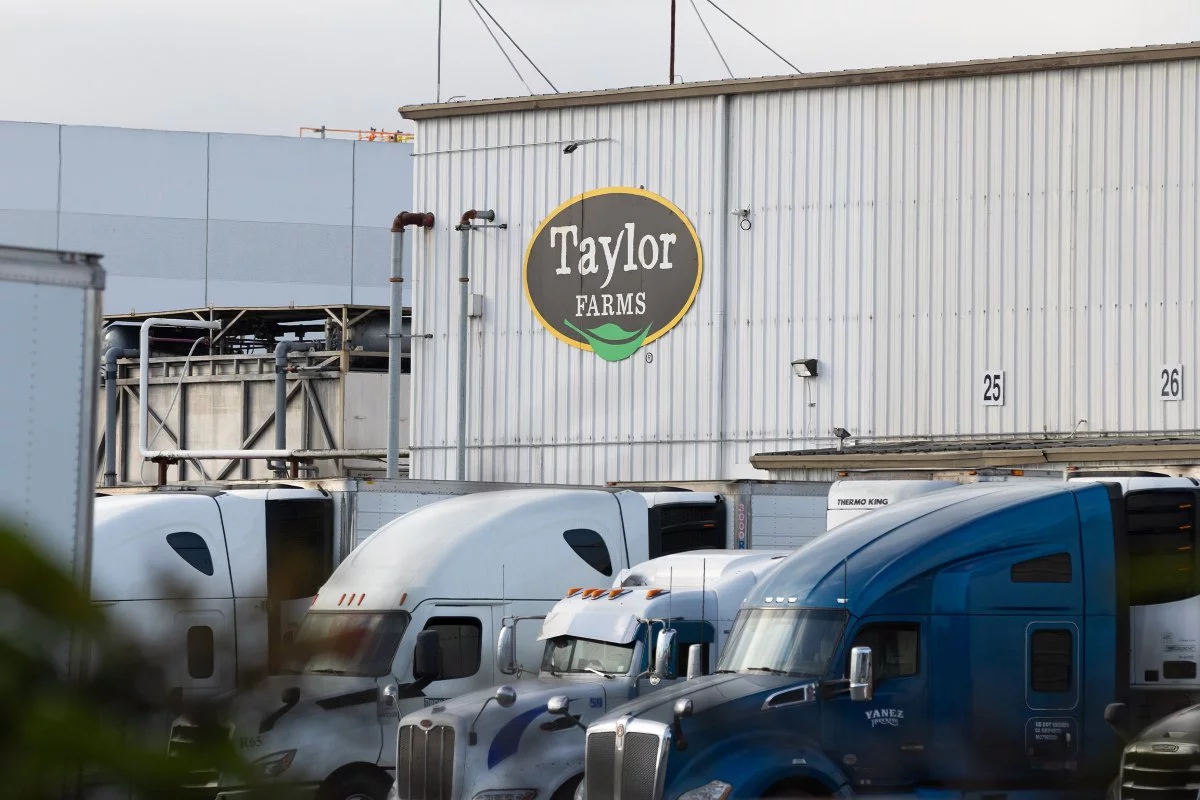
The recent scrutiny surrounding Taylor Farms, a major produce supplier, illustrates how these arrangements can surface in high-visibility ways. Reporting has pointed to the use of incarcerated workers contracted through Arizona Correctional Industries, with wages cited as low as $4.75 per hour, while incarcerated workers themselves may be capped at $1.50—levels far below federal minimum wage standards in the conventional labor market. For companies, the arithmetic can be compelling: a 70–90% reduction in labor costs compared with typical hourly rates, especially in processing and packaging roles.
Yet the same cost advantage can reshape markets in ways that are difficult to reconcile with fair competition and long-term productivity:
- Competitive distortion: Firms using prison labor may gain an outsized cost advantage over competitors that pay market wages, potentially pressuring the sector toward a race-to-the-bottom dynamic.
- Wage stagnation spillovers: When a low-cost labor pool is available, incentives to raise wages for non-incarcerated workers can weaken, particularly in regions with limited labor mobility.
- Delayed automation investment: Cheap labor can reduce the urgency to invest in mechanization, robotics, and AI-enabled quality control—technologies that may be essential for resilience and safety in the long run.
For executives and investors, the strategic question is no longer whether prison labor exists, but whether reliance on it is compatible with modern ESG expectations, supply-chain governance, and brand risk tolerance.
Food safety meets labor governance: what the cyclospora episode signals about operational risk
The probe’s focus on Taylor Farms is sharpened by the reputational and operational fallout of a cyclospora outbreak linked to contaminated shredded lettuce. Foodborne illness investigations are complex, and contamination can occur at multiple points—from field conditions to wash systems to handling and packaging. Still, outbreaks tend to expose the weakest links in a system designed for speed, volume, and cost efficiency.
When labor is sourced through correctional programs—particularly at very low wages—companies face heightened scrutiny around whether workers receive adequate training, whether safety protocols are consistently followed, and whether operational incentives unintentionally encourage corner-cutting. Even absent intentional misconduct, the combination of high throughput, tight margins, and fragmented accountability can degrade compliance.
Two structural challenges stand out:
- Traceability opacity: Multi-tiered produce supply chains can delay root-cause identification, amplifying consumer harm and extending reputational damage across growers, processors, and retail partners.
- Underutilized technology: Tools such as IoT environmental monitoring, automated sanitation verification, and secure-ledger provenance systems can improve detection and accountability—but adoption often lags in cost-sensitive segments.
For the food industry, the lesson is not that prison labor inherently causes contamination, but that labor governance and food safety are operationally entangled. When a workforce is structurally disempowered and compensation is disconnected from market norms, companies must work harder—not less—to demonstrate rigorous training, oversight, and accountability.
Human-rights due diligence, ICE detention dynamics, and the next wave of corporate exposure
Perhaps the most ethically and politically charged dimension is the reported presence of non-citizens detained by ICE among incarcerated workers—individuals for whom prison status may become the only legal basis for employment. This convergence of immigration enforcement and prison labor creates a uniquely fraught incentive structure: work opportunities exist, but within conditions shaped by confinement, constrained choice, and limited bargaining power.
From a corporate risk perspective, the direction of travel is clear. Human-rights due diligence expectations are tightening globally, and prison labor—especially when it resembles coercion or lacks wage parity—can trigger scrutiny under:
- ESG and human-rights frameworks used by institutional investors and major procurement organizations
- Emerging and expanding due diligence regimes, including the EU Corporate Sustainability Due Diligence Directive
- U.S. legal exposure theories tied to forced labor and deceptive sourcing claims, including potential actions under the Trafficking Victims Protection Act and state-level consumer protection statutes
For industry leaders, the practical response is increasingly concrete rather than rhetorical: map labor inputs end-to-end, audit subcontracting pathways, and treat labor sourcing as a first-class supply-chain risk alongside cybersecurity and food safety. The companies that will fare best are those that can prove—quickly and credibly—what their labor practices are, where they occur, and how worker protections are enforced.
The deeper issue raised by this episode is not only whether prison labor is legal under a constitutional exception, but whether it is strategically sustainable in an economy where transparency is accelerating, due diligence is becoming mandatory, and reputational shocks can propagate through supply chains at the speed of a headline.

 By
By
 By
By


 By
By
 By
By
 By
By