
A high-conviction AI trade meets the hard edge of market structure
The effective collapse of Situational Awareness, the AI-focused hedge fund founded by former OpenAI researcher Leopold Aschenbrenner, is more than a cautionary tale about leverage. It is a revealing case study in how modern capital markets adjudicate conviction—swiftly, mechanically, and often without regard for narrative. After building a reputation for AI-native insight and amassing a portfolio once associated with a peak valuation near $20 billion, the fund reportedly relinquished most of its publicly traded equities to Citadel at distressed prices, a forced retreat that underscores the unforgiving interplay between liquidity, derivatives, and correlated tech risk.
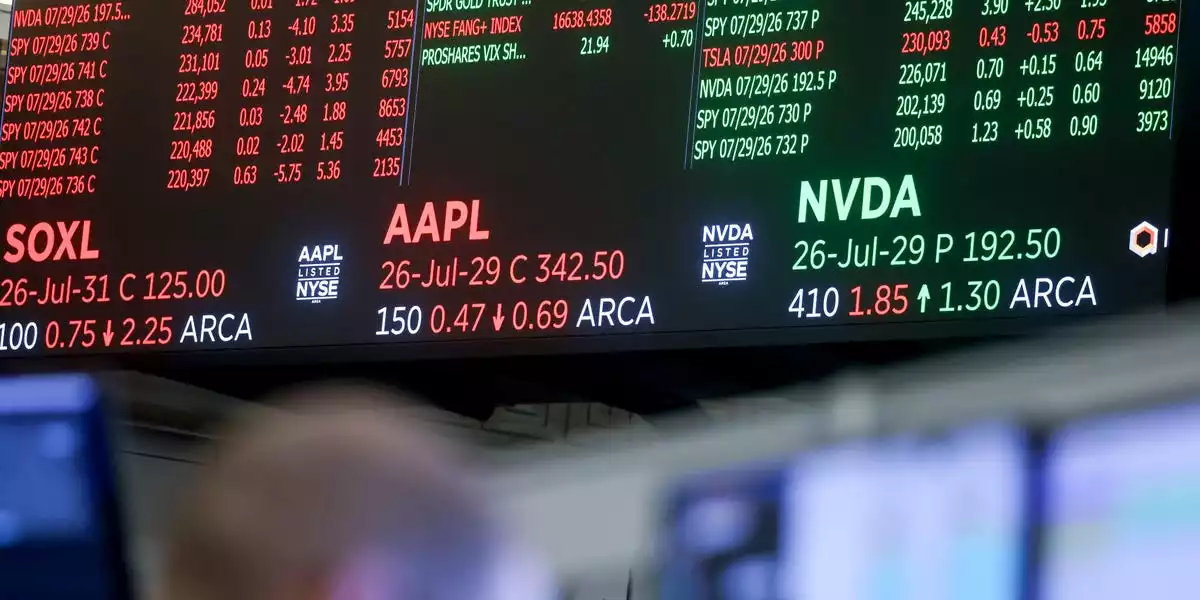
At the center of the episode is a familiar tension: frontier technology can be directionally right while financially untradeable under the wrong risk architecture. Situational Awareness appears to have paired aggressive AI exposure with mitigation strategies—most notably index-level put options—that were not sufficient when the market’s stress arrived through multiple channels at once: a broad technology sell-off, factor rotation away from high-growth names, and shocks in AI-adjacent hardware supply chains, including South Korean memory-chip stocks.
Citadel’s role—absorbing assets at depressed levels—highlights another structural reality. In dislocations, the winners are often not those with the best thesis, but those with the deepest balance sheet, the most flexible hedging toolkit, and the operational capacity to act when others must sell.
When AI valuations outrun deployment economics
The fund’s unwind lands at a moment when the market is actively renegotiating what “AI value” means. For much of the recent cycle, AI exposure has been priced as a near-linear function of technological progress: better models, more compute, larger addressable markets. Yet the repricing now underway suggests investors are demanding clearer answers on revenue durability, unit economics, and regulatory trajectory—especially for companies whose valuations imply years of frictionless adoption.
Situational Awareness’s experience surfaces a key distinction for AI investing: technical inevitability does not equal financial inevitability. Foundation models and frontier platforms may indeed reshape software and labor markets, but public equities discount cash flows, not research milestones. The gap between breakthrough capability and monetizable deployment can widen quickly when:
- Interest rates rise and long-duration growth assets are repriced
- Liquidity tightens, reducing tolerance for leveraged exposure
- Competition compresses margins, especially as model access commoditizes
- Regulatory uncertainty increases the discount rate applied to future earnings
Notably, the fund reportedly retains private positions, including in Anthropic, which points to another asymmetry: private-market stakes can preserve long-term optionality, but they are also less liquid and harder to finance against during drawdowns. When public books are stressed, private holdings can become psychological ballast—yet operationally irrelevant—if they cannot be converted into cash without punitive terms.
The limits of “AI-native” edge in a correlated sell-off
Aschenbrenner’s background as an AI researcher likely provided meaningful advantages: sharper technical priors, privileged networks, and earlier access to deal flow. But the unwind illustrates a recurring lesson in technology-driven finance: domain expertise is not a substitute for portfolio engineering.
Index puts can protect against broad market declines, but they often fail in scenarios where losses are driven by concentrated factor exposures—for example, crowded positioning in AI beneficiaries, shared sensitivity to rates, or correlated drawdowns across semiconductors, cloud infrastructure, and software multiples. In other words, a hedge can “work” in theory while failing in practice because the portfolio’s true risk is not the index—it is the hidden correlation structure.
The mention of sell-offs in South Korean memory-chip manufacturers is particularly instructive. Memory pricing, capex cycles, and inventory dynamics feed directly into the cost curve of AI training and inference. When hardware-linked equities wobble, the shock can propagate through:
- Supplier credit conditions and capex expectations
- OEM and hyperscaler spending forecasts
- Valuation multiples for AI software and platform names priced on growth assumptions
- Derivative margin requirements, which can force liquidation independent of fundamentals
This is how modern “contagion” often works: not through a single catastrophic event, but through cross-margin mechanics and synchronized de-risking.
What this signals for hedge funds, AI startups, and regulators
The broader implication is not that AI is a mirage, but that AI investing is maturing from narrative to discipline. Situational Awareness’s fire-sale is already fueling debate about whether aggressive AI vehicles—especially those combining leverage with concentrated thematic exposure—can remain stable when macro conditions turn.
Several forward-looking signals stand out:
- For institutional investors and hedge funds: expect greater emphasis on *multi-factor hedging* (rates, volatility, sector correlations) and more rigorous *liquidity stress testing* that models simultaneous drawdowns across public and private books.
- For AI startups and growth-stage companies: funding terms may tighten as allocators demand clearer commercialization milestones. The bargaining power could shift toward established VCs, corporate strategics, and patient capital willing to underwrite longer timelines—but at more conservative valuations.
- For policymakers and regulators: the episode strengthens the case for monitoring leverage and derivative exposure tied to nascent technology themes, particularly where opacity in private valuations can amplify sudden liquidity vacuums.
Perhaps the most enduring takeaway is cultural as much as financial. The market’s fascination with “tech wunderkinds” can inflate expectations of infallibility—yet capital markets ultimately reward not brilliance alone, but resilience under stress. In the next phase of AI’s financialization, the durable winners are likely to be those who pair genuine technological insight with macro-aware risk systems, robust liquidity planning, and an acceptance that even the best ideas can be ruined by the wrong structure at the wrong moment.

 By
By
 By
By
 By
By


 By
By
 By
By
 By
By