
Drones as rapid-response security infrastructure in K–12 and higher education
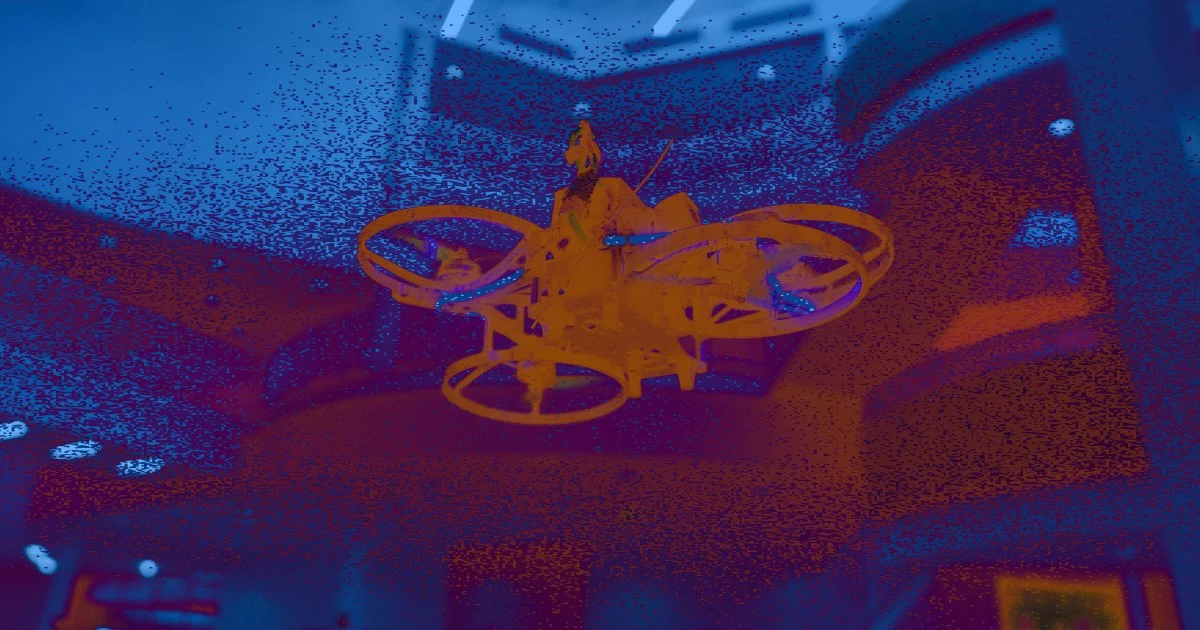
A new class of campus security technology is moving from speculative concept to funded pilot: high-speed, remotely piloted drones designed to intervene during an active shooter event. Marketed by Mithril Defense as “Campus Guardian Angels,” these UAVs are positioned as a bridge between detection and law-enforcement arrival—launching from on-campus lockers and flown by trained operators based in Austin. The promise is starkly operational: sub-15-second response times, speeds up to 60 mph, and a suite of nonlethal disruption tools including pepper spray, sirens, strobe lights, and even ramming capability.
For school systems in Florida, Georgia, and a Colorado charter school—collectively committing more than $1 million—the appeal is understandable. Educational leaders are under relentless pressure to demonstrate readiness against low-probability but catastrophic events. Drones offer a visible, modernized posture: mobile, fast, and potentially able to provide real-time situational awareness to first responders.
Yet the shift is more than a procurement story. It reflects a broader evolution in public-sector safety strategy: from static hardening (metal detectors, locks, bollards) to dynamic intervention, where “response” becomes a product with performance claims, service-level expectations, and liability implications.
From deterrence to “nonlethal force”: what the technology actually changes
The drones’ proposed value proposition rests on two pillars: deterrence/disruption and intelligence gathering. In theory, a loud, fast-arriving UAV with lights and sirens could disorient an assailant, slow movement, and buy time for evacuation or lockdown. Simultaneously, a stabilized video feed could provide law enforcement with actionable information—location, direction of travel, and potential victims—reducing the fog of an unfolding crisis.
But the operational reality is complex. These systems are not autonomous guardians; they are human-in-the-loop platforms. That introduces a chain of dependencies that must work under extreme stress:
- Connectivity and latency: Real-time piloting depends on resilient bandwidth and low-latency links—conditions that may degrade during emergencies, infrastructure failures, or network congestion.
- Command-and-control clarity: Who authorizes deployment, escalation, and use of pepper spray? A principal, a district security lead, local police, or the remote operator? Ambiguity here is not a paperwork issue—it is a risk multiplier.
- Safety engineering and fail-safes: Ramming mechanisms and chemical irritants require rigorous validation. In crowded hallways, the margin for error is thin; unintended collisions or exposure could harm students and staff.
- Use-of-force governance: Pepper spray is not merely a “tool”; it is a use-of-force decision with medical, legal, and reputational consequences—especially when deployed remotely.
The industry’s adjacent track record also matters. Parallel experiments with AI-driven gun detection have produced both false positives and missed threats, highlighting a central challenge in school safety technology: mission-critical systems fail differently than consumer tech. A false alarm can trigger panic, lockdown trauma, and police mobilization; a missed detection can be catastrophic. Even if Mithril’s drones are not yet AI-targeting systems, the market’s direction points toward more automation—raising the stakes for dataset quality, bias mitigation, and verification standards.
The business model: defense-to-civilian transfer meets education procurement realities
Mithril Defense’s positioning—defense-contractor roots, startup delivery cadence, and a hardware-plus-remote-operations service—mirrors patterns seen in cybersecurity and “security-as-a-service.” For districts, that model can reduce the need for in-house aviation expertise, but it also introduces vendor dependency and long-term cost questions that extend beyond the pilot headline numbers.
Key economic dynamics are already visible:
- Total Cost of Ownership (TCO): A pilot budget (e.g., $500,000 across five schools) is only the entry point. Ongoing costs may include maintenance, software updates, secure storage infrastructure, operator staffing, training, compliance, and insurance.
- Vendor lock-in risk: If the remote operations center, drone fleet, and data systems are tightly coupled, switching costs can become prohibitive—especially once protocols and training are built around a single vendor.
- Insurance and liability pricing: Insurers are likely to demand empirical safety data before underwriting broad deployments. Excess-liability coverage may become standard, shifting costs back to districts and potentially constraining adoption.
- Scaling economics vs. evidence: Widespread adoption could lower unit costs through manufacturing scale and centralized operations. But without credible outcome data—beyond response-time claims—capital markets and public budgets may hesitate.
This is also a notable example of defense technology transfer into domestic public services, a trend that has accelerated across drones, biometrics, and surveillance tooling. The school environment, however, is uniquely sensitive: it combines minors, mandatory attendance, and heightened privacy expectations—conditions that make “move fast” an untenable posture.
Governance, privacy, and the strategic trade-off schools cannot avoid
Even if drones prove technically reliable, their legitimacy will hinge on governance: rules of engagement, data stewardship, transparency, and accountability. These systems generate video and telemetry that can become records subject to retention policies, public-records requests, and student privacy protections. Compliance with FERPA and related state laws will require clear answers to practical questions: What is recorded? Who can access it? How long is it stored? Under what circumstances is it shared with law enforcement?
Equally important is the strategic tension underlying the entire category: technology-solutionism versus root-cause mitigation. Critics argue that high-tech interventions risk diverting attention and funding from measures such as mental-health staffing, community-based prevention, and legislative approaches to gun violence. Proponents counter that schools must manage immediate risk in the world as it is, not as stakeholders wish it to be.
The most durable path forward is likely neither blanket adoption nor reflexive rejection, but disciplined evaluation. If districts proceed, pilots will need independent oversight and metrics that go beyond marketing:
- Response time under varied conditions (network degradation, power loss, weather)
- False activations and near-miss safety incidents
- Coordination performance with local law enforcement
- De-escalation outcomes and unintended harm rates
- Psychological and cultural impact on students and staff
School safety is becoming a domain where procurement, policy, and ethics converge—and where the “best” tool is the one that can withstand not only a crisis, but also the scrutiny that follows it.

 By
By
 By
By
 By
By


 By
By
 By
By