
South Korea’s AI-fueled selloff becomes a stress test for modern equity markets
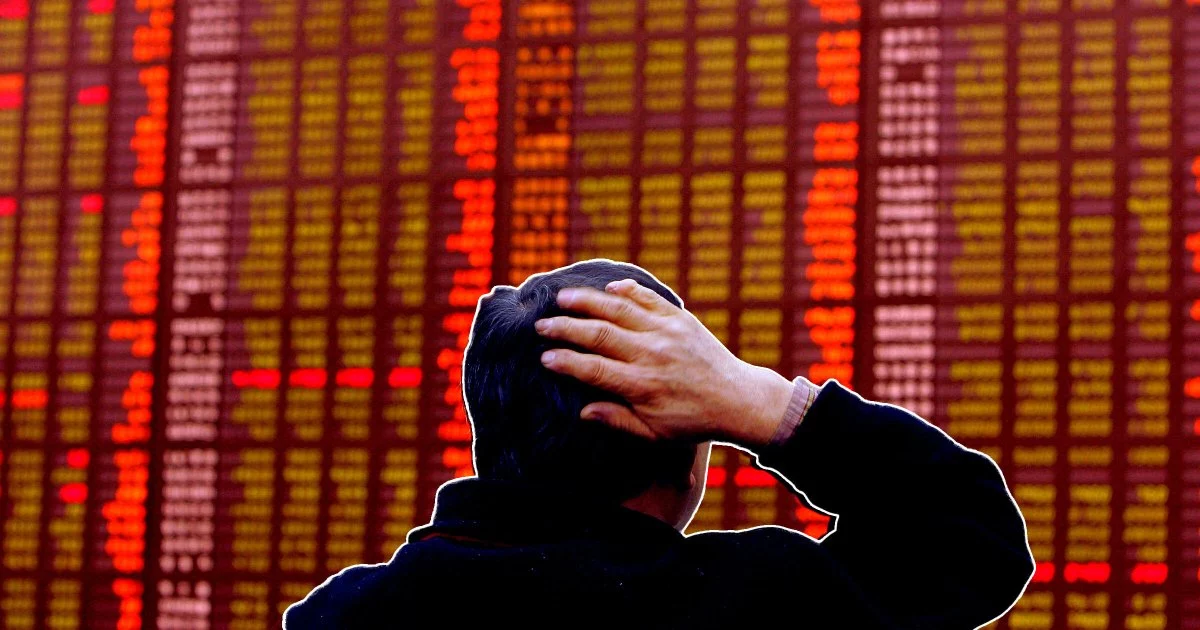
South Korea’s equity markets have entered a sharp and unusually disorderly correction, with technology shares at the epicenter. Since a June peak, the Korea Composite Stock Price Index (KOSPI) has fallen by more than 40%, while the tech-heavy KOSDAQ has repeatedly approached or triggered historic circuit-breaker conditions. What makes this episode particularly notable is its regional specificity: the “AI bubble” dynamics that have been more contained in the US and parts of Europe appear to have expressed themselves with greater intensity in Seoul, where semiconductors and high-beta growth names occupy an outsized role in market psychology and index composition.
The immediate catalyst was investor reaction to SK Hynix, a bellwether for memory chips used in AI workloads. Even as the company reported quarterly profits surging roughly sixfold, the market’s response was disappointment—an outcome that underscores a defining feature of late-cycle exuberance: results can be strong and still fail to satisfy expectations priced for perfection. The subsequent trading halts on July 28–29—described as unprecedented in their severity—signaled that volatility was no longer merely a valuation reset; it had become a market-structure event.
For global investors and technology executives alike, South Korea’s drawdown is more than a local correction. It is a live demonstration of how AI narratives, semiconductor cyclicality, and leveraged retail products can interact to amplify downside risk—especially when policy makers are forced to choose between market discipline and financial stability.
When AI optimism collides with the semiconductor cycle
At the heart of the turmoil is a tension that has been building for months: AI-driven demand is real, but semiconductor markets remain cyclical. The memory segment—particularly DRAM and NAND—is historically prone to boom-bust dynamics driven by capacity additions, inventory swings, and pricing power that can reverse quickly. AI training and inference workloads do increase demand for high-performance memory, yet that structural tailwind does not eliminate the risk of oversupply or a sudden deceleration in end-market purchasing.
Several technology-specific fault lines are now visible:
- AI hype versus supply-demand math: The market’s earlier willingness to extrapolate AI demand into near-linear revenue growth has met the industry’s reality: capacity ramps and pricing cycles can overwhelm narrative-driven multiples.
- Exposure at the leading edge: Firms pushing advanced manufacturing—often described in terms of sub-10-nanometer competitiveness and high-end packaging ecosystems—face long capital-expenditure timelines. If demand visibility weakens, the market may discount not only earnings but also the return profile of multi-year fab investments.
- From “AI trade” to “AI audit”: Investors are increasingly separating companies with durable AI-linked cash flows from those whose valuations were primarily momentum-driven. That distinction matters acutely in Korea, where semiconductor champions can dominate both sentiment and index performance.
This is not an argument that AI demand is fading. Rather, it is a reminder that AI is not a single trade: it spans hardware, memory, networking, power, software platforms, and services. When hardware supply-demand dynamics wobble, capital can rotate quickly toward segments perceived as less cyclical—such as software, model optimization, and AI-enabled enterprise services.
Leverage, circuit breakers, and the regulatory pivot in Seoul
The market’s abruptness also reflects how modern trading instruments can intensify stress. South Korea’s decision to impose an immediate ban on new single-stock leveraged ETFs is a clear signal that authorities view leverage as a volatility accelerant, not merely a speculative sideshow. These products can create reflexive selling: as underlying shares fall, leveraged vehicles may be forced to rebalance in ways that mechanically increase pressure during already thin or panicked markets.
Key implications for market structure and regulation include:
- Retail leverage as a systemic variable: When leveraged ETFs are widely held, volatility can migrate from individual names into broader indices, raising the likelihood of circuit breakers and liquidity gaps.
- Policy intervention versus moral hazard: Rapid intervention can stabilize conditions, but repeated rescues risk training investors to expect a backstop—potentially weakening incentives for rigorous risk management.
- A template for Asia: If Seoul’s measures are seen as effective, other Asian markets with heavy semiconductor exposure—particularly Taiwan and Japan—may face pressure to tighten rules around leverage, margin, and volatility controls.
Seoul’s emergency meetings and efforts to stem billions of dollars in capital outflows highlight another reality: in a world of mobile global capital, confidence can erode quickly when investors perceive that a market’s upside has been fueled by leverage and crowded positioning. The political dimension—intensified criticism of the ruling party—adds a further layer of uncertainty, because policy responses may be judged not only on economic merit but also on public perception.
What business leaders and investors should watch next
The next phase will likely be defined by whether volatility remains a localized deleveraging or becomes a broader Asian risk-off event. With global monetary conditions still relatively tight, high-beta equity segments can remain fragile even after large drawdowns.
For decision-makers, several watchpoints stand out:
- Earnings quality versus expectation resets: Strong reported profits may not lift stocks if forward guidance, pricing assumptions, or inventory signals disappoint.
- Regulatory tightening on trading products: Expect enhanced scrutiny of leveraged retail instruments, potential disclosure upgrades, and more active volatility management.
- Supply-chain concentration risk: Companies dependent on Korean memory chips may reassess sourcing strategies, not as a rejection of Korean suppliers but as a hedge against single-region market and policy shocks.
- Geopolitics and industrial policy: South Korea’s semiconductor sector sits at the intersection of US-China competition, export controls, and allied supply-chain initiatives—factors that can influence both capital allocation and corporate strategy.
South Korea’s market dislocation is ultimately a high-resolution case study in how the AI investment narrative can outrun the semiconductor cycle, and how leverage can turn repricing into disruption. The recalibration now underway will reward participants who can separate structural AI demand from transient market mechanics—and who treat policy intervention as a variable to model, not a guarantee to rely on.

 By
By
 By
By
 By
By


 By
By
 By
By
 By
By