
Microsoft’s capex “steady hand” and what the market is really pricing in
Microsoft’s decision to hold its full-year capital expenditure (capex) forecast at $175 billion—after an earlier $190 billion figure was effectively reduced via an accounting adjustment—landed as a signal event in an industry gripped by AI infrastructure escalation. The market’s reaction was immediate: roughly an 8% share-price jump, a move that reads less like exuberance about spending and more like relief about restraint.
In a cycle where “more GPUs, more data centers” has become a default competitive reflex, Microsoft is attempting something subtler: maintaining AI momentum while tightening the narrative around return discipline. The message to investors is not that AI demand is fading, but that incremental capacity must justify itself more rigorously—especially as the industry confronts the possibility of diminishing marginal returns from ever-larger infrastructure outlays.
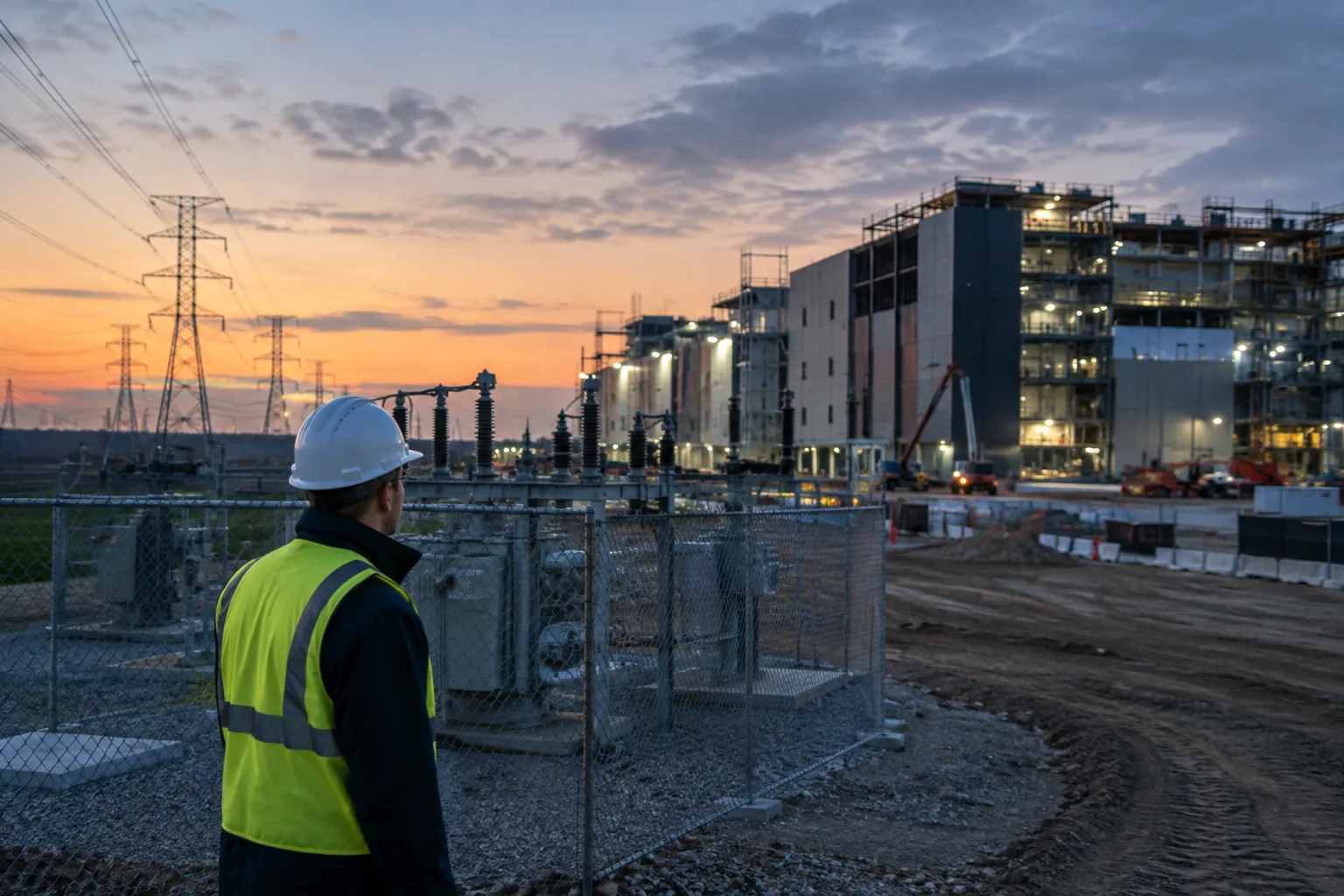
This stands in sharp contrast to peers such as Alphabet and Tesla, which have raised capex targets to accelerate AI data center build-outs. Meanwhile, Google, Amazon, and Meta are collectively planning more than $700 billion in AI-related infrastructure spending this year—an arms race that is increasingly shaped not only by strategy, but by input-cost inflation and supply constraints.
The AI data center arms race meets the hard math of memory, margins, and macro risk
The current phase of AI competition is being dictated by a handful of bottlenecks, with DRAM and high-bandwidth memory (HBM) emerging as central cost drivers. Rising memory-chip prices are estimated to account for about 45% of capex growth across major cloud providers—an unusually concentrated contributor that turns procurement into strategy.
This matters because AI infrastructure economics are not linear. When memory and accelerator costs surge, the cost of each additional unit of compute rises—often faster than near-term monetization can keep up. The result is a widening gap between:
- Capacity expansion (more racks, more clusters, more regions)
- Revenue realization (enterprise adoption cycles, workload migration, pricing power)
- Profit conversion (gross margin pressure, depreciation schedules, utilization rates)
Microsoft’s steadier capex posture can be read as an implicit acknowledgment that supply-side dislocations may persist and that bulk ordering does not automatically translate into superior economics—particularly if global growth slows or if AI demand proves more uneven across sectors than headline adoption suggests.
Macro conditions amplify the stakes. Sticky inflation, fragile supply chains, and shifting rate expectations all raise the bar for long-duration investments. In that environment, hyperscalers face a strategic dilemma: overbuild and risk underutilization, or underbuild and risk losing early-mover advantage. Microsoft is signaling it intends to thread that needle—continuing to invest, but within a capital envelope that markets can underwrite with more confidence.
Why Microsoft’s approach resonates: ROIC is back, and “AI scale” is no longer a blank check
The investor response suggests a broader regime shift: capital discipline is reasserting itself as a premium attribute. For much of the AI boom, markets rewarded the perception of inevitability—whoever built the most compute would win the future. That narrative is now being stress-tested by questions that are more financial than futuristic:
- What is the payback period on incremental AI data center capacity?
- How durable is pricing power once AI compute becomes more standardized?
- Will utilization remain high if enterprise demand normalizes after early experimentation?
- How do depreciation and operating costs reshape return on invested capital (ROIC)?
Against that backdrop, Microsoft’s unchanged guidance functions as a form of risk management. It also differentiates the company from competitors whose capex increases—such as Alphabet’s reported $15 billion rise and Meta’s $2.5 billion midpoint increase—have drawn scrutiny over potential capital misallocation.
Crucially, Microsoft is not stepping away from AI. It continues to advance its Azure AI stack, deepen its partnership with OpenAI, and pursue in-house silicon initiatives. The distinction is framing: Microsoft is positioning AI investment as selective and hurdle-driven, not purely scale-driven. That framing matters because it aligns with what many institutional investors now prioritize: near-term profitability resilience and disciplined deployment, rather than open-ended infrastructure escalation.
The next competitive frontier: software differentiation, ecosystem leverage, and modular infrastructure
If the first phase of the AI cycle rewarded brute-force infrastructure accumulation, the next phase is likely to reward software and services differentiation—especially as hardware supply expands and costs eventually normalize. As memory pricing stabilizes through volume manufacturing and next-generation semiconductor nodes, the locus of value creation may shift toward:
- Proprietary models and tuning pipelines that improve performance per dollar
- Developer platforms, APIs, and tooling ecosystems that increase stickiness
- Verticalized AI applications embedded into enterprise workflows
- Distribution advantages through productivity suites and cloud marketplaces
This is where Microsoft’s strategy looks structurally advantaged. By embedding AI across its enterprise software portfolio and positioning Azure as a services-led platform—not merely a hardware substrate—Microsoft can potentially extract higher marginal returns from each incremental unit of compute. In practical terms, the company can aim to monetize AI not only through infrastructure rental, but through workflow integration, seat expansion, and application-layer differentiation.
Forward-looking implications for the broader market are already taking shape:
- Dynamic procurement and supply-chain intelligence will become a competitive capability, not a back-office function.
- Partnership models—co-investment, shared regional hubs, silicon licensing—may reduce single-player capex exposure.
- Scenario planning will intensify as boards demand stress tests against macro tightening, regulatory scrutiny, and demand volatility.
- Asset-light options (leasing capacity, sovereign cloud partnerships) may look increasingly attractive versus full ownership.
Microsoft’s capex stance does not end the AI infrastructure race—it reframes it. The companies that win the next leg are unlikely to be those that simply spend the most, but those that can prove, quarter after quarter, that their AI build-out converts into durable cash flows, defensible platforms, and measurable returns on capital.

 By
By
 By
By

 By
By

 By
By
 By
By
 By
By