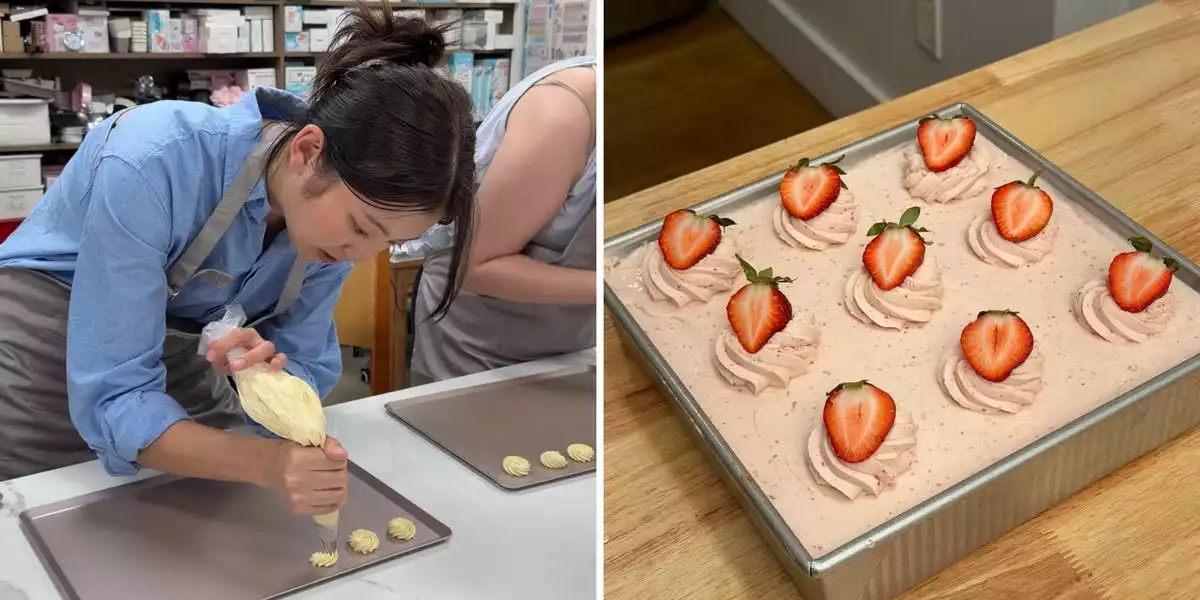

When “Just a Pinch” Meets the Era of Precision Consumption
A veteran pastry professional’s list of seven recurring home-baking mistakes reads, on the surface, like a practical checklist: weigh ingredients, don’t freestyle substitutions, avoid overmixing, replace tired leaveners, stop opening the oven door, don’t overcrowd pans, and keep the workspace orderly. Yet beneath these familiar admonitions sits a broader signal for business and technology leaders: home baking is increasingly a precision activity, and consumers are being nudged—by frustration as much as aspiration—toward tools, data, and systems that make outcomes repeatable.
The most foundational error—relying on volumetric measurements instead of weight—is also the clearest bridge to modern consumer tech. Flour compacts, humidity changes ingredient behavior, and “one cup” becomes a moving target. In industrial contexts, this is a solved problem: measurement is standardized, instrumented, and audited. In the home kitchen, it is becoming one. The kitchen scale is no longer a niche accessory; it is a gateway device to a broader ecosystem where accuracy, telemetry, and guided workflows can be packaged as convenience.
Equally telling is the warning against unsystematic recipe alterations. Swapping sugar types, changing fat ratios, or “adding a little extra leavener” is not merely creative—it can be chemically disruptive. This frames baking as a consumer-facing version of formulation science, where the market opportunity is not just better recipes, but better decision support: tools that explain what a change does, predict its impact, and learn from outcomes.
Smart Ovens, Sensor Feedback, and the New Process-Control Kitchen
Several of the highlighted mistakes point directly to process control failures—areas where connected appliances and embedded sensors can create measurable value.
Consider the classic habit of opening the oven door to check progress. It’s a human response to uncertainty, but it destabilizes temperature and airflow, undermining rise and texture. Likewise, overcrowding pans compromises convection and heat distribution. These are not simply user errors; they are information gaps. The consumer wants visibility and confidence.
That gap is precisely where smart appliances are evolving:
- Real-time thermal mapping can reduce hot-spot variability and help ovens behave more like calibrated equipment.
- Humidity sensing and control can improve consistency for breads, laminated doughs, and delicate cakes where moisture dynamics matter.
- Guided baking workflows—timers that adapt to actual oven performance rather than nominal settings—can replace guesswork with feedback loops.
The admonition to avoid overmixing is another subtle indicator. Overmixing drives gluten development and changes crumb structure; it’s a mechanical process problem. While full automation may be unnecessary for most households, there is room for assistive intelligence: mixers that infer viscosity changes, recommend stop points, or integrate with recipes that adjust mixing time based on flour type and batch size.
Taken together, these “simple” mistakes outline a roadmap for consumer-grade process control—where the kitchen becomes a testbed for edge computing, sensor fusion, and human-in-the-loop automation.
Ingredient Freshness as a Supply-Chain and Packaging Battleground
The professional’s warning about expired or under-potent leavening agents exposes a less visible constraint: ingredient performance is not guaranteed. Yeast viability, baking powder potency, and moisture intrusion are supply-chain realities that consumers experience as “my bread didn’t rise.”
For consumer packaged goods (CPG) brands, this shifts the competitive frame from branding to verification. The market is moving toward:
- Batch-certified performance expectations, where consumers implicitly demand reliability, not just flavor.
- Moisture-sealed, shelf-life-extending packaging that protects functional ingredients from degradation.
- Traceability narratives—potentially blockchain-enabled in premium segments—where provenance and handling become part of the value proposition.
At the same time, the rise of pre-weighed ingredient kits and subscription baking models addresses the precision gap directly. By delivering measured, fresh, and recipe-aligned components, these services reduce failure rates and create recurring revenue. They also align with e-commerce logistics: standardized SKUs, predictable replenishment cycles, and opportunities to bundle hardware (scales, thermometers) with consumables (single-use yeast sachets, pre-sifted flour).
Macro conditions amplify the stakes. The pandemic-era home cooking boom normalized baking as both hobby and cost strategy, while inflation and commodity volatility—wheat, sugar, dairy—pressure margins and consumer budgets. Brands and retailers that can help households waste less and succeed more often gain a defensible advantage, especially when “failed bakes” translate into both emotional and financial cost.
From Clean-as-You-Go to Kaizen: Why Baking Is Becoming a Data Product
The final mistake—neglecting workspace maintenance—may sound like lifestyle advice, but it maps cleanly onto operational excellence. “Clean as you go” mirrors Lean manufacturing’s 5S and Kaizen: reduce friction, prevent errors, and keep the process flowing. This is fertile ground for consumer software design. Kitchen apps can reinforce these behaviors through:
- Step sequencing that minimizes clutter and rework
- Timers and prompts that reduce cognitive load
- Gamified habit loops that increase retention and subscription stickiness
More broadly, the article’s logic reframes baking as experimentation. Each adjustment becomes an informal A/B test—change one variable, observe the outcome, iterate. Platforms that capture ingredient weights, timing, oven settings, and results can apply machine learning to recommend improvements, effectively turning recipes into living, personalized models rather than static instructions.
This is also where smart-home economics emerge. Oven usage patterns, batch sizes, and ingredient preferences are commercially valuable signals for personalization across appliances, grocery, and recipe platforms. The strategic constraint is trust: privacy-compliant data monetization will determine whether consumers embrace connected baking ecosystems or reject them as intrusive.
For business and technology leaders, the deeper message is that baking—high-frequency, low-risk, emotionally resonant—may be one of the most practical on-ramps for mainstream IoT adoption. The winners will be those who treat common kitchen failures not as user shortcomings, but as solvable system design problems—where precision, process control, and data-driven guidance turn everyday cooking into reliably excellent outcomes.

 By
By


 By
By
 By
By
 By
By
 By
By