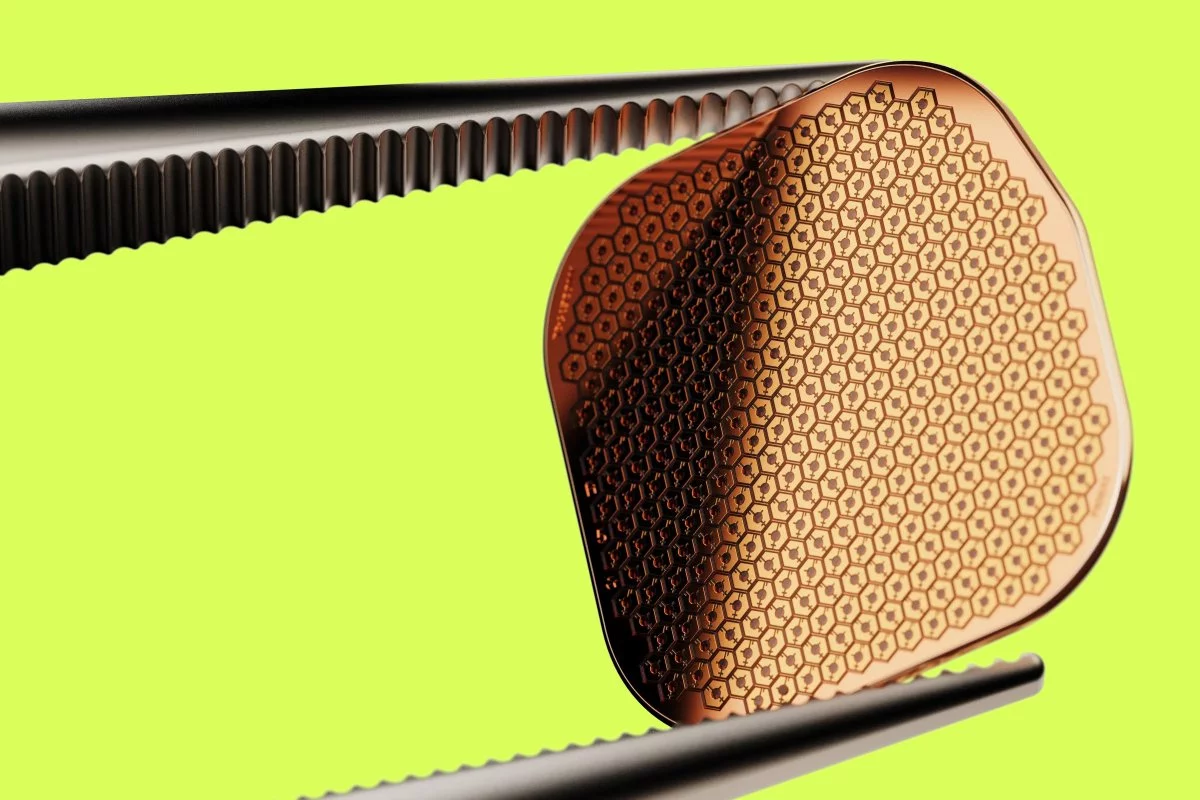

EU clearance positions Prima as a defining moment for retinal neuroprosthetics in age-related macular degeneration
The European Union’s authorization to commercialize Prima, a wireless retinal implant from Science Corporation, marks a consequential step in the evolution of bioelectronic medicine—particularly for patients with advanced age-related macular degeneration (AMD), a leading cause of legal blindness in aging populations. Unlike pharmacological approaches that aim to slow degeneration, Prima is designed to restore functional vision by reintroducing a usable visual signal into retinal circuitry that can still communicate with the brain.
At the center of the system is a microchip implanted under the retina, paired with camera-equipped eyewear that captures the scene and transmits it using near-infrared light. The implant converts that optical input into electrical stimulation patterns that the visual system can interpret. Late-stage clinical results described in the material suggest meaningful functional gains: users have reportedly been able to recognize faces, read extended text, and perform fine-motor tasks such as drawing—capabilities that, for many with late-stage AMD, represent a profound shift from dependence to partial autonomy.
The company’s own framing of current acuity—akin to “looking through a straw”—is an important anchor for expectations. This is not a return to natural sight; it is a new sensory channel that must be learned, calibrated, and supported. Yet the EU decision signals that regulators view the benefit-risk profile as sufficiently compelling to move beyond experimental use and into real-world clinical practice, beginning with an initial rollout in Germany.
—
How the “chip + eyewear + algorithms” stack changes the innovation cadence
Prima’s architecture reflects a broader technological pivot: modern neuroprosthetics are increasingly systems, not single devices. The clinical promise is not only in the implant but in the end-to-end pipeline—sensing, encoding, transmission, stimulation, and patient adaptation. That matters because it enables iteration cycles closer to software and semiconductor roadmaps than to traditional implant timelines.
Key technology implications embedded in this approval include:
- Wireless microfabricated stimulation at retinal scale: Prima reinforces that high-precision, implantable electronics can operate reliably in a sensitive ocular environment while remaining wirelessly powered and controlled—an engineering threshold that many next-generation sensory prostheses must cross.
- Algorithmic vision as a clinical variable: Because the eyewear and signal-processing layer shapes what the retina receives, improvements in image preprocessing, contrast enhancement, and eventually AI-driven scene interpretation can translate into measurable functional gains without changing the surgical implant each time.
- A bridge to broader BCI development: The design logic parallels trends in brain-computer interfaces (BCIs)—miniaturization, power management, bidirectional links, and closed-loop calibration. Progress in retinal encoding can inform cortical approaches, and vice versa, particularly around neural signal encoding standards and long-term device stability.
This is where the “straw” metaphor becomes strategically revealing. If today’s experience is narrow-field and limited-resolution, the path forward is plausibly one of incremental upgrades: higher pixel density, improved stimulation patterns, multi-wavelength approaches that could support color perception, and adaptive calibration that personalizes output to each patient’s residual retinal function.
—
Pricing, reimbursement, and manufacturing: the real bottlenecks to scale
The projected cost—high-hundreds of thousands of dollars per patient—places Prima in the same economic conversation as complex implantable therapies and certain gene and cell treatments. That price point does not inherently preclude adoption, but it forces the market to answer a hard question: what outcomes justify the spend, and who pays upfront?
For payers and health systems, the value proposition will likely hinge on endpoints that extend beyond acuity charts:
- Reduced reliance on assisted living or home care
- Improved ability to perform activities of daily living
- Mental health and social participation benefits (e.g., reduced isolation)
- Lower downstream costs associated with injury risk and dependency
This is where health technology assessment (HTA) in Europe becomes pivotal. EU commercialization under the Medical Device Regulation (MDR) is not the finish line; it is the start of a long period of post-market surveillance and real-world evidence generation. Reimbursement will increasingly favor models such as:
- Value-based contracting tied to functional outcomes over time
- Risk-sharing agreements where manufacturers absorb part of non-response risk
- Staged payments aligned to continued device performance and patient benefit
Operationally, scaling also depends on manufacturing realities. Retinal implants require precision microfabrication, stringent quality controls, and specialized surgical and clinical training pathways. The eyewear layer adds another supply chain: optics, sensors, and robust calibration workflows. To move from early rollout to broad EU availability, Science Corporation will likely need deep partnerships across:
- Semiconductor and microfabrication capacity
- Ophthalmic surgical centers and training networks
- Specialized distribution and service infrastructure for long-term device support
—
Competitive pressure and regulatory precedent in a fast-forming sensory-augmentation market
Prima’s EU entry arrives as competition intensifies. The material notes Neuralink advancing preclinical ocular interfaces, and the broader landscape includes both large medtech and specialized start-ups pursuing different technical routes to visual restoration. The strategic significance of being early in the EU is twofold: it provides commercial learning and it establishes a regulatory precedent that can shape how future neuroprosthetics are evaluated.
That precedent matters globally. MDR compliance, real-world evidence expectations, and cybersecurity obligations can influence how companies design trials and monitoring programs for other jurisdictions, including the United States and Japan. At the same time, neuroprosthetics introduce governance issues that are no longer peripheral:
- Data privacy and GDPR alignment for device-generated and usage data
- Cybersecurity protections for implant-adjacent systems
- Anticipatory compliance with emerging frameworks such as the EU AI Act, especially if AI-driven preprocessing becomes central to performance
From an industry standpoint, Prima also strengthens the case that sensory restoration is becoming a platform category—one that could support software-like upgrades, service revenue, and potentially future convergence with augmented reality concepts. For now, the clinical mission remains clear: deliver reliable functional vision where biology alone can no longer do so. The EU’s decision suggests that retinal neurotechnology has crossed into a new phase—less speculative, more operational—where the next breakthroughs may be as much about reimbursement design, manufacturing discipline, and data governance as about pixels and photonics.

 By
By

 By
By

 By
By
 By
By
 By
By