
A deregulatory pivot that reopens the PFAS question in America’s fertilizer loop
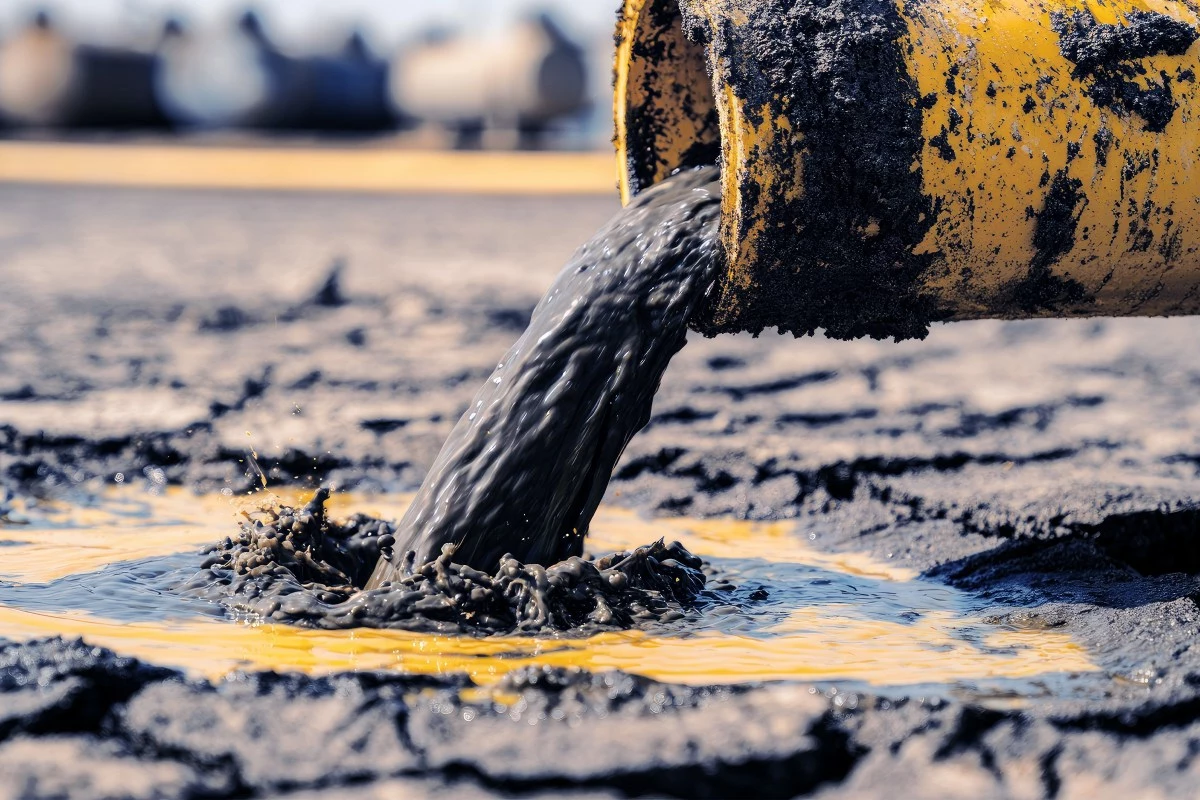
The U.S. Environmental Protection Agency’s move—under the Trump administration—to rescind a restriction on land application of treated sewage sludge, commonly marketed as biosolids, reorders the risk calculus for agriculture, food brands, and environmental technology providers. At the center of the dispute are PFAS (per- and polyfluoroalkyl substances), often called “forever chemicals” because many compounds persist in the environment and human tissue for years.
What makes this reversal unusually consequential is the proximity between recent internal research signals and the policy change. The rescinded approach had been informed by findings indicating that PFAS concentrations above 1 part per billion (ppb) in biosolids could elevate cancer risk for farmworkers and consumers. Earlier EPA testing reportedly identified biosolid concentrations as high as 9.4 ppb, a figure that—if representative of broader conditions—would place some sludge-derived fertilizer streams well above the risk threshold implied by the agency’s own analysis.
The EPA’s counterargument emphasizes scale and exposure: biosolids are applied to under 1% of U.S. farmland, and the agency contends that fears of widespread food contamination are overstated. Critics, however, frame the rollback as a structural shift in responsibility—moving safety burdens away from regulators and upstream producers and toward individuals, farm operators, and downstream food buyers who may lack the tools to measure or manage PFAS risk.
For business and technology stakeholders, the headline is not only the regulatory rollback; it is the uncertainty premium now attached to a circular-economy practice that depends on public trust.
The science and the sensors: why detection capability is now a policy fault line
PFAS compounds are notoriously difficult to remove through conventional wastewater treatment. Over the last decade, analytical chemistry has advanced rapidly, pushing detection limits from parts-per-billion toward parts-per-trillion in many contexts. That matters because as measurement improves, the “background” presence of PFAS becomes harder to dismiss—and easier to quantify, litigate, and regulate.
By sidelining research that connects PFAS levels in biosolids to health risk, the policy shift may also slow adoption of remediation and monitoring technologies that are increasingly viable, including:
- Advanced oxidation processes (AOPs) and electrochemical oxidation for PFAS destruction or transformation
- Thermal treatment pathways (with careful emissions controls)
- On-site sampling automation and lab-to-field workflows that reduce time-to-result
- Real-time or near-real-time sensor networks that can flag suspect batches before land application
The deeper tension is that biosolids sit at the intersection of two powerful narratives: resource circularity (recycling nutrients back into soil) and chemical persistence (the long tail of industrial compounds). Without credible monitoring and enforceable thresholds, the circular economy promise can become reputationally fragile—particularly for food categories where consumer trust is easily shaken.
Farm balance sheets, brand exposure, and the hidden cost of “low-cost” inputs
Biosolids have long appealed to farmers as a cost-effective soil amendment. Yet PFAS introduces a liability profile that behaves less like a typical agronomic variable and more like a long-duration financial risk—one that can surface years after application through testing, health claims, or market access disputes.
Key economic and operational implications include:
- Insurance repricing and underwriting scrutiny: If PFAS contamination becomes a more prominent claim category, insurers may reassess agricultural portfolios, potentially raising premiums or tightening exclusions.
- Supply-chain finance impacts: Lenders and counterparties may demand stronger environmental representations, warranties, or testing regimes—especially for high-value produce supply chains.
- Recall and contract risk: Even the perception of contamination can trigger retailer delistings, contract renegotiations, or costly verification programs.
- Regional price signals: Areas known for biosolid use could face demand discounts, while biosolid-free claims may command premiums—creating a market incentive to shift toward compost, green manures, or synthetic fertilizers.
The timing also amplifies scrutiny. The rollback arrives amid heightened attention to food safety and agricultural inputs, including a cyclospora outbreak linked to agricultural supply chains. Separately, the political context—such as reported campaign contributions from major produce-sector players around the time of federal traceability delays—adds a layer of reputational sensitivity, even where causality is unproven. For corporate risk leaders, perception can be as operationally costly as verified contamination.
Regulatory whiplash, trade friction, and the emerging playbook for mitigation
The most strategic risk may be regulatory rebound. PFAS policy is moving unevenly across federal agencies, states, and international markets. A future administration or Congress could reinstate strict limits, and states may continue to set their own standards—creating a patchwork that complicates compliance for national brands and multi-state growers.
Internationally, the stakes are higher still. As the European Union and other markets tighten PFAS restrictions, U.S. exporters tied to biosolid-based fertility programs could face:
- Non-tariff barriers such as mandatory testing, certification, or documentation
- Border rejections or enhanced inspection regimes
- Contractual requirements from overseas buyers seeking PFAS risk insulation
Against that backdrop, the opportunity set for technology and services firms is expanding. The rollback does not eliminate PFAS risk; it redistributes it—often downstream—creating demand for verification and control systems. Likely growth areas include:
- PFAS treatment and destruction vendors positioned for municipal and industrial wastewater clients
- IoT-enabled soil and input monitoring, building a “cyber-physical” record of farm chemistry
- Blockchain-backed or database-driven traceability, linking field inputs to lots, shipments, and retail endpoints
- Third-party certification and auditing for biosolid-free or low-PFAS sourcing claims
For executives, the practical takeaway is that PFAS exposure is becoming a board-level issue that blends environmental science, product integrity, and capital markets. In a world where detection keeps improving and policy can swing sharply, the competitive advantage will accrue to organizations that treat biosolids and PFAS not as a political debate, but as a measurable, monitorable risk—one that can be engineered down, documented clearly, and priced accurately.


 By
By

 By
By
 By
By

 By
By
 By
By