
A tighter F-1 clock: what DHS changed and why it matters
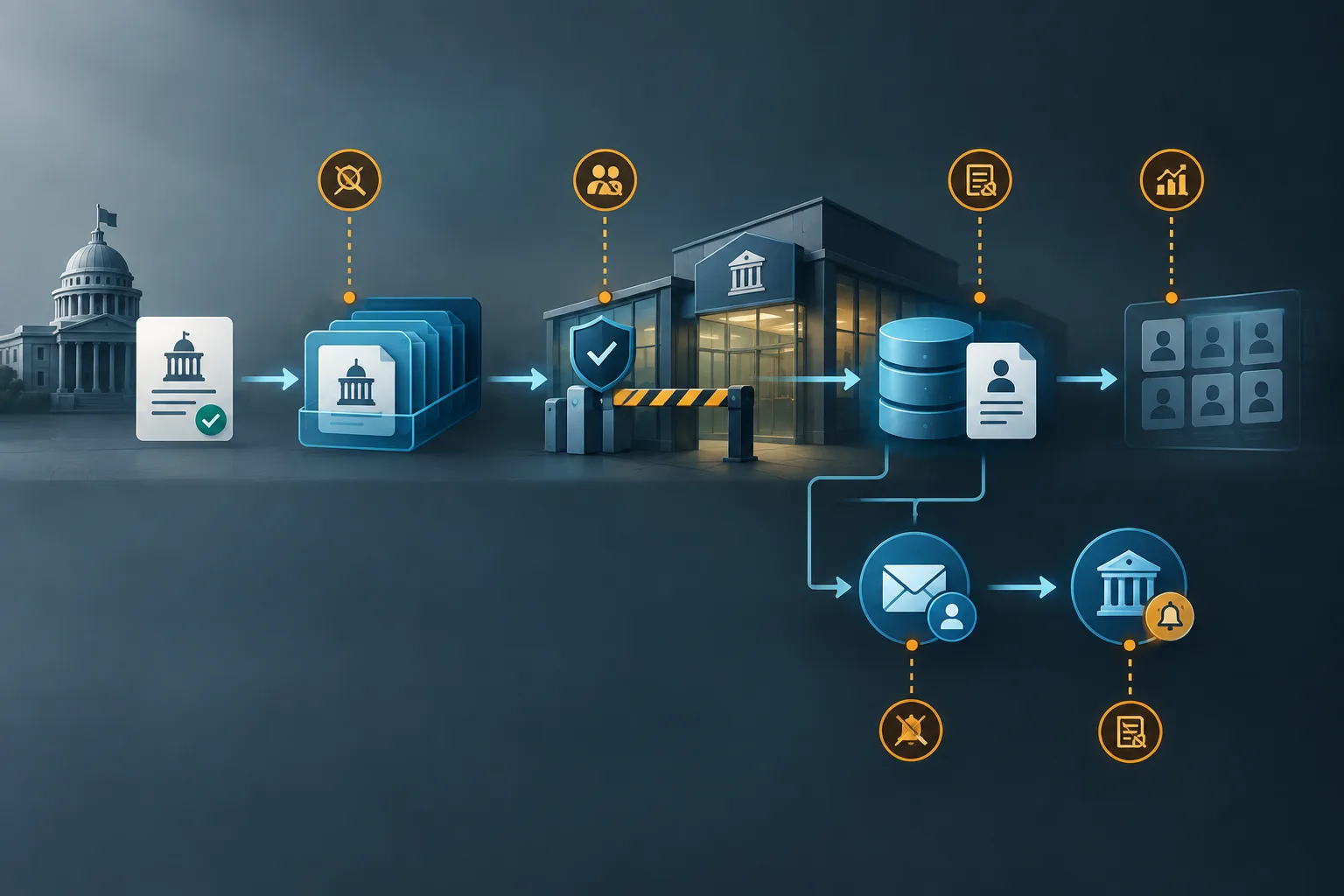
The U.S. Department of Homeland Security has finalized a significant overhaul of the F-1 international student visa framework, with an effective date of September 15 (subject to congressional review). The rule’s core mechanics are straightforward, but its second-order effects are anything but.
Key provisions include:
- A four-year cap on total F-1 duration, limiting how long a student can remain in the U.S. under the program.
- A shorter post-completion grace period, reduced from 60 days to 30 days, compressing the window to transfer status, depart, or take next steps.
- A prohibition on “degree-level looping,” preventing students from enrolling in a second program at the same or lower degree level after completing their current course of study.
DHS frames the changes as a necessary modernization to reduce national-security risks, curb visa fraud, and manage the overall volume of international enrollees. That rationale will resonate with policymakers focused on enforcement and administrative clarity. Yet immigration attorneys and higher-education leaders warn that the rule may introduce friction into one of America’s most productive—and globally envied—economic engines: the student-to-skilled-worker pipeline that feeds U.S. innovation.
The immediate question for markets, universities, and employers is not whether the U.S. can still attract talent, but whether it can do so at scale while maintaining the predictability that global applicants and corporate workforce planners require.
Universities as economic infrastructure: tuition, research throughput, and regional innovation
International students are not merely a campus demographic; they are a material component of the U.S. higher-education business model and research apparatus. Many pay full tuition, cross-subsidizing programs and stabilizing budgets—especially at public universities navigating structural fiscal pressures. A policy that reduces flexibility and length of stay can change applicant behavior quickly, particularly among students weighing multiple OECD destinations.
Potential pressure points include:
- Revenue sensitivity and budget planning
– International tuition often functions as a financial backstop amid rising costs and constrained state funding.
– A decline in enrollment can force difficult tradeoffs: tuition increases for domestic students, reduced course offerings, or cuts to research support.
- Research capacity and grant competitiveness
– Graduate-level international students are deeply embedded in U.S. lab operations, from data collection to experimental design.
– Reduced doctoral and master’s enrollment can slow lab throughput, affecting timelines for federally funded projects and industry-sponsored research.
- Regional innovation spillovers
– University-driven ecosystems—biotech corridors, AI hubs, advanced manufacturing clusters—depend on a steady inflow of specialized talent.
– When universities weaken, local economies feel it through fewer startups, fewer patents, and less industry-university collaboration.
The four-year duration cap may be particularly consequential for students in programs where time-to-completion is variable—such as research-intensive STEM tracks, interdisciplinary degrees, or programs requiring co-ops and extended internships. Even if exceptions exist in practice, the perceived rigidity alone can alter global decision-making, especially among top-tier candidates who optimize for certainty.
The workforce pipeline at risk: OPT adjacency, hiring friction, and offshoring incentives
While the rule focuses on F-1 status, the business community will interpret it through a labor-market lens: how reliably does the U.S. convert education into employable, job-ready talent? The U.S. technology, engineering, and research sectors have long relied on international graduates as a critical source of specialized skills—often developed in U.S. labs and aligned with U.S. industry needs.
A shorter grace period and tighter program progression rules may create:
- Higher transaction costs for employers
– The shift from 60 to 30 days compresses timelines for onboarding, legal processing, and contingency planning.
– Companies that rely on extended internships, co-ops, or post-graduation transitions may face more frequent disruptions.
- Recruiting gaps in high-skill roles
– If students perceive the U.S. pathway as less navigable, they may choose Canada, Australia, or parts of Europe where post-study work rights are more predictable.
– Employers could see increased competition for a smaller pool of candidates, pushing wage inflation in niche roles.
- A subtle push toward offshoring
– Policymakers may seek to onshore advanced manufacturing and R&D, but constrained domestic talent availability can nudge firms to place knowledge work where hiring is easier.
– The result can be a paradox: stricter visa controls intended to strengthen national resilience may unintentionally encourage global dispersion of critical expertise.
For corporate strategy teams, the practical implication is scenario planning. Talent constraints rarely appear as a single shock; they compound across hiring cycles, product roadmaps, and research timelines. Firms that depend on specialized STEM labor may increasingly treat immigration policy as a core operational risk—alongside supply-chain volatility and cybersecurity.
Security, soft power, and the innovation paradox in global talent competition
DHS’s stated objective—reducing fraud and national-security exposure—reflects legitimate concerns in an era of heightened geopolitical competition and sensitive technology transfer. Yet the strategic calculus is complicated by a reality that has long benefited the U.S.: lawful, trackable student flows are one of the most transparent and influence-building channels in global mobility.
If the U.S. becomes less attractive or less predictable, several geopolitical and innovation dynamics may follow:
- Soft power erosion
– U.S. higher education has historically served as a durable instrument of influence, shaping global leaders and professional networks.
– If top candidates pivot elsewhere, the U.S. risks ceding long-term diplomatic and commercial leverage.
- Cross-border research drag
– Emerging fields—AI, quantum computing, advanced materials, biomanufacturing, pandemic preparedness—depend on sustained collaboration and continuity.
– Shorter stays and tighter pathways can discourage multi-year research consortia and reduce continuity in high-impact labs.
- Market openings for alternatives
– Edtech and remote credentialing providers may gain share as students seek U.S.-branded education without U.S. visa exposure.
– Universities may respond by expanding hybrid programs, offshore campuses, and dual-degree partnerships in more visa-flexible jurisdictions.
What happens next will likely be shaped as much by institutional adaptation as by formal policy debate. Universities may accelerate international partnerships and build analytics to track application volumes and yield rates in real time. Employers may diversify hiring pipelines, expand remote teams, and intensify workforce planning around immigration variability. Meanwhile, advocacy coalitions—universities, state governments, and technology consortia—are poised to press for targeted exemptions, particularly for research-critical STEM fields and for timelines that better align with post-study processing realities.
The rule signals a strategic inflection point: the U.S. is testing whether it can tighten immigration controls without weakening the very talent and research systems that underpin its economic dynamism. In a world where human capital is increasingly the scarcest resource, the countries that win will be those that pair security with speed, scrutiny with predictability, and enforcement with an unmistakable welcome for the world’s most capable minds.

 By
By
 By
By


 By
By

 By
By
 By
By