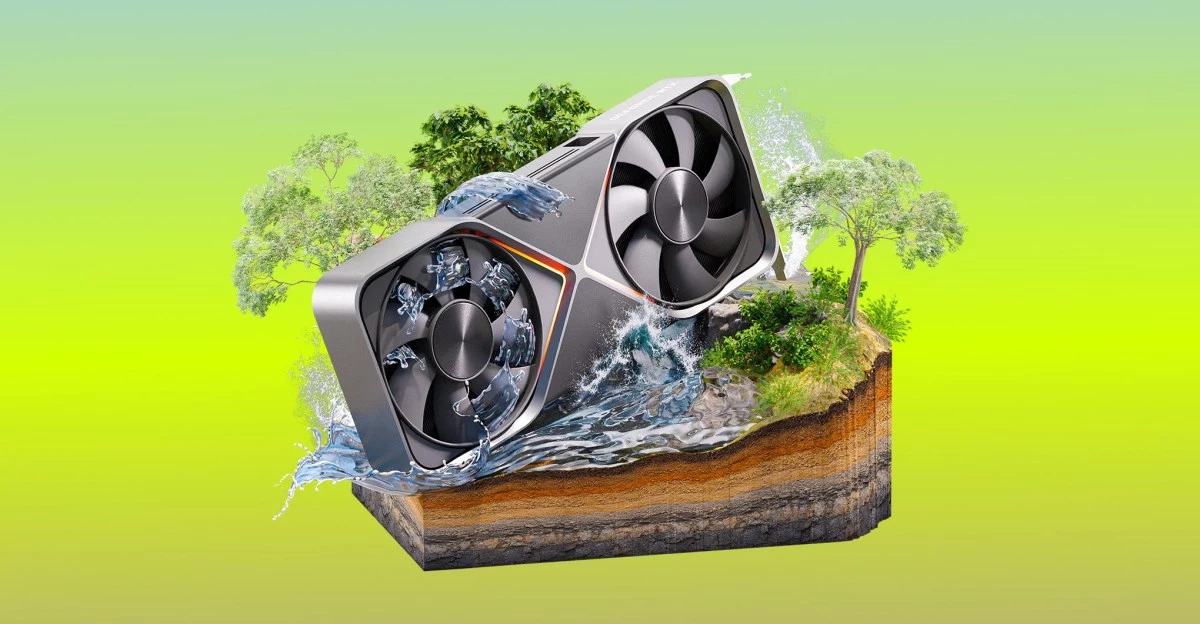

AI’s GPU Boom Meets the Physical Limits of Power, Water, and Local Consent
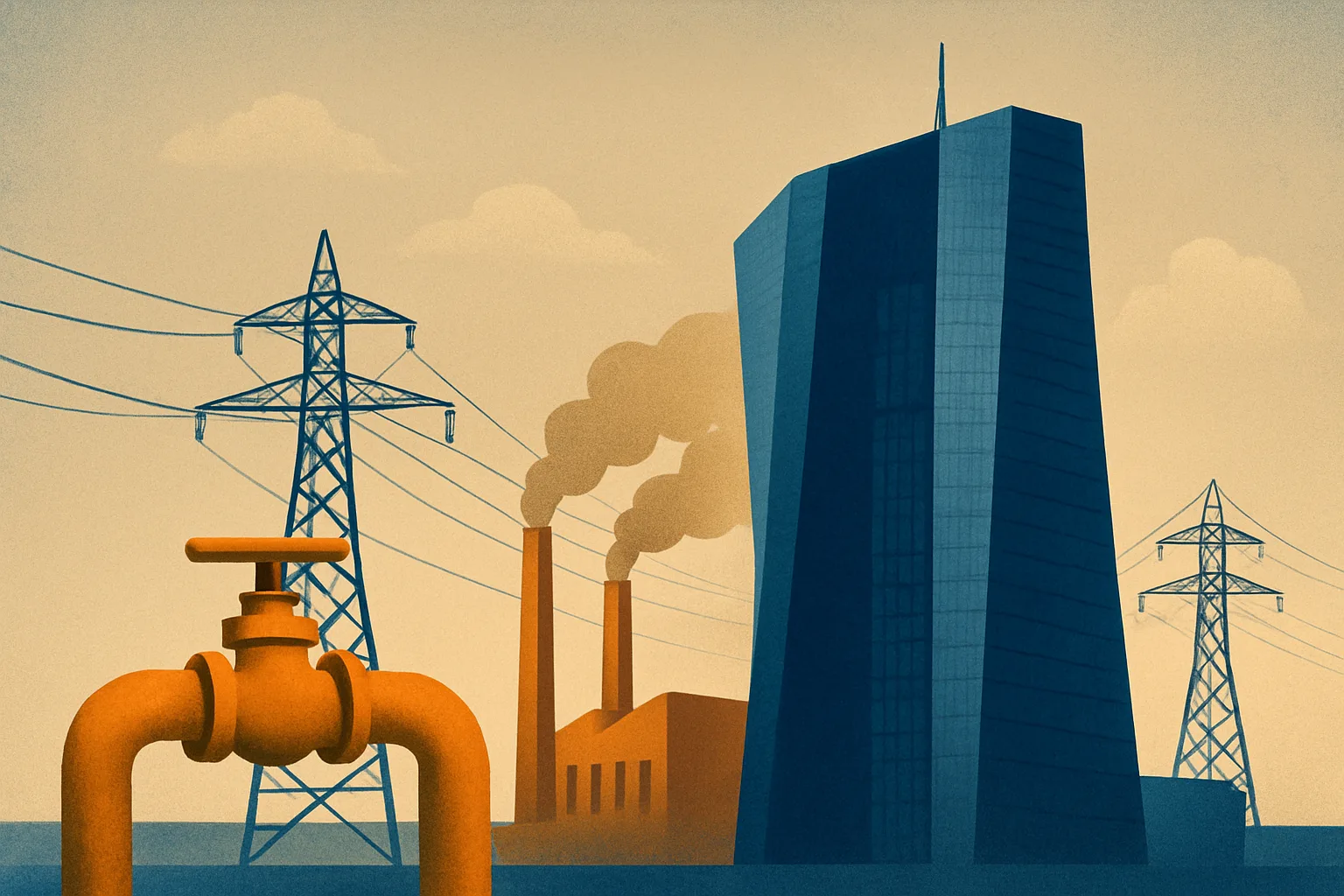
The global race to scale artificial intelligence has a tangible footprint: more GPUs, more data centers, and more strain on the basic utilities that make digital infrastructure possible. The United States’ lead in data-center capacity underscores how quickly AI workloads—especially training and high-volume inference—are reshaping industrial planning, grid strategy, and municipal politics.
What is emerging is not a simple story of “tech growth versus the environment,” but a more operational reality: AI compute is becoming a contested resource. Electricity demand rises not only from servers, but from the cooling systems required to keep dense GPU racks stable. Water, often treated as a secondary input in public debate, is moving to the foreground as freshwater withdrawals for cooling collide with drought cycles and local scarcity. At the same time, communities near proposed sites are increasingly vocal about noise, air-quality impacts from backup generation, land-use changes, and perceived inequities in who benefits.
For businesses, this shifts AI infrastructure from a back-office capacity decision into a board-level risk domain. The question is no longer whether AI delivers productivity gains—many applications clearly do, from medical diagnostics to weather forecasting—but whether the environmental and social costs are being measured, governed, and fairly allocated. In that sense, the AI data-center buildout is becoming a live test of corporate credibility on sustainability and community partnership, not merely a test of engineering prowess.
Cooling, Architecture, and the New Engineering Baseline for AI Data Centers
As GPU density increases, the industry’s traditional reliance on air cooling is showing its limits. The next phase of AI infrastructure is being defined by thermal management innovation, with liquid cooling and immersion approaches moving from experimental deployments toward mainstream procurement requirements.
Key technology trajectories now shaping data-center design include:
- Liquid cooling and immersion systems: These approaches can materially reduce cooling overhead, with reported energy-use reductions on the order of 30–50% versus air-cooled racks in certain configurations. Beyond efficiency, they also address a practical constraint: air cooling struggles as rack power densities climb.
- Two-phase immersion experiments in hyperscale environments: Early adopters are effectively setting a market expectation that high-performance AI clusters must be designed around advanced cooling from day one, not retrofitted later.
- Edge computing and hybrid edge-core AI: For many inference workloads—latency-sensitive applications, localized analytics, or bandwidth-heavy streams—distributed compute can reduce long-haul network load and avoid concentrating energy and water demand in a single mega-site. The likely end state is not “edge replaces cloud,” but a hybrid architecture that optimizes cost, performance, and environmental externalities.
This is where AI strategy becomes inseparable from infrastructure strategy. A model’s performance-per-parameter matters, but so does performance-per-watt, performance-per-liter, and performance-per-ton of embodied carbon. The firms that treat cooling and architecture as first-class strategic variables—rather than facilities afterthoughts—are positioning themselves for a world where permitting, grid interconnection, and community acceptance can be the true bottlenecks.
Critical Minerals, Export Controls, and the Quiet Fragility of the GPU Supply Chain
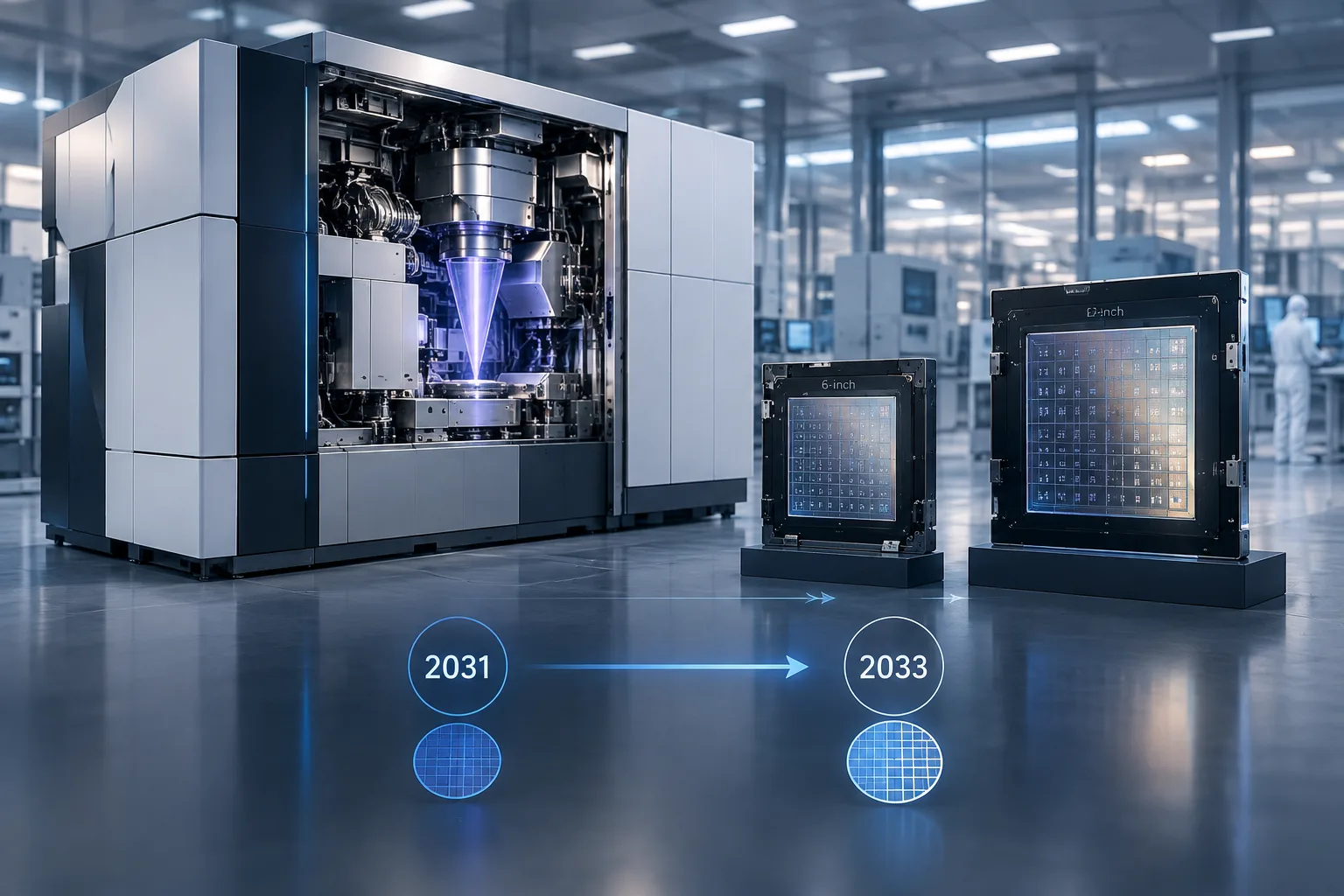
The AI boom is often narrated through software breakthroughs, yet its enabling hardware depends on a supply chain that is both concentrated and politically exposed. GPU fabrication and advanced packaging rely on a small number of leading-edge foundries operating amid export-control regimes and geopolitical tension. Meanwhile, upstream mining for cobalt, copper, and rare earth elements is geographically concentrated in regions where governance challenges and human-rights concerns can create both supply shocks and reputational risk.
For enterprises scaling AI, this introduces a new strategic vocabulary:
- Compute sovereignty: Nations are increasingly treating AI compute capacity as strategic infrastructure. Tariffs, export controls, and national AI initiatives can fracture what used to be a relatively globalized procurement model.
- Geo-diversified sourcing and capacity planning: Multinational firms are recalibrating where they build, lease, or partner for capacity to reduce exposure to regulatory discontinuities.
- Material substitution and next-gen power electronics: Research into alternatives and efficiency enablers—such as silicon carbide (SiC) and gallium nitride (GaN)—is not only about performance; it is about resilience and reducing dependence on constrained inputs.
This is also where ESG becomes operational rather than rhetorical. The environmental impacts of mining—habitat disruption, toxic byproducts, and water contamination—are increasingly part of the AI value chain’s public scrutiny. As AI adoption expands, companies may find that their brand risk is shaped as much by upstream mineral provenance as by downstream model behavior.
ESG Metrics Become Financial Metrics: Carbon, Water, E-Waste, and the License to Operate
The most consequential shift may be financial: climate and resource risk are being priced into capital. Investors, rating agencies, and regulators are steadily moving toward more standardized disclosure expectations, including under regimes such as the EU’s Corporate Sustainability Reporting Directive and evolving climate disclosure rules elsewhere. For AI-heavy businesses, that means the footprint of compute is becoming legible—and comparable.
Three pressure points stand out:
- Carbon intensity per AI workload: Organizations are increasingly judged not just on total emissions, but on carbon per training run or per unit of deployed inference. This can influence credit perceptions and cost of capital as climate risk is embedded into valuation models.
- Water scarcity as a gating constraint: Municipalities may impose moratoria, tiered pricing, or strict permitting conditions on large withdrawals. Hydrological modeling and community impact assessments are becoming essential to avoid delays, litigation, or shutdowns.
- E-waste accumulation and circular-economy opportunity: Projections that AI servers could generate millions of metric tons of e-waste by 2030 highlight a looming infrastructure gap in recycling and refurbishment. Yet the same wave creates a market: component harvesting, material reclamation, and refurbishment can become strategic capabilities—potentially even vertically integrated by cloud and colocation leaders.
A particularly notable frontier is compute carbon accounting: the idea that organizations will track and allocate carbon budgets internally at the workload level, potentially evolving into tradable “compute-carbon” credits across departments or partners. Whether such mechanisms mature into credible markets will depend on measurement integrity and standards—precisely the area where industry consortia and transparent reporting can either build trust or invite backlash.
Ultimately, the AI data-center expansion is forcing a more mature bargain between innovation and infrastructure. Companies that embed sustainability into compute strategy—measuring water use, lifecycle emissions, and end-of-life pathways with the same rigor applied to model accuracy—will be better positioned to secure permits, maintain community trust, and withstand geopolitical and regulatory volatility. The next competitive moat in AI may be less about who has the biggest cluster, and more about who can operate at scale without exhausting the resources—and patience—of the world around them.

 By
By
 By
By

 By
By
 By
By
 By
By

 By
By