
A new AI contender reshapes the competitive map: Moonshot AI and Kimi K3
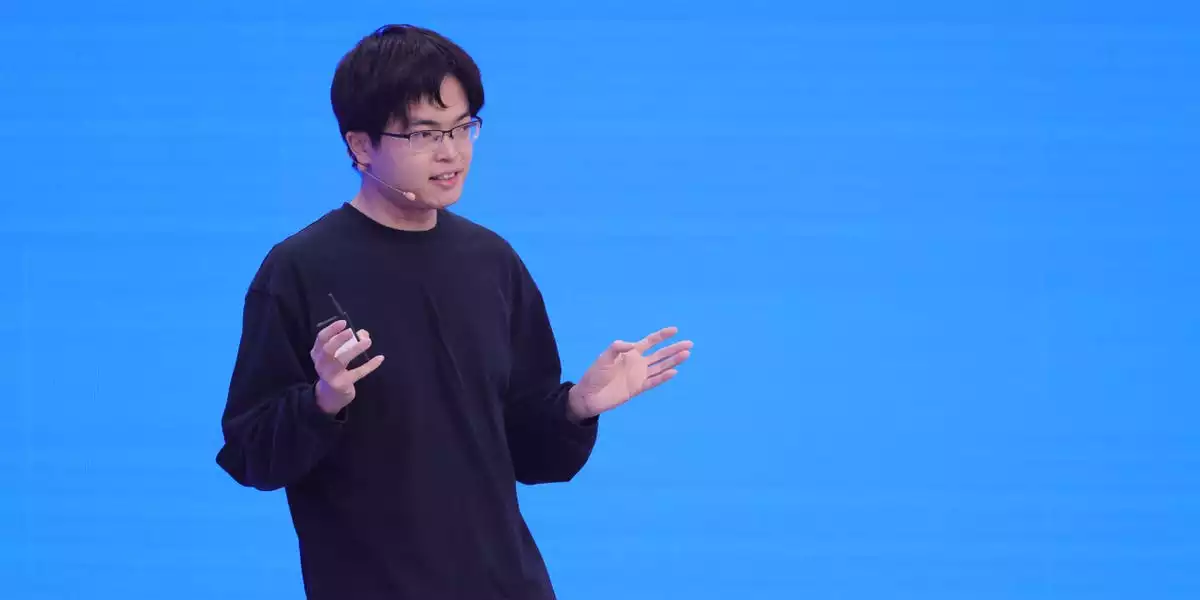
Moonshot AI’s rapid rise—catalyzed by the launch of its Kimi K3 large language model (LLM)—is a telling signal that the global AI hierarchy is becoming more fluid, more contested, and less anchored to a single geography. Led by cofounder and CEO Yang Zhilin, the Beijing-based startup has moved with unusual speed since its early-2023 founding, translating elite academic training (Tsinghua University and Carnegie Mellon University) and high-caliber industry exposure (including internships at Google Brain and Meta) into a product narrative that is increasingly difficult for incumbents to dismiss.
Yang’s résumé also reflects a broader pattern in frontier AI: the most valuable leaders are often those who have operated across research, systems engineering, and large-scale deployment. His involvement with major Chinese AI efforts—such as Huawei’s PanGu and the Beijing Academy of Artificial Intelligence’s Wu Dao—suggests a familiarity not only with model development, but with the institutional and infrastructure realities required to build at scale.
Early external validation matters in a market saturated with performance claims. Endorsements and benchmark chatter—such as attention from Vercel CEO Guillermo Rauch—have helped position Kimi K3 as credible competition to leading U.S. proprietary models, at least in certain developer-centric tasks. Whether K3 ultimately proves consistently superior is less important than what its emergence represents: a widening field of labs capable of producing top-tier LLM performance, and a narrowing window for incumbents to rely on brand gravity alone.
The engineering turn in large language models: why “scale” is back in the spotlight
Moonshot AI’s stated philosophy—prioritizing scale and engineering execution over novel algorithms—lands at a moment when the industry is quietly rebalancing its innovation story. The past two years have elevated the idea that architectural breakthroughs are not the only—or even primary—determinant of real-world model quality. Increasingly, advantage is found in the unglamorous layers: hardware utilization, distributed training efficiency, inference optimization, and reliability under load.
Kimi’s earlier K2 model, noted for an expanded context window, foreshadowed this direction. Larger context is not merely a feature; it is an enabling constraint that forces a lab to master memory management, attention efficiency, and end-to-end systems design. If K3 is indeed strong on web engineering and code-adjacent benchmarks, that points to a competitive frontier where performance is shaped by:
- Systems integration: compiler optimizations, kernel tuning, and multi-host synchronization
- Inference efficiency: latency, throughput, and cost per token under production traffic
- Context management: long-document coherence, retrieval strategies, and tool use across extended sessions
- Operational robustness: monitoring, fallback behaviors, and predictable outputs for enterprise workloads
This is also where “scale laws” mature into operational discipline. As algorithmic gains become more incremental, leading teams differentiate through engineering throughput—the ability to iterate quickly, train reliably, and deploy efficiently. For enterprise buyers, that shift matters: it changes procurement criteria from abstract model rankings to measurable production outcomes like uptime, integration effort, and total cost of ownership.
Context depth meets vertical value: where Kimi-style models can monetize
Extended context windows and strong developer performance are not just technical flexes; they map cleanly onto high-value enterprise workflows. The commercial opportunity is clearest where organizations face long, complex inputs and high switching costs—domains where a model’s ability to “hold the whole problem” in working memory becomes a practical advantage.
Likely near-term application contours include:
- Legal and compliance review: long contracts, regulatory filings, and audit trails
- Financial due diligence: multi-document synthesis across reports, disclosures, and correspondence
- Software engineering copilots: navigating large codebases, refactoring, and multi-repo reasoning
- Knowledge operations: policy libraries, internal wikis, and cross-departmental documentation
This is also where platform strategy becomes decisive. Even if K3 remains proprietary, the market is splitting into two complementary lanes:
- Proprietary LLMs competing on performance guarantees, enterprise support, and SLAs
- Open-weight ecosystems (e.g., Llama-style momentum) accelerating experimentation, customization, and edge deployment
For many companies, the winning posture will be hybrid: proprietary models for regulated or mission-critical workloads, and open models for rapid prototyping, fine-tuning, and cost-controlled deployments. The strategic question is less “open vs. closed” than how to architect optionality—so model choice can evolve without rewriting the business.
Talent flows and geopolitics: Yang Zhilin’s return as a policy signal
Yang’s decision to return to China rather than remain in U.S. labs has reignited a debate that business leaders can no longer treat as abstract: immigration policy is now industrial policy in AI. Advanced AI talent is globally mobile, and the marginal difference between “can stay and build” versus “must leave and build elsewhere” can redirect entire companies, supply chains, and ecosystems.
Moonshot AI’s ascent also underscores a broader geopolitical reality: the AI market is trending toward bifurcated or multipolar ecosystems, shaped by export controls, data-localization rules, and divergent standards for model governance. For multinational enterprises, that fragmentation will increasingly influence vendor selection, deployment geography, and partnership design.
Pragmatically, executives should read the Kimi K3 moment as a prompt to recalibrate:
- Diversify AI sourcing across regions and model types to reduce single-jurisdiction risk
- Invest in systems and ModelOps talent, not only research hires, because efficiency is now a core moat
- Plan for margin compression as more high-performing models enter the market and per-token pricing normalizes
- Engage policy and standards bodies where immigration, compute access, and compliance regimes shape competitiveness
Moonshot AI’s Kimi K3 is not merely a new model release; it is a marker that frontier capability is diffusing, engineering execution is becoming the differentiator, and the global contest for AI leadership is increasingly decided by who can assemble talent, compute, and deployment pathways fastest—wherever they happen to be building.

 By
By
 By
By
 By
By
 By
By
 By
By


 By
By