
A cyclospora outbreak that exposes the modern produce paradox: scale without certainty
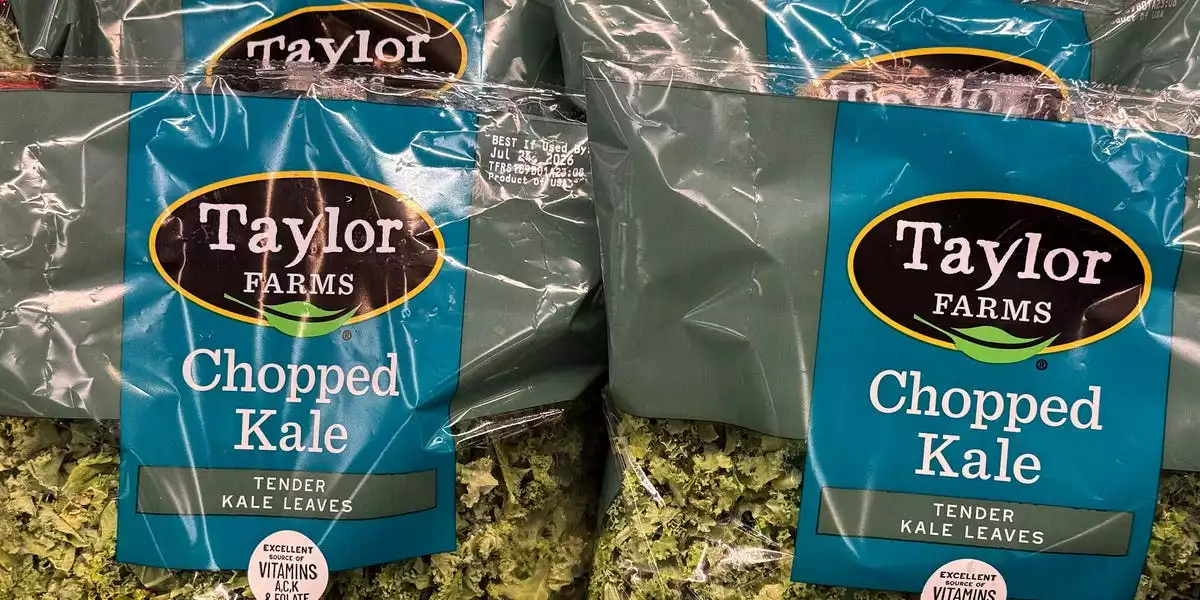
More than 1,600 confirmed cyclosporiasis cases across five U.S. states—alongside 94 hospitalizations—have been traced to shredded iceberg lettuce served at Taco Bell, according to the FDA and CDC. The agencies’ findings point to a single independent farm supplying iceberg lettuce to Taylor Farms de México, after which Taylor Farms moved to withdraw iceberg lettuce sourced from central Mexico. Taco Bell, for its part, has removed the implicated lettuce from its supply chain while federal investigators assess whether additional products, lots, or suppliers could be involved.
For the business and technology community, the episode is less a one-off food safety scare than a high-visibility case study in the produce industry’s central tension: the sector has mastered industrial-scale freshness—fast harvest cycles, cold-chain logistics, and nationwide distribution—yet still struggles to deliver industrial-scale certainty when contamination emerges. Parasites like *Cyclospora* are particularly unforgiving because they are difficult to detect quickly, can spread through complex agricultural pathways, and often reveal themselves only after consumers fall ill.
This is also a reputationally sensitive moment because Taylor Farms is not an unknown player. Founded in 1995, it has become a multibillion-dollar fresh-produce company with 24,000 employees, 22 North American production sites, and a broad portfolio spanning packaged salads, fresh-cut vegetables, and meal kits. Its history includes a 2013 Cyclospora outbreak (631 illnesses) and a 2024 E. coli incident tied to slivered onions supplied to McDonald’s—context that raises the stakes for how quickly and transparently the company, its customers, and regulators can demonstrate control.
Traceability, detection, and the shift from “find the source” to “stop the shipment”
The most consequential technology lesson from this cyclospora outbreak is that traceability is still too slow for the speed of modern food distribution. Even when investigators ultimately identify a likely source, the elapsed time can be measured in days or weeks—long enough for contaminated product to move through multiple nodes, be commingled, and reach consumers at scale.
A next-generation food safety posture increasingly hinges on three capabilities:
- End-to-end digital traceability (lot-level, not just supplier-level)
Traditional recordkeeping can be fragmented across growers, processors, distributors, and restaurant operators. Distributed-ledger or blockchain-based provenance systems are often proposed not as a buzzword, but as a practical mechanism to create tamper-resistant, interoperable records that accelerate traceback. The business value is straightforward: compress the time from “signal detected” to “implicated lot isolated,” reducing both illnesses and recall blast radius.
- Real-time or near-real-time pathogen detection at critical control points
Emerging tools—lab-on-a-chip assays, rapid molecular methods, and AI-driven hyperspectral imaging—suggest a future where processors can screen more frequently and non-destructively. While *Cyclospora* presents unique detection challenges compared with bacteria like *E. coli*, the strategic direction is clear: move from a system that primarily reacts to outbreaks to one that intercepts anomalies before distribution.
- Predictive analytics tied to environmental monitoring
Parasite risk is shaped by variables that are increasingly measurable: weather patterns, irrigation sources, soil conditions, and farm practices. Machine learning models that fuse historical outbreak data with real-time environmental inputs can help identify risk zones and high-risk windows, guiding targeted sampling and operational decisions. This is where food safety begins to resemble other data-intensive industries: prevention becomes a modeling problem as much as a compliance problem.
The deeper implication is that the industry’s competitive frontier may shift from who can process and ship fastest to who can prove safety fastest—with auditable data that regulators and buyers can trust.
The economics of a recall: brand equity, pricing pressure, and systemic concentration risk
Large-scale withdrawals—reported here as affecting distribution across 27 states—carry immediate costs: logistics, product loss, operational disruption, and potential litigation exposure. But the longer-term economic damage often accrues through brand equity erosion and buyer skepticism, particularly when outbreaks recur within a category like leafy greens that already faces heightened consumer concern.
Several business dynamics are likely to intensify:
- Pricing and contract pressure from major buyers
Restaurant chains and retailers increasingly demand measurable safety assurances—more testing, tighter specifications, faster reporting. Those requirements can raise costs, and the negotiation question becomes who absorbs them: growers, processors, or downstream brands.
- Consolidation versus diversification
Scale brings efficiency and negotiating leverage, but it can also concentrate risk. When a large processor supplies many downstream brands, a single contamination event can ripple widely. This may encourage companies to pursue portfolio diversification—including product lines with lower pathogen exposure (for example, heat-treated or shelf-stable offerings)—or to build redundancy across geographies and facilities.
- Trust as a monetizable asset
In fresh produce, trust is not abstract; it influences shelf placement, menu decisions, and consumer willingness to buy pre-cut products. Companies that can demonstrate verifiable traceability, rapid testing turnaround, and transparent corrective actions may find that safety investment becomes a differentiator rather than merely a cost center.
Taylor Farms’ scale and history make it a bellwether: how it operationalizes corrective measures—beyond immediate withdrawal actions—will be watched closely by enterprise buyers evaluating supplier risk.
Regulation, climate, and the next operating model for leafy greens supply chains
Regulatory scrutiny tends to harden after high-profile outbreaks, and this case arrives amid broader momentum toward stricter traceability and preventive controls. As the FDA and state agencies continue investigations, the industry should anticipate a push toward:
- More stringent traceability requirements and faster access to standardized records
- Higher frequency environmental testing and clearer accountability across cross-border supply chains
- Stronger expectations for supplier verification, especially when product is commingled or processed into ready-to-eat formats
Overlaying all of this is a structural accelerant: climate-driven pathogen dynamics. Warmer temperatures, altered rainfall patterns, and shifting growing seasons can expand the geographic and seasonal footprint of parasites like *Cyclospora*. That reality pressures producers to revisit planting calendars, water management, and field sanitation with a level of rigor historically associated with controlled manufacturing environments.
The strategic endpoint is not simply “fewer outbreaks,” but a re-architected system in which fresh-produce leaders build resilience by design: redundant sourcing zones, modular processing that can be isolated quickly, vertically integrated testing capacity, and shared industry testbeds where technology providers, growers, processors, and regulators validate what works at commercial scale. In a market where speed and freshness have long been the defining metrics, the next era will reward the companies that can ship quickly—and prove, with data, that they should.

 By
By
 By
By
 By
By
 By
By
 By
By


 By
By