
Shenzhen’s URKL: When humanoid robotics becomes a mass-market spectacle
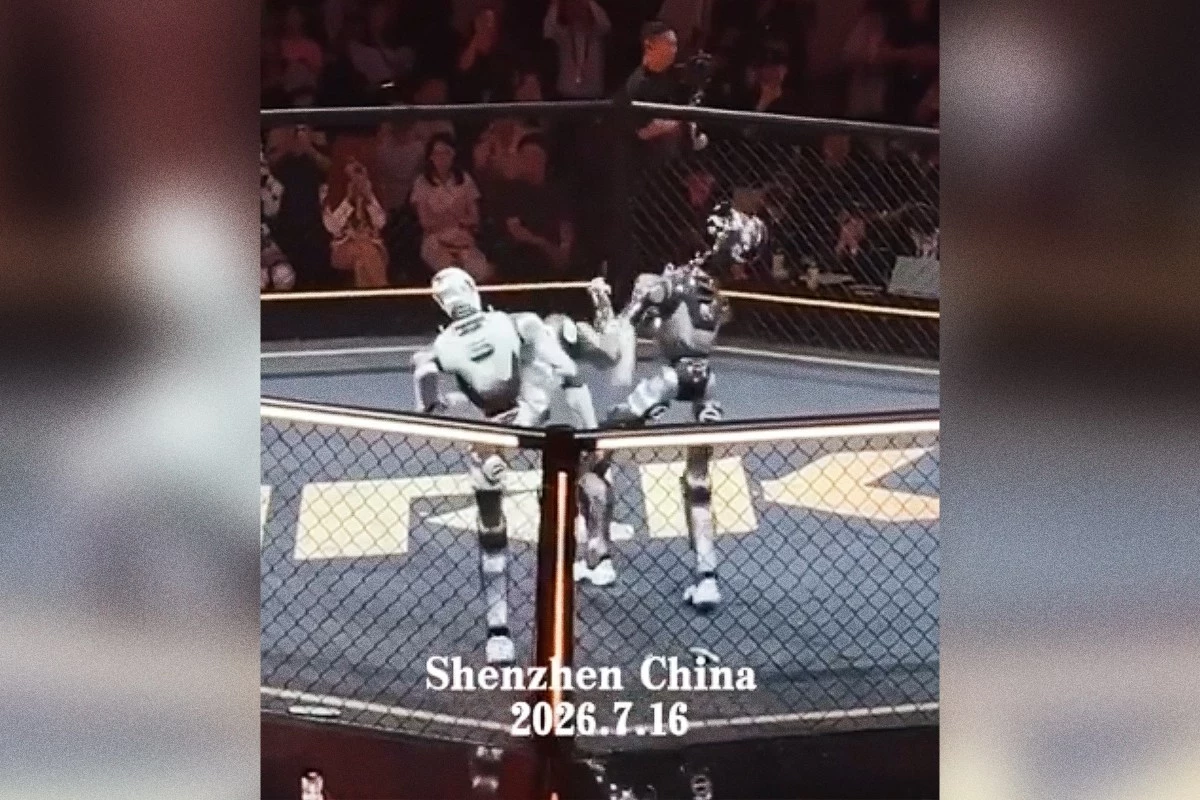
The inaugural Ultimate Robot Knock-out Legend (URKL) in Shenzhen was staged as a combat tournament, but it functioned more like a live, high-bandwidth product demonstration for the next era of humanoid robotics. With 32 international teams competing on EngineAI’s T800 humanoid platform, the event blended martial-arts theater with engineering proof points—an approach designed to capture public imagination while compressing the feedback loop that typically slows robotics development.
The viral moments were not incidental; they were the message. A dramatic flying kick that detached an opponent’s head—while sensational in presentation—signaled tangible progress in actuator power, structural resilience, and real-time control under chaotic conditions. Even the optics of celebrity involvement, including Donnie Yen’s presence, and the widely shared clip of EngineAI’s CEO absorbing T800 strikes, served a strategic purpose: to translate complex robotics advances into instantly legible, emotionally resonant media.
URKL’s deeper significance lies in what it implies about the market’s direction. Humanoid robots are no longer framed solely as factory-floor tools; they are being positioned as consumer-facing machines—with entertainment as the wedge that accelerates adoption, funding, and ecosystem formation.
The T800 platform as a stress test for next-generation humanoid engineering
Combat is an unusually revealing benchmark for robotics because it forces systems to perform under impact, instability, and adversarial interaction—conditions that expose weaknesses faster than controlled lab trials. URKL’s single-platform rule, requiring teams to build on the EngineAI T800, effectively turned the tournament into a standardized testbed for rapid iteration.
Key technical implications emerging from the event include:
- Humanoid platform maturation under load: The T800’s performance points to advances in high-torque brushless motors, compact hydraulic actuation, and durable composite structures. The ability to deliver human-scale motion while tolerating repeated impacts is directly relevant to industrial environments where robots must operate around heavy equipment, uneven surfaces, or unpredictable contact.
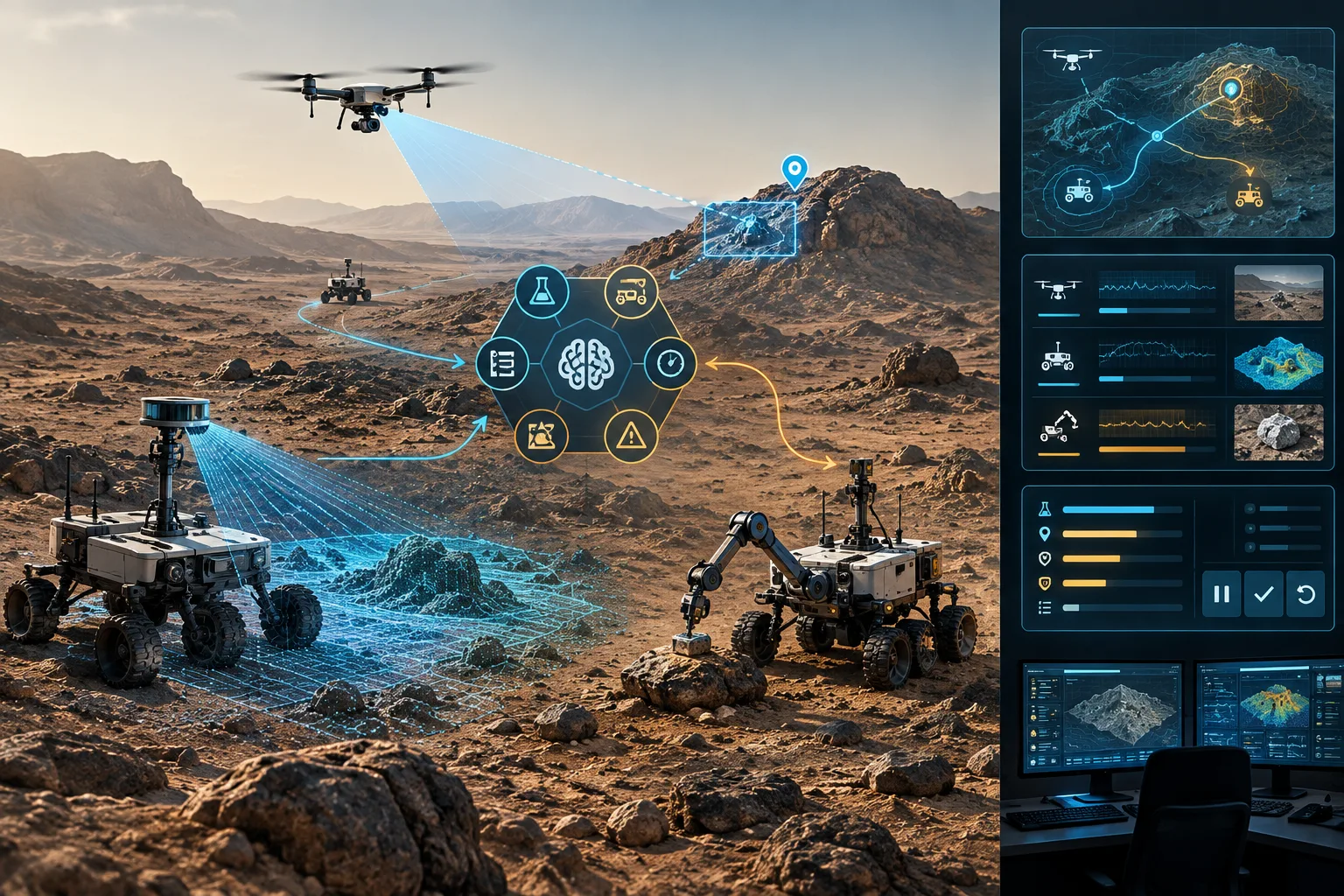
- On-board intelligence and closed-loop control: Real-time balance recovery, gait adjustment, and opponent tracking depend on sensor fusion—typically combining vision systems, IMUs, and proprioceptive feedback—paired with control policies increasingly shaped by reinforcement learning. These are the same foundational capabilities required in logistics automation, inspection robotics, and emergency response.
- Standardization and modularity as an ecosystem accelerator: By anchoring competition on a shared platform, URKL encourages a market for interoperable sensors, software modules, and end-effectors. This tournament-driven standardization echoes patterns seen in early open-source ecosystems: shared baselines reduce friction, expand participation, and can commoditize components faster than traditional vendor-led roadmaps.
For technology leaders, the most consequential takeaway is that “combat-tested” is not just marketing language. It is a proxy for robustness engineering, and robustness is the currency that determines whether humanoids can move from demos to dependable deployment.
A new robotics economy: media rights, supply chains, and valuation gravity
URKL also reads as a deliberate attempt to create a new commercial category: robot combat sports as a scalable entertainment vertical. If eSports proved that competition formats can industrialize content production, URKL suggests a similar arc—only with physical machines, real-world risk management, and hardware supply chains embedded in the business model.
Economically, several layers are forming at once:
- Entertainment monetization pathways: live ticketing, broadcast and streaming rights, sponsorships, merchandising, and branded technology partnerships. The format is inherently clip-friendly, making it well-suited to algorithmic distribution and global audience growth.
- Industrial demand spillovers: higher visibility tends to pull forward procurement and R&D in enabling components—servo drives, gearboxes, power electronics, battery systems, and ruggedized materials. China’s manufacturing depth and integration across these categories positions domestic suppliers to scale quickly and export aggressively.
- Investment and valuation dynamics: high-profile events can reshape investor narratives, lifting valuation multiples for platform companies like EngineAI while drawing capital into adjacent markets such as robot-as-a-service, simulation and digital twin tooling, and safety-certified actuator stacks.
This is where URKL’s structure matters: a standardized platform reduces uncertainty for developers and sponsors alike. It also creates a clearer path for third parties to build compatible modules—turning a one-off event into a repeatable market mechanism.
Soft power, dual-use scrutiny, and the race to govern humanoid capability
URKL’s cultural packaging—martial arts aesthetics fused with advanced engineering—functions as a form of technology soft power. It projects a narrative of Chinese leadership in embodied AI and robotics, not through white papers, but through globally shareable spectacle. That exportability is strategic: a “gladiator robotics” format can travel as a combined media franchise and industrial showcase, much like air shows have historically served aerospace.
At the same time, the event highlights regulatory and geopolitical pressure points that will intensify as humanoids become stronger and more autonomous:
- Dual-use concerns: demonstrated kinetic force and mobility inevitably raise questions about repurposing, even if the immediate application is entertainment.
- Safety and liability frameworks: regulators will be pushed to define standards spanning arena safety, operator responsibility, software assurance, and hardware fail-safes—especially as competitions evolve toward higher speeds and heavier platforms.
- Talent and national competitiveness: high-visibility tournaments can become recruitment engines, pulling students and researchers into robotics and reinforcing national STEM pipelines.
URKL ultimately signals that humanoid robotics is entering a phase where public perception, ecosystem standardization, and capital formation may move as quickly as the underlying engineering. The tournament’s most lasting impact may be that it reframes humanoids not as distant industrial assets, but as a near-term platform category—one that will be shaped as much by media and governance as by motors and code.

 By
By
 By
By

 By
By
 By
By
 By
By

 By
By