

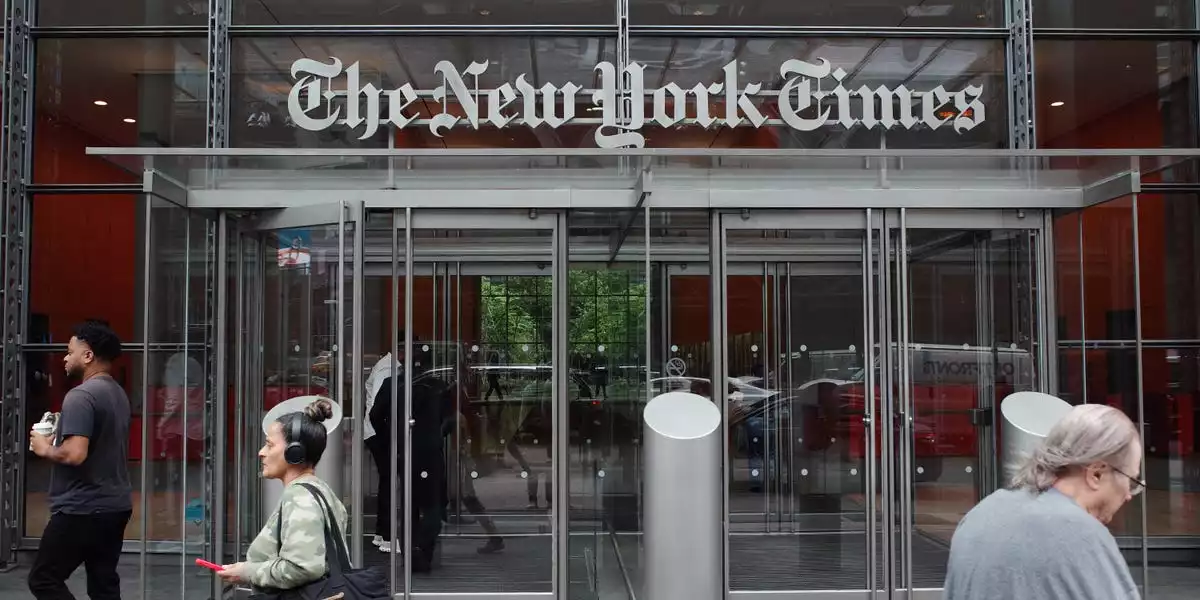

A leak probe that tests the boundary between national security and investigative reporting
The New York Times’ move to quash sealed grand-jury subpoenas—seeking testimony from five of its reporters in a Manhattan leak investigation—has become a high-stakes referendum on how aggressively the U.S. government will pursue national-security disclosures in the post-guideline era. The subpoenas, signed by U.S. Attorney Jay Clayton, target reporting that revealed a sensitive operational detail: Qatar-donated Boeing 747-8 aircraft intended for Air Force One use reportedly lack upgraded anti-missile defenses.
From the government’s perspective, the case is framed as a conventional leak inquiry with material-witness subpoenas used to identify a source and contain further disclosure. From the Times’ perspective, the subpoenas function as a punitive instrument—one that risks converting journalists into investigative auxiliaries of the state. That tension has now spilled into public view through Capitol Hill scrutiny, where senators have warned that compelling reporters to testify can create a chilling effect that extends far beyond one newsroom.
The White House’s decision to task the FBI with leading the leak investigation adds another layer: it signals that the administration views the disclosure not merely as an embarrassment, but as a matter of operational security. At the same time, senior Justice Department nominees defending the subpoenas as “routine” underscores a broader institutional posture—one that appears more comfortable testing the edges of press protections than prior DOJ regimes that treated journalist subpoenas as a last resort.
What the Air Force One retrofit story reveals about modern defense technology risk
The underlying reporting—focused on the absence of next-generation infrared countermeasures and related defensive avionics—touches a nerve in defense procurement because it highlights an uncomfortable reality: retrofitting legacy platforms is increasingly complex, slow, and vulnerable to integration gaps. Even when an airframe is modern and capable, the mission system stack—electronic warfare suites, secure communications, cryptographic modules, and countermeasure dispensers—must be validated as an integrated whole.
Several technology and defense-readiness implications stand out:
- Integration debt in high-profile platforms: A Boeing 747-8 modified for presidential transport is not simply a “plane with upgrades.” It is a layered system-of-systems where timing, certification, electromagnetic compatibility, and software assurance can become bottlenecks. Any reported gap—especially in missile-defense countermeasures—invites questions about schedule pressure versus security rigor.
- Attack-surface amplification through public disclosure: Even partial reporting on defensive capabilities can help adversaries refine targeting assumptions, model engagement windows, or tailor intelligence collection. In an era of rapid open-source intelligence exploitation, capability inference can be as valuable as explicit technical specifications.
- Supply-chain and insider-risk exposure: High-visibility modifications draw a large ecosystem of contractors and subcontractors. Public attention can increase the odds of social engineering, phishing, or recruitment attempts aimed at personnel who touch avionics, mission software, or maintenance documentation.
The geopolitical dimension of a Qatar-to-U.S. aircraft donation further complicates the technical narrative. Diplomatic gifts can accelerate availability of an asset, but they can also introduce perception risk: critics may interpret any capability shortfall—real or alleged—as evidence that strategic optics outpaced security assurance. For defense stakeholders, the lesson is less about the donor and more about governance: how to ensure that security validation, red-teaming, and certification remain non-negotiable, regardless of how an airframe is sourced.
Subpoenas, sealed proceedings, and the new compliance reality for media and industry
The legal fight is not only a First Amendment story; it is also a governance and compliance story with implications for any organization handling sensitive information—media companies, defense primes, cloud providers, and regulated enterprises alike. The Times’ posture—challenging the subpoenas and pressing to unseal documents—signals an attempt to set a boundary: that compelled testimony should not become a default tool of leak enforcement.
The broader shift is structural. Recent Justice Department policy changes have made it easier to pursue subpoenas and warrants involving journalists, reflecting a recalibration toward more expansive leak prosecutions. Even if officials characterize the requests as routine, the operational effect can be profound:
- Chilling effects are not abstract: If reporters anticipate legal exposure for routine source cultivation, fewer sources will come forward, and fewer stories will be pursued—especially those involving defense readiness, procurement, or intelligence oversight.
- Corporate counsel must plan for subpoena volatility: The same prosecutorial posture that reaches journalists can also reach employees, contractors, and vendors. Companies should assume that sealed demands for testimony or records may arrive with limited warning and high reputational stakes.
- Secrecy versus accountability becomes the battleground: When proceedings are sealed, public trust depends on institutional credibility. That credibility erodes if stakeholders perceive that secrecy is being used to avoid scrutiny rather than protect operations.
For Boeing, the prime contractor lens is unavoidable. Any narrative suggesting compromised modification processes—or insufficient testing—can affect defense-sector confidence, future contract competitiveness, and aftermarket support economics. Even if the technical reality is more nuanced than headlines imply, reputational drag can become a material business risk in defense aviation, where trust and assurance are part of the product.
Strategic takeaways for defense leaders, policymakers, and the information ecosystem
This episode sits at the intersection of defense technology integration, press freedom, and geopolitical signaling, and it is likely to shape behavior well beyond the immediate case. Three forward-looking imperatives emerge:
- Institutionalize integrated security assurance: Defense and aerospace leaders should accelerate cross-domain audits that span electronic warfare, cyber resilience, and cryptographic integrity—paired with independent red-team assessments early enough to influence design and procurement decisions.
- Build rapid legal-response muscle: Media organizations and corporations alike should maintain protocols for challenging overbroad requests, managing sealed processes, and protecting sensitive data without obstructing legitimate investigations.
- Create credible norms for vulnerability disclosure: The hardest problem is not choosing “security” or “transparency,” but designing a framework where responsible reporting, oversight, and operational protection can coexist without turning journalists into compelled witnesses by default.
The subpoenas targeting The New York Times are, on their face, a procedural move in a leak investigation. In practice, they are a stress test of how the United States balances operational secrecy, democratic accountability, and the realities of modern defense technology—a balance that will define not only this case, but the rules of engagement for national-security reporting in the years ahead.

 By
By
 By
By
 By
By


 By
By
 By
By








