
A Bronx flashpoint: when hospital automation meets hard-won labor protections
Montefiore Hospital’s decision to lay off twelve utilization nurses—experienced professionals who sit at the nerve center of patient flow, care coordination, and utilization management—has quickly become more than a local staffing dispute. It is an early, highly visible test of how U.S. health systems will reconcile AI-driven operational redesign with collective bargaining commitments and the clinical realities of complex patient care.
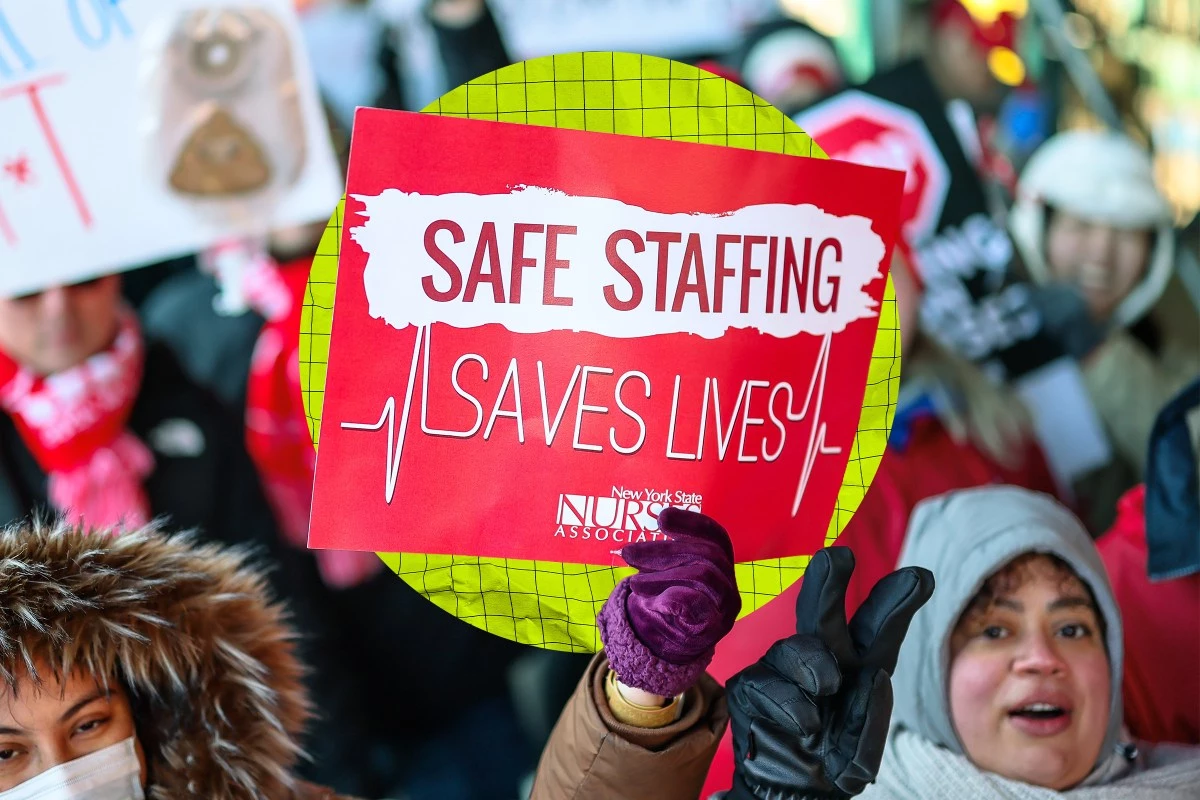
The timing is what gives this episode its broader significance. The layoffs follow a 41-day strike involving roughly 15,000 New York State Nurses Association (NYSNA) members, which produced a three-year contract that reportedly includes explicit safeguards intended to prevent AI from supplanting nursing functions. Union leaders argue the 45-day notices arrived with limited explanation and that the move effectively sidesteps the spirit—if not the letter—of that agreement. Montefiore, for its part, publicly rejects a direct causal link between the layoffs and AI deployment, framing the change as part of broader technology investments designed to “enhance patient outcomes.”
For healthcare executives, labor leaders, and regulators, the central question is not merely whether software can complete tasks once performed by nurses. It is whether the institutional role of utilization nurses—often a blend of clinical judgment, advocacy, escalation, and cross-department negotiation—can be safely reduced to workflow logic without eroding accountability when edge cases arise.
—
From decision support to operational autonomy: what changes when AI runs the queue
Healthcare has long used AI in assistive modes—radiology support, risk scoring, documentation aids. Montefiore’s reported shift toward AI-driven utilization management signals a move toward autonomous operational decisioning, where software does not just advise but executes: prioritizing cases, routing patients, and shaping bed assignment and throughput.
That transition carries clear potential benefits:
- Reduced latency in bed assignment and discharge coordination
- Standardized workflows that can lower administrative friction
- Scalability during surges, staffing gaps, or seasonal demand spikes
Yet the risks are structurally different from those of “AI as a second opinion.” When AI becomes the process owner, three fault lines widen:
- Algorithmic opacity and contestability: If a patient’s placement or authorization pathway is delayed, who can explain—quickly and credibly—why the system made that call?
- Systemic bias at scale: Utilization and triage decisions can encode historical inequities (payer mix, prior utilization patterns, social determinants) and then operationalize them at speed.
- Safety and accountability: International precedents, including a widely cited case involving a fatal delay associated with automated bed allocation in Brazil, underscore that operational AI can produce clinical harm indirectly—through timing, routing, and prioritization rather than diagnosis.
In practical terms, this is where “human-in-the-loop” stops being a slogan and becomes a governance requirement. Autonomous throughput systems need clear override authority, escalation pathways, and continuous monitoring—especially when they intersect with high-acuity populations and crowded emergency departments.
—
Datavant, Palantir ties, and the new politics of health data infrastructure
The vendor dimension adds a second layer of scrutiny. The software reportedly comes from Datavant, a data-management firm with ties to Palantir—a company frequently associated in public debate with government analytics and surveillance-adjacent work. Even if the immediate use case is narrow (utilization management), the infrastructure implications are expansive: once a hospital builds a modern data pipeline, it can be extended into predictive staffing, supply-chain optimization, population health analytics, and real-world evidence collaborations with life sciences partners.
This is where patient trust and institutional reputation become strategic assets. Key issues likely to intensify include:
- Data stewardship and patient privacy: What data is ingested, how it is de-identified (or re-identification risk managed), and what secondary uses are permitted.
- Governance and auditability: Whether decisions can be reconstructed with reliable logs—essential for clinical review, legal discovery, and regulatory compliance.
- Vendor lock-in and ecosystem power: Data platforms can become the “operating system” of a health network, shifting bargaining leverage from hospitals to vendors over time.
For Montefiore and peers, the reputational calculus is not only about whether AI improves throughput. It is also about whether patients and staff perceive that sensitive health information is being routed into an ecosystem that feels distant, opaque, or politically charged.
—
Margin pressure, union leverage, and the emerging blueprint for “algorithmic labor”
Economically, the incentives are straightforward. Hospitals remain under post-pandemic margin compression, facing elevated labor costs, persistent staffing shortages, and rising complexity in payer authorization and discharge planning. AI can appear to be a controllable lever: fewer FTEs, faster throughput, and more predictable operations.
But the substitution story is rarely linear. Labor savings can be offset by:
- Software licensing and integration costs
- Ongoing model tuning, monitoring, and governance overhead
- Operational risk when exceptions overwhelm automated pathways
The labor dimension may prove even more consequential. If unions view this as a precedent that weakens negotiated protections, the near-term savings could be met with grievances, arbitration, legal challenges, and renewed labor unrest—all of which carry financial and operational costs that are harder to model than a headcount reduction.
There is also a strategic workforce risk: utilization nurses often carry institutional memory—knowing which bottlenecks are chronic, which physicians escalate quickly, which post-acute facilities reliably accept transfers, and when a “standard” pathway will fail a specific patient. Replacing that tacit knowledge with automation can improve averages while worsening outcomes in the tails—the exact place where hospitals incur reputational damage and clinical liability.
What emerges from the Montefiore episode is a clearer industry choice architecture:
- Adversarial automation: deploy AI primarily as labor replacement, accept heightened labor conflict and governance scrutiny.
- Collaborative augmentation: co-design AI workflows with unions, redeploy experienced nurses into oversight, exception handling, patient education, and data-quality roles.
- Phased autonomy: pilot with measurable safety metrics, preserve human authority for high-impact decisions, and expand only when performance is demonstrably superior.
Montefiore’s decision is being watched because it compresses the future into a single, legible moment: a major health system, fresh off a landmark strike, testing whether algorithmic throughput can be a more scalable—and less negotiable—operating model than human-centered coordination. The institutions that thrive in this next phase will be those that treat AI not as a shortcut around labor and accountability, but as a capability that must earn trust through transparent governance, clinical validation, and durable social license.


 By
By
 By
By
 By
By

 By
By

 By
By