
A new risk surface for autonomous ride-hailing: the passenger, not the robot
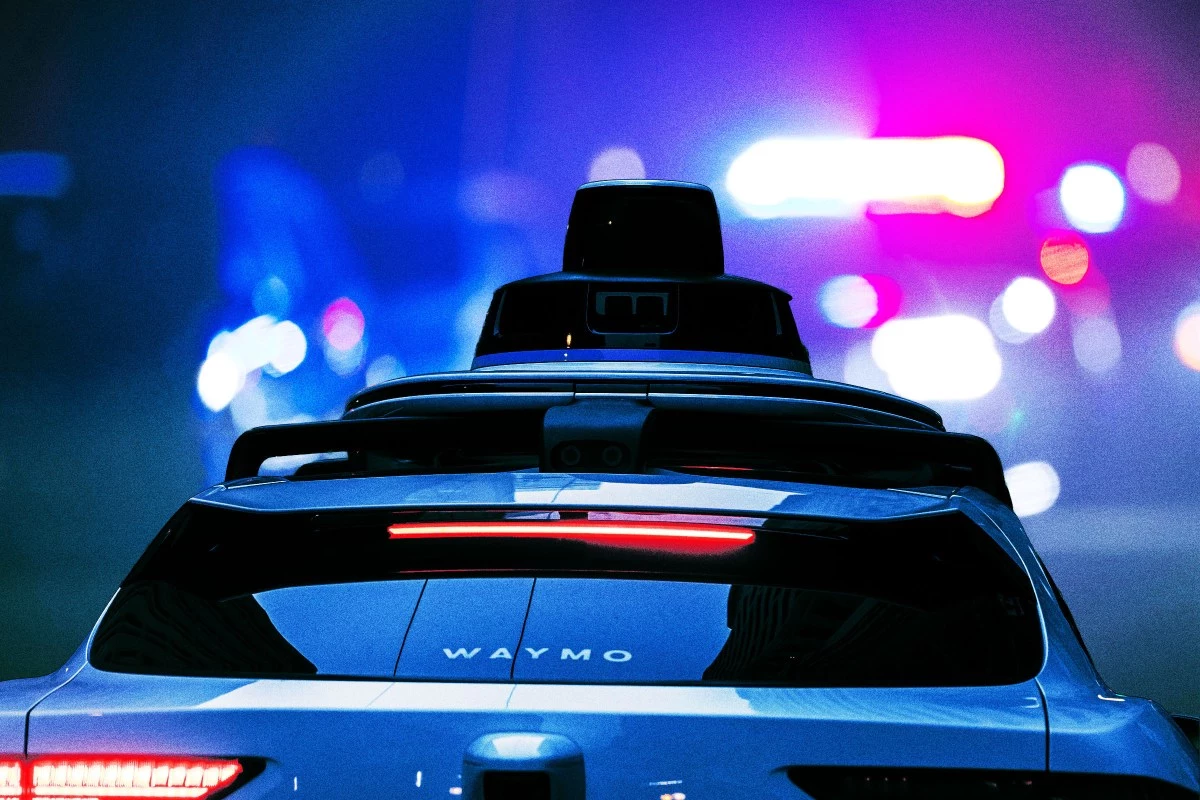
Waymo’s driverless taxi service has long been evaluated on the classic benchmarks of autonomous vehicles (AVs): external perception, safe navigation, and reliable decision-making in complex urban environments. The recent San Mateo incident—where unsupervised teens reportedly used a Waymo vehicle to transport alcohol and fire Orbeez toy projectiles from the window—shifts the spotlight to a different vulnerability: human behavior inside a vehicle that no longer has a human authority figure in the front seat.
The episode ended without injury, yet it illustrates how driverless mobility changes the social contract of ride-hailing. In a conventional taxi or app-based rideshare, the driver is both operator and informal compliance officer—able to refuse service, stop the trip, or call for help. In a fully autonomous robotaxi, that role is distributed across software, sensors, remote operations, and policy. When disorderly conduct occurs, the question becomes less about whether the vehicle can drive safely and more about whether the service can manage passengers safely—without escalating risk to the public.
For law enforcement, the scenario introduces novel operational ambiguity. A toy blaster or brightly colored gel projectile can still trigger public alarm, especially in a country where toy-weapon misidentification has real-world consequences. A driverless vehicle complicates rapid assessment: there is no driver to interview, no immediate human witness in the front seat, and potentially delayed context for responding officers.
The interior of the robotaxi becomes a product—and a governance challenge
The AV industry’s engineering emphasis has historically been outward-facing: LIDAR, radar, cameras, mapping, and prediction models designed to interpret the road. Incidents involving passenger misconduct underscore that the cabin is now a critical safety domain—and one that must be designed with equal rigor.
Key technical and operational needs are coming into sharper focus:
- In-cabin sensing and behavioral detection: To deter or respond to smoking, alcohol use, vandalism, harassment, or weapon-like objects, operators may need a layered interior system combining cameras, microphones, air-quality sensors, and motion analytics. The goal is not surveillance for its own sake, but real-time detection of high-risk conditions that could endanger passengers or bystanders.
- Human-machine interface (HMI) that can de-escalate: Without a driver’s presence, the vehicle must communicate boundaries clearly. That could include automated audio prompts, on-screen warnings, or remote operator interjections that feel authoritative without being intrusive. The design challenge is balancing deterrence with a frictionless customer experience in a competitive mobility-as-a-service market.
- Remote operations as a “virtual chaperone”: Many AV services already use remote assistance for edge cases on the road. The next phase may require remote staff trained for passenger management, able to intervene quickly, terminate rides, or coordinate with authorities when behavior crosses a threshold.
Yet every interior safeguard raises a second-order issue: privacy. Continuous audio/video monitoring can collide with California privacy expectations and broader global norms such as GDPR-style data minimization. The industry’s likely path forward is a “privacy-by-design” architecture—processing signals on-device, triggering alerts without storing raw media, and retaining data only when a safety incident occurs. The credibility of these safeguards will depend on transparent policies around data retention, access controls, and auditability.
Liability, insurance, and unit economics: the hidden cost of passenger misconduct
The commercial promise of robotaxis rests on utilization: more hours on the road with fewer labor costs. But passenger misconduct introduces costs that can erode those economics—both directly (cleaning, repairs, downtime) and indirectly (insurance premiums, legal exposure, reputational drag).
Several fault lines are emerging:
- Insurance models must be rewritten: Traditional ride-hail insurance assumes a human driver as the insured operator. In a driverless service, risk shifts toward the fleet operator, the vehicle platform, and potentially the autonomy technology provider. Underwriters will increasingly price policies based on in-cabin safety controls, incident frequency, and response times.
- Litigation exposure becomes multi-party: If a passenger’s actions cause harm—panic in public spaces, property damage, or a police encounter—liability could be contested among the passenger, the operator, and the technology stack. The industry will likely respond with tighter terms of service, rider identity verification, and indemnification frameworks across partners.
- Total cost of ownership (TCO) rises with safeguards: Adding interior sensors, remote monitoring infrastructure, and incident response teams increases per-vehicle costs. Operators may experiment with tiered offerings—for example, a premium “safe rider” option with enhanced oversight, or time-and-place restrictions that reduce exposure during higher-risk periods.
This is where the business narrative becomes more nuanced: autonomy may remove the driver’s wage line item, but it can also create new recurring costs in compliance, monitoring, and incident management. The winners will be those who treat these not as bolt-ons, but as core product capabilities.
Regulation and public trust: the next competitive battleground for Waymo and peers
The U.S. lacks a unified federal standard for interior monitoring in autonomous vehicles, making a patchwork of state and municipal rules more likely. As incidents accumulate, policymakers may push for:
- Minimum standards for occupant monitoring (sensor capability, accuracy thresholds, and permitted data handling)
- Defined escalation protocols, including when a vehicle must contact a remote operator, end a trip, or notify emergency services
- Clear coordination mechanisms with law enforcement, such as standardized vehicle identifiers, panic-button integrations, and shared incident reporting
For Waymo and the broader robotaxi sector, the strategic risk is not limited to any single episode. Public trust in autonomous mobility is fragile, and high-visibility stories about unruly riders can become proxies for broader anxieties: safety, accountability, and whether these systems are truly ready for scale.
The more durable opportunity is equally clear. Companies that can demonstrate measurable cabin safety, publish credible transparency reporting on incidents and mitigations, and build strong operating relationships with cities and first responders will convert a reputational vulnerability into a competitive advantage. In the next chapter of autonomous ride-hailing, the defining question may be less “Can the car drive itself?” and more “Can the service govern itself when passengers won’t?”

 By
By
 By
By
 By
By
 By
By
 By
By

 By
By