
Longevity as a Competitive Moat: From Ancient Pines to Modern Balance Sheets
Across biology, culture, and commerce, the most enduring entities share a counterintuitive trait: they optimize for survival before they optimize for speed. The Great Basin bristlecone pine known as Methuselah—estimated at 4,765 years old in California’s White Mountains—stands as a living case study in resilience engineering. So does the Greenland shark, whose lifespan may reach roughly 500 years, thriving in cold, low-energy environments that reward metabolic efficiency over rapid growth.
For business and technology leaders, these examples are more than curiosities. They reinforce a strategic principle increasingly relevant in an era of AI acceleration and geopolitical volatility: longevity is an asset class. Biological durability is now informing research agendas in:
- Biomedicine and regenerative science, where oxidative stress resistance and cellular maintenance mechanisms are central questions
- Materials science, including coatings, composites, and corrosion resistance inspired by long-lived organisms
- Low-energy preservation and cooling, a theme with direct implications for supply chains and data center operations
In parallel, commercial longevity—seen in heritage brands and institutions—signals something equally valuable: trust compounding over time. Brands that persist for centuries do not merely “survive disruption”; they repeatedly translate continuity into pricing power, distribution leverage, and customer loyalty. The strategic takeaway is not nostalgia. It is that durable systems—biological or economic—tend to be conservative in core architecture and experimental at the edges.
Continuity at Scale: What Taos Pueblo and Legacy Media Reveal About Governance and Trust
The endurance of Taos Pueblo in New Mexico, continuously inhabited since around 900 AD, highlights a form of resilience that modern organizations often struggle to replicate: distributed stewardship anchored in shared norms. Its longevity suggests that governance models can remain stable for centuries when they balance:
- Local autonomy with collective responsibility
- Cultural continuity with adaptive practice
- Resource stewardship with intergenerational accountability
These dynamics echo in today’s experimentation with decentralized coordination—especially in blockchain communities and cooperative digital structures. While the technologies differ, the underlying question is the same: how do you sustain legitimacy and cohesion when leadership, membership, and external conditions constantly change?
A parallel lesson emerges from American media history. The Hartford Courant, founded in 1764, is widely recognized as the longest-running newspaper in the United States, and it served as a vital information conduit during the Revolutionary era. Its persistence underscores a point that modern platform companies sometimes learn the hard way: scale is not a substitute for credibility. In a fragmented attention economy, the durable advantage is often:
- Curation that earns repeat reliance
- Local relevance paired with broader context
- Editorial identity that remains legible across generations
For contemporary media and technology firms, the Courant’s lineage reads like an early blueprint for platform trust: loyalty is built not only through distribution, but through institutional reliability—the sense that the outlet will still be there tomorrow, and that it has reasons to protect its reputation.
Centuries-Long Institutions: Barclays, Oxford, and Harvard as Adaptive Infrastructure
If longevity in nature is about energy efficiency and repair, longevity in institutions is about reinvention without identity loss. Barclays, founded in 1690 in London, illustrates how financial institutions can evolve from local origins into global relevance by repeatedly adapting to new market structures, technologies, and regulatory regimes. Its arc reflects a broader truth about legacy enterprises: survival depends on the ability to embed innovation inside continuity, rather than treating transformation as a periodic crisis response.
For strategic leaders, Barclays’ long trajectory highlights recurring imperatives:
- Geographic and product expansion timed to structural shifts in capital markets
- Operational modernization (from early settlement innovations to contemporary digitization)
- Regulatory navigation as a core competency, not a compliance afterthought
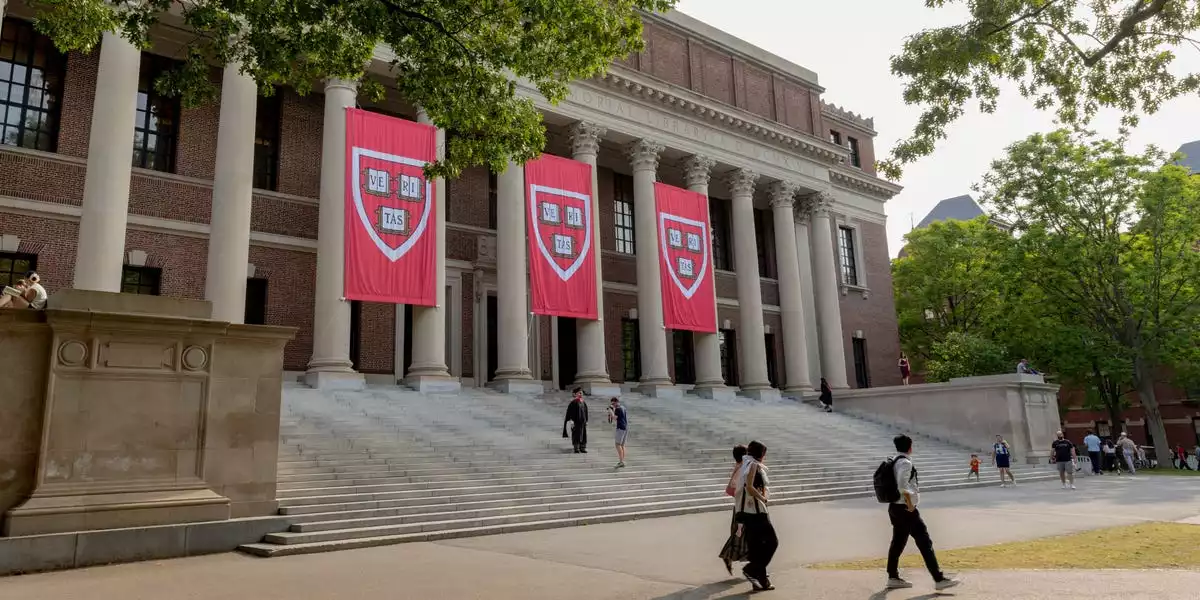
The knowledge economy offers its own long-lived exemplars. Oxford University (with origins traced to 1096) and Harvard University (founded 1636) have functioned for centuries as durable engines of human capital formation and research output. Their staying power is not simply prestige; it is their role as institutional platforms—places where talent pipelines, funding networks, and intellectual property ecosystems continually renew.
For corporations facing AI-driven labor shifts and frontier-tech competition, the implication is practical: resilient talent strategies increasingly resemble academic models, including:
- Multi-year fellowships and research appointments to retain scarce expertise
- Corporate–university co-labs that accelerate applied R&D in AI, clean energy, and advanced manufacturing
- Open or shared IP frameworks where speed and ecosystem adoption matter more than exclusivity
In this framing, universities are not just training grounds—they are strategic infrastructure for innovation continuity.
Heritage Brands and Incremental Technology: Stella Artois, Twinings, and Papin’s Platform Lesson
Commercial endurance is often most visible in consumer markets, where tastes change quickly and competition is relentless. Yet Stella Artois (dating to 1366) and Twinings tea (founded 1706) demonstrate how brands can persist by treating heritage as a living asset—protected through quality control and storytelling, but refreshed through distribution, packaging, and product-line evolution. Their longevity suggests a repeatable playbook: preserve the core promise, modernize the delivery.
That same logic appears in the history of technology itself. Denis Papin’s 1679 steam-digester, a precursor to modern pressure-cooker technology, exemplifies how breakthrough inventions often achieve mass impact through incrementalism—successive improvements, safer designs, and broader usability. The analogy maps cleanly onto modern software and hardware strategy:
- Modular architectures that allow components to evolve independently
- Backward compatibility that protects user investment and reduces adoption friction
- Upgradeable platforms that turn one invention into an enduring product category
Taken together—ancient organisms, continuous communities, legacy newspapers, global banks, research universities, heritage brands, and foundational inventions—these cases point to a shared strategic pattern: the future belongs not only to the fastest innovators, but to the best stewards of systems that can keep improving without breaking.

 By
By
 By
By


 By
By
 By
By
 By
By