


A synthetic cell that forces a rethink of “life” as an engineering specification
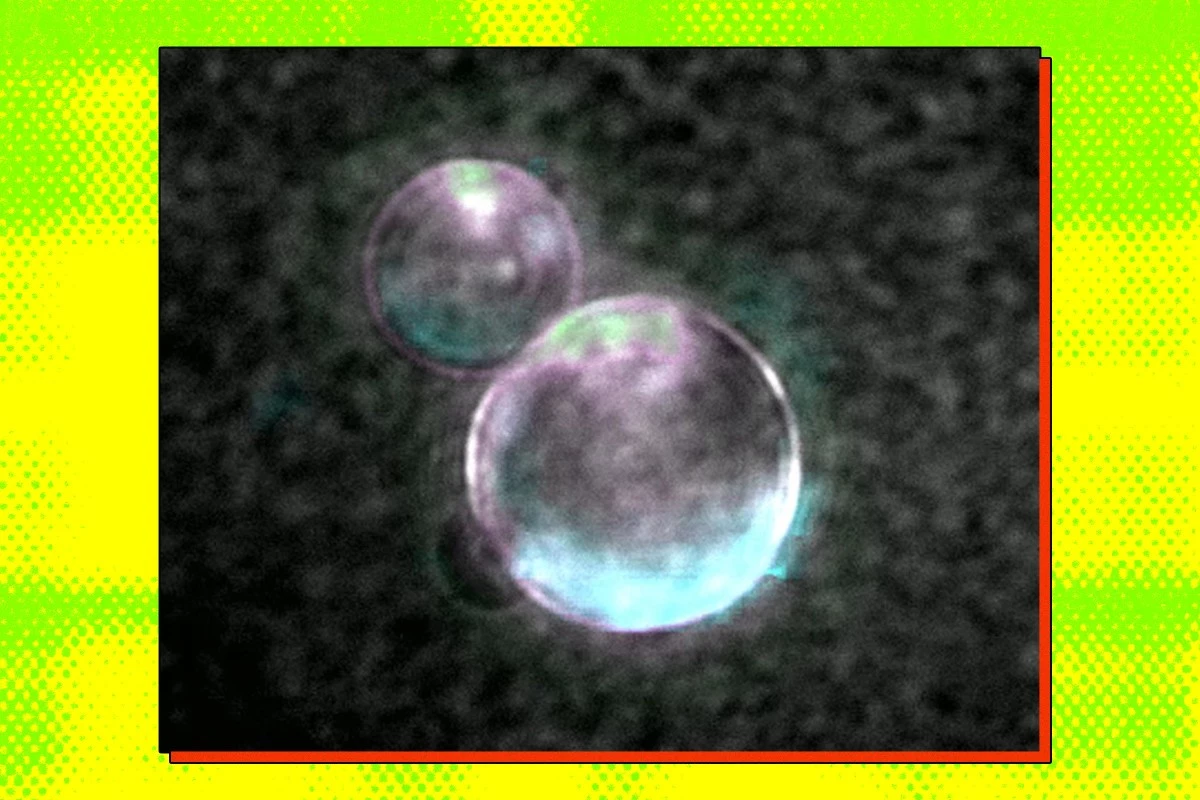
The University of Minnesota’s engineered synthetic cell—widely referred to as “SpudCell”—marks a notable inflection point for synthetic biology: a lab-built construct assembled from roughly 150–200 chemical components that can consume nutrients, grow, and progress through a rudimentary cell cycle across multiple generations. The replication is slow and dependent on tightly controlled conditions, but the conceptual leap is difficult to overstate. For decades, the field has excelled at rewriting existing organisms; SpudCell gestures toward something more foundational: building cellular behavior from defined parts.
At the center of the discussion is not only what SpudCell does, but what it implies. If a cell-like system can execute growth and division without the full complexity of natural life, then “living” begins to look less like a binary category and more like a spectrum of capabilities—metabolism, compartmentalization, information transfer, replication, and adaptation—each potentially implementable in modular form. That framing matters because it shifts the narrative from philosophical novelty to industrial practicality: if the core functions can be isolated and standardized, they can be optimized, audited, and scaled like any other engineered platform.
SpudCell’s physiology is described as resembling a primitive bacterium, with a limited metabolic scope and reliance on external feedstocks. Yet that limitation is also the point: the achievement demonstrates compositional control—the ability to specify what is inside the system and, by extension, what it can and cannot do. In an era when biology is increasingly treated as a programmable substrate, that level of determinism is the difference between clever experiments and credible manufacturing platforms.
From “black-box biology” to composable bio-machinery
SpudCell’s most consequential contribution may be methodological: it reinforces synthetic biology’s trajectory toward standardized, testable modules rather than opaque cellular complexity. Where traditional biotech often inherits the quirks of evolved organisms—unpredictable regulation, metabolic cross-talk, and context-dependent behavior—minimal or synthetic cells invite a more explicit design philosophy.
Key technological implications stand out:
- Minimal machinery as a design target: Demonstrating a cell cycle without invoking any “special” life force reframes replication as an implementable process, not an emergent mystery. That opens the door to defining the smallest set of functions required for specific tasks.
- Orthogonal metabolism and controllability: With precise control over molecular makeup, researchers can pursue orthogonal pathways—metabolic circuits designed to coexist with, or replace, native biochemistry. For industry, orthogonality is a route to predictable yields, reduced byproducts, and clearer safety cases.
- A platform that is real—but not yet practical: Replication over roughly five generations and dependence on curated inputs underscores the distance from commercial viability. Still, platform technologies often begin as constrained demonstrations; the strategic value lies in the roadmap for iterative upgrades: faster replication, broader substrate use, stress tolerance, and programmable regulation.
This is also where the “alive or not” debate becomes less academic than it seems. Regulatory agencies, investors, and the public do not evaluate life as a metaphysical category; they evaluate risk, containment, traceability, and intent. A synthetic cell that is deliberately limited—unable to thrive outside defined conditions—could, if validated, become a compelling model for built-in safety by design, rather than safety as an afterthought.
The business stakes: IP, investment gravity, and the shape of Bioeconomy 2.0
SpudCell arrives amid accelerating global investment in synthetic biology, with annual R&D spending projected to exceed $20 billion. The macro drivers—decarbonization, resilient supply chains, precision medicine, and sustainable agriculture—are pushing biology from niche innovation to strategic infrastructure. In that context, a programmable synthetic cell is not merely a scientific milestone; it is a potential chassis for new value chains.
Several economic and industry dynamics are likely to intensify:
- Intellectual property as competitive terrain: Minimal cell designs, orthogonal pathway libraries, and automated assembly methods could become defensible IP anchors. The winners may be those who secure patents not only on components, but on architectures and workflows that make synthetic cells reproducible at scale.
- Partnerships as the default commercialization path: Early-stage synthetic cell research is capital- and talent-intensive, encouraging academia–startup–enterprise alliances. Pharmaceutical firms, chemical conglomerates, and advanced materials players have incentives to co-develop platforms that shorten development cycles and reduce manufacturing volatility.
- Regulatory frameworks under strain: Synthetic organisms blur existing biosafety and biosecurity categories. Regulators will face pressure to define standards for containment, environmental interaction, and auditability. For companies, this translates into a new cost center—and a differentiator: transparent governance and proactive compliance may become prerequisites for market access.
Importantly, the most disruptive impact may not be confined to biotech. Programmable cells intersect with materials science, environmental remediation, and sensing. The idea of engineered microbes as self-assembling scaffolds for advanced electrodes, responsive agents for precision agriculture, or components in next-generation biosensors is no longer speculative hand-waving—it is a plausible adjacency once the chassis becomes reliable.
What executives should watch next: scaling physics, governance credibility, and talent architecture
For leaders evaluating synthetic cell engineering, SpudCell is best understood as a signal: the field is moving from editing life to assembling life-like systems with explicit constraints and capabilities. The near-term question is not whether this specific construct is ready for industry—it is not—but whether the underlying approach can be industrialized.
Practical watchpoints include:
- Scale-up bottlenecks: replication rate, robustness under variable conditions, and feedstock flexibility will determine whether synthetic cells can compete with established microbial platforms.
- Biofoundry integration: competitive teams will pair wet-lab automation with AI-driven design loops, high-throughput analytics, and real-time metabolic monitoring to accelerate iteration.
- Governance as a product feature: built-in biosafety locks, traceability, and clear environmental risk models will shape both regulatory outcomes and customer adoption.
SpudCell’s deeper message is that biology is becoming a discipline of systems engineering—with all the attendant implications for standardization, quality control, and platform economics. If the next iterations can expand metabolic breadth while preserving compositional control, synthetic cells could evolve from a provocative proof-of-concept into a cornerstone technology for a more resilient, lower-carbon manufacturing era.

 By
By
 By
By
 By
By
 By
By


 By
By








