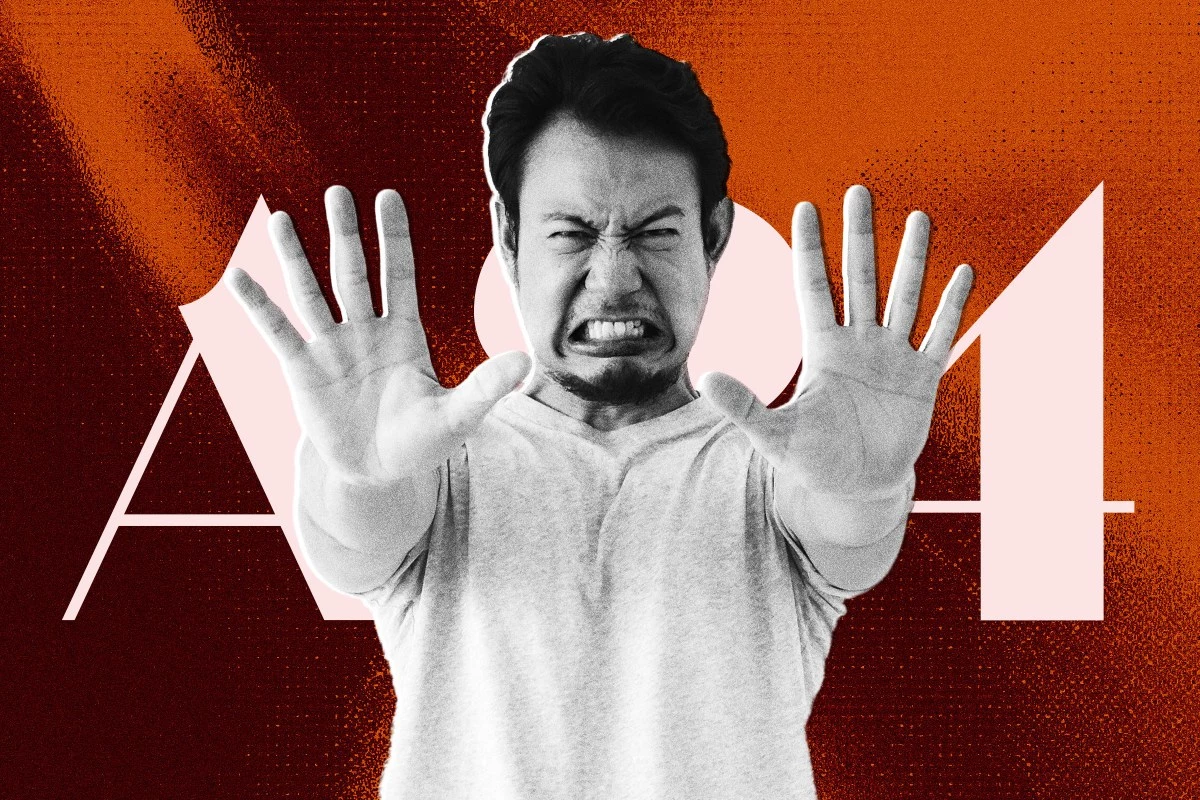

A24’s “Backrooms” windfall meets Big Tech’s AI gravity
A24 has rarely needed to prove its commercial instincts, but the numbers behind “Backrooms” recalibrate even that reputation: more than $330 million worldwide on a $10 million budget, now the studio’s highest-grossing release. For an independent brand built on risk-taking and auteur credibility, it’s the kind of breakout that typically buys years of creative latitude.
Yet the studio’s next headline—a $75 million research partnership with Google to co-develop AI tools for film production—has landed with a different kind of force. The timing matters. Announced in the afterglow of a defining box-office success, the deal reads to many observers as a pivot from “indie insurgent” to “platform-aligned innovator,” raising immediate questions about what A24 is optimizing for: artistic leverage, operational efficiency, or strategic defensibility in an industry being re-architected by artificial intelligence.
The backlash has been amplified by the public stance of Kane Parsons, an A24-associated director who has described generative AI as “genuinely harmful” to economic and cultural values. Meanwhile, A24 communications lead Sophia Shin has framed the partnership as a way to ensure artists have a seat at the table—an argument that resonates in principle, but faces skepticism in practice. In the current climate, audiences and creators increasingly treat AI not as a neutral toolset, but as a values-laden production choice with labor, authorship, and authenticity implications.
What AI co-development could change inside the production pipeline
The most immediate promise of generative AI in entertainment is straightforward: time and cost compression. In a business where schedules slip, reshoots balloon budgets, and post-production bottlenecks can determine release windows, even incremental efficiency can be strategically meaningful—especially for a studio known for low-to-mid budget filmmaking.
Potential AI-enabled capabilities that a Google–A24 collaboration could target include:
- Pre-production acceleration
– Script breakdowns, coverage analysis, continuity checks
– Rapid storyboarding and pre-visualization for complex sequences
- Post-production augmentation
– Assisted editing workflows, rough-cut assembly, scene matching
– VFX ideation, rotoscoping support, environment extensions
- Production planning
– Scheduling optimization, budget forecasting, asset tracking
– Location and set exploration via synthetic previs environments
The creative risk is equally clear: early generative systems often struggle with emotional fidelity—the subtle, human texture that distinguishes a merely coherent narrative from a resonant one. For a brand like A24, whose market value is tightly coupled to taste and tone, the central question is not whether AI can generate “content,” but whether it can support the kind of directorial intent and narrative nuance that audiences associate with the studio’s identity.
That tension becomes sharper when the partnership is not simply about licensing off-the-shelf tools, but about co-developing them. Co-development implies influence over design choices—yet it also implies deeper entanglement with the underlying mechanics of model training, evaluation, and deployment. In other words, the deal is not just about what AI can do for A24; it’s about what A24’s creative footprint can do for AI.
Data rights, IP leverage, and the new economics of “style”
A24’s catalog is not vast compared to major studios, but it is unusually distinctive—a curated library of recognizable tonal signatures, visual language, and audience expectations. In machine learning terms, that is valuable not merely as “content,” but as metadata-rich creative signal: pacing, framing, color palettes, narrative structures, and marketing performance patterns.
This is where the partnership’s most consequential questions emerge:
- Training data and consent
– Which assets are used: scripts, dailies, final cuts, sound design stems, marketing materials?
– Who approves usage: directors, writers, cinematographers, editors, composers?
- Ownership of outputs
– If an AI tool generates a storyboard, previs sequence, or VFX plate, who holds rights?
– How are derivative works handled when “style” becomes reproducible?
- Attribution and transparency
– Will productions disclose AI-assisted elements to audiences and guild stakeholders?
– Can creators opt out without career penalty or contractual friction?
The economic stakes extend beyond A24. If a respected indie studio normalizes AI co-development with a tech giant, it may set precedents for rights management and data licensing across the sector—especially as regulators begin to scrutinize training data provenance and as unions push for enforceable guardrails around digital replication and credit.
Just as importantly, AI validated in film production rarely stays in film. Toolchains built for previs, environment generation, and synthetic assets can spill into gaming, virtual events, advertising, and branded entertainment, creating new revenue pathways—and new incentives to standardize workflows in ways that may not always favor artisanal filmmaking.
Brand trust, competitive pressure, and the governance test ahead
A24’s brand equity has long been anchored in a “cult-indie” compact: audiences believe they are buying into curation, originality, and creative autonomy. Partnerships with Big Tech can be compatible with that identity, but only if the studio can convincingly demonstrate that AI is being used to amplify artists rather than replace them, and that creative labor is not being quietly devalued in the name of efficiency.
At the same time, competitive pressure is real. Netflix, Disney, and Amazon are all experimenting with AI-enabled production workflows, and the broader market is contending with rising costs, uncertain theatrical demand, and streaming-era margin constraints. Against that backdrop, A24’s move can be interpreted as both:
- a defensive hedge against being out-tooled by larger rivals, and
- a differentiation bet that positions the studio as a boutique innovator rather than a nostalgic holdout.
What will likely determine whether the Google partnership becomes a model or a cautionary tale is governance—clear, enforceable rules that translate “artists at the table” into operational reality. The industry will be watching for signals such as:
- Defined permissible use-cases (e.g., previs and planning vs. performance synthesis)
- Consent and compensation mechanisms for creators whose work informs tools
- Auditability and documentation of datasets, model behavior, and output provenance
- Transparency standards that protect both audiences and collaborators from ambiguity
A24’s “Backrooms” success proves the studio can still turn bold creative bets into mainstream returns. The AI partnership now tests something harder to quantify: whether an indie institution can engage Big Tech capital and capability without diluting the very authenticity that made its victories feel personal to audiences—and professionally meaningful to the artists who built the brand.

 By
By
 By
By
 By
By
 By
By
 By
By
 By
By